


Church Leaders Turn Against Trump — and They’re Not Whispering
Across the country, faith leaders are stepping out of the pulpit and into the streets — and they’re not standing with Donald Trump. They’re standing against him.
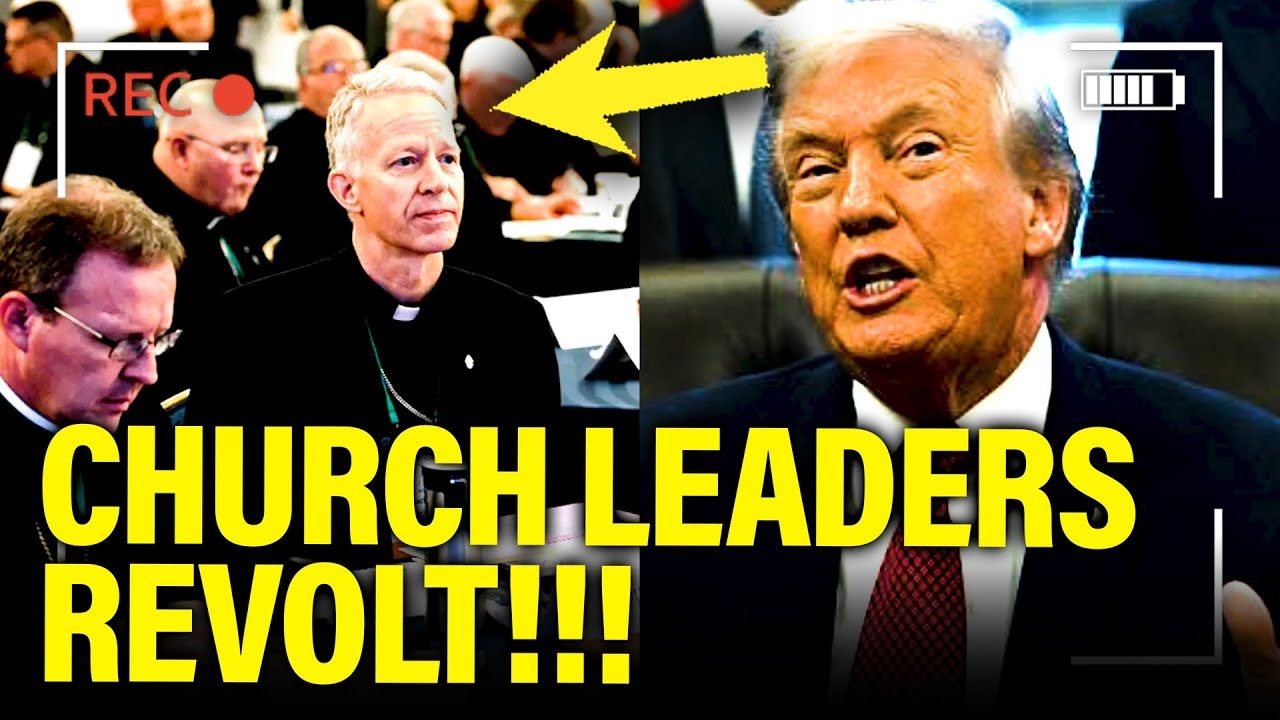
In Chicago, that resistance has a face: Pastor David Black, an ordained teaching elder at First Presbyterian Church of Chicago. He’s not a pundit. He’s not a politician. He’s the guy standing outside an ICE detention center, Bible in hand, praying for the detained — and for the people detaining them.
And for that, Trump’s ICE shot him in the head.
Pastor Black has been on the front lines at the Broadview ICE detention facility outside Chicago, where migrants are being held in what he bluntly calls a modern “gate of hell.” His “crime”? Standing on a sidewalk, in clerical collar, preaching the words of Jesus to armed federal officers.
“Repent and believe the good news that the kingdom of God has come near.”
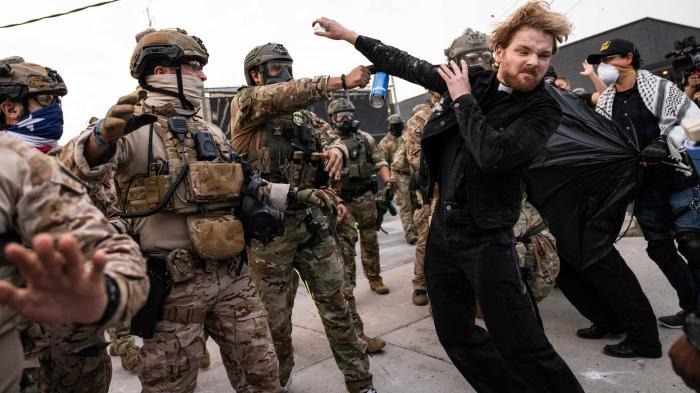
Mid-sentence, they opened fire.
Pepper balls slammed into his head and body — so-called “non-lethal” rounds that absolutely can be lethal. The viral video of a pastor getting shot while quoting Scripture shattered any illusion that this was just “law and order.” It looked like exactly what he says it is: an empire testing how far it can go.
Pastor Black says he wasn’t alone. That day, peaceful protesters, clergy, and community members were attacked by ICE in what he describes as either gross incompetence or deliberate escalation. And what happened next only proved his point: even after a federal judge granted an injunction protecting demonstrators’ rights, ICE allegedly responded by deploying tear gas in a nearby Latino neighborhood within an hour.
Law. Order. Contempt.
Black became a plaintiff in a lawsuit backed by the ACLU, journalists, and other protesters — a case that resulted in a detailed federal injunction affirming that their First Amendment rights had been trampled. But the fact that it took top-tier lawyers and a massive legal fight just to secure the right not to be shot while praying in public says everything about how far the system has been pushed.
And yet, the most shocking part isn’t the violence. It’s the reaction — and the revival it sparked.
Pastor Black describes a “moment of revelation” inside American Christianity itself. He says there have always been two Christianities:
- the Christianity of the oppressed, standing with the vulnerable,
- and the Christianity of the oppressor, wrapping injustice in a Bible verse and calling it God’s will.
For decades, Trump and his allies have weaponized evangelical language to justify cruelty — locking up migrants, tearing apart families, and now turning detention centers into sacramental dead zones where even communion has been banned. Clergy have had to sue just to bring the Eucharist to detainees.
But now, Black says, something is breaking open.
He talks about an emerging “religious left” — pastors, priests, rabbis, imams, and people of no formal faith standing shoulder to shoulder at places like Broadview. Not in panel discussions. Not in interfaith photo-ops. On the street. In the line of fire. Creating what he calls a world-building project of democracy and moral courage.
It’s messy. It’s leaderless. It’s not about one hero. It’s about people finally realizing democracy is not a show you watch — it’s a responsibility you share.
Black is brutally clear about privilege too. He says “Christians of privilege” — those with safety, institutional backing, or public platforms — don’t get to sit this out. Not anymore. Not with ICE agents gassing neighborhoods. Not with pastors getting shot for quoting Jesus. Not with fascism draping itself in church language and calling it holy.
His challenge is painfully simple:
Stop treating democracy and faith like spectator sports.
Knock on your neighbor’s door. Check on someone who’s alone. Cross the invisible line of fear and isolation. Because when people are isolated, they’re easy to control. When they’re connected, organized, and bound together in trust and love, strongmen lose their grip.
You don’t have to be a believer to understand the threat.
And you don’t have to be religious to join the pushback.
What’s happening in Chicago isn’t just a church story. It’s a warning:
Trump’s regime is testing how much violence it can get away with.
And for the first time in a long time, church leaders are saying “No” — out loud, on camera, and under fire.