


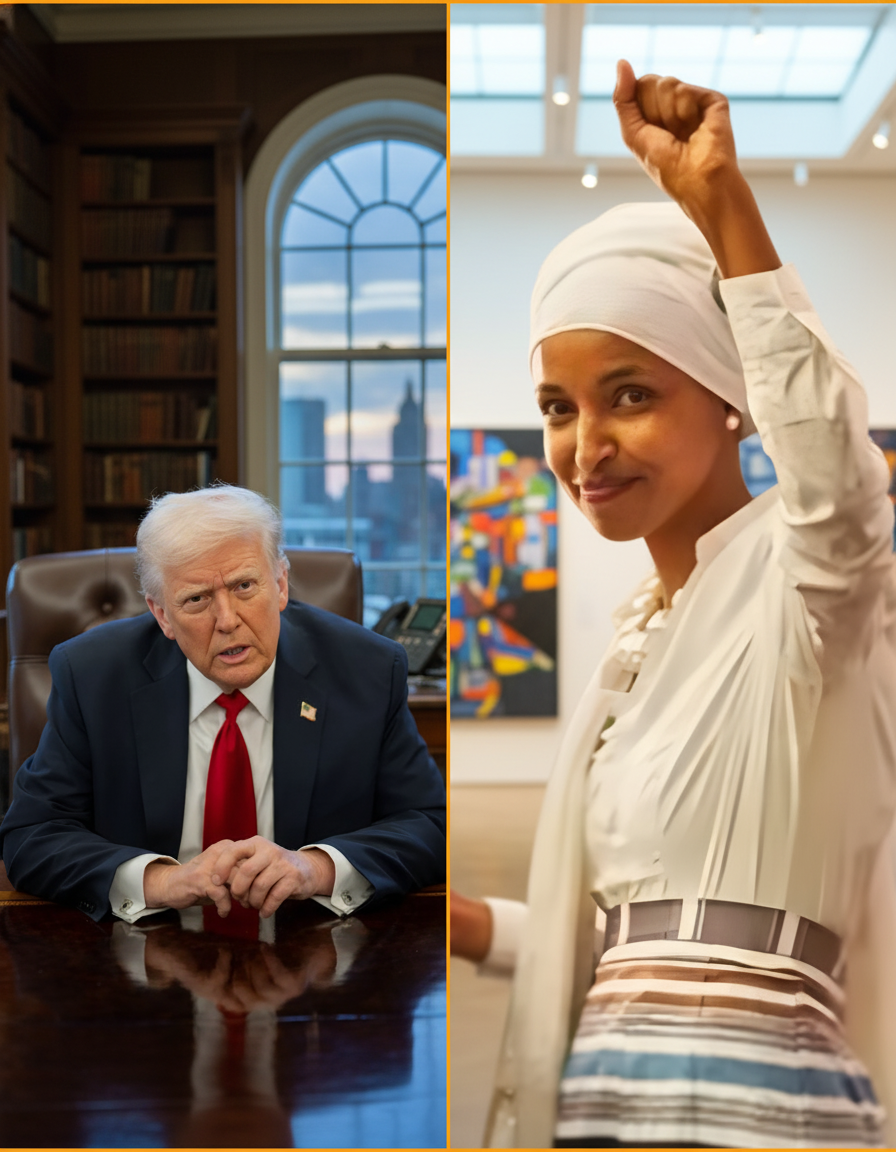
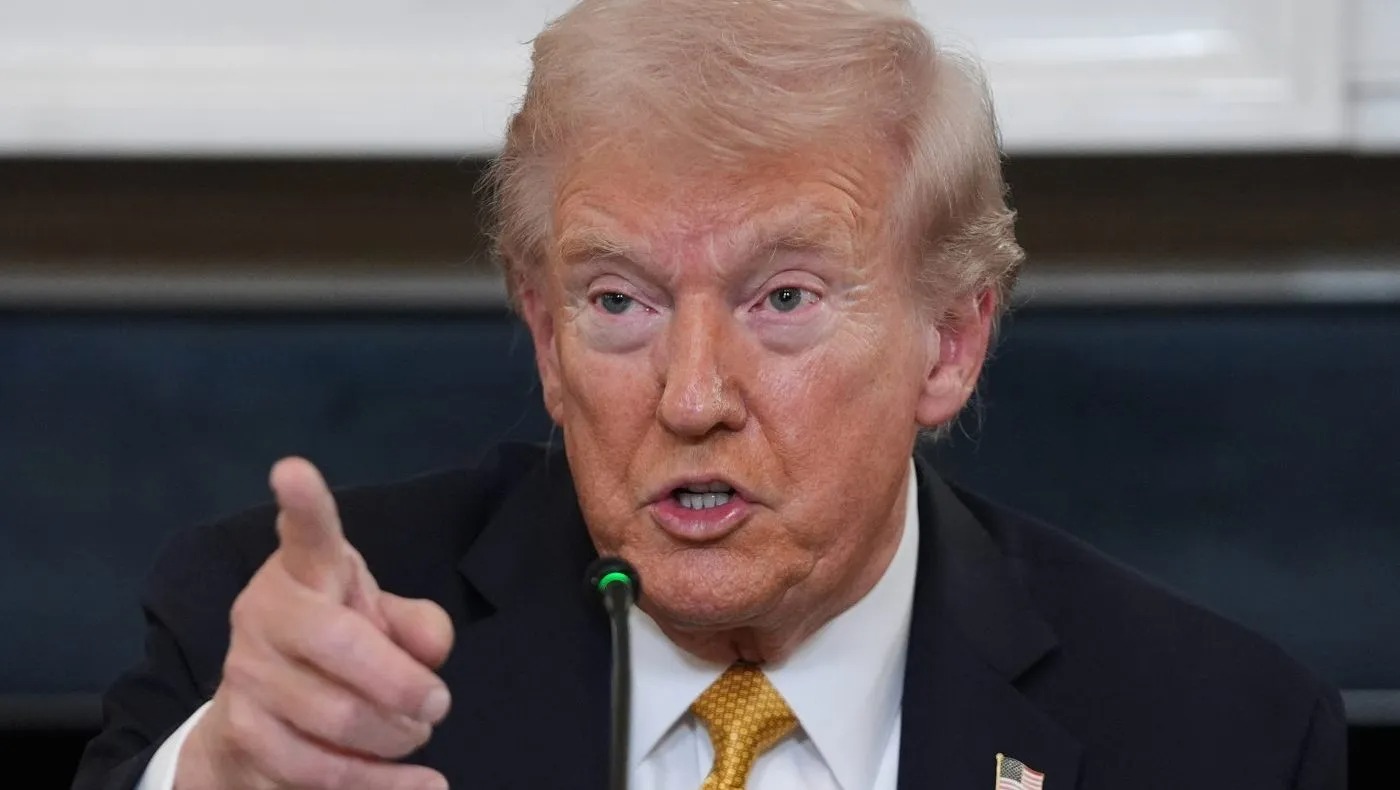
The political storm began with a single sentence—sharp, provocative, and unmistakably intentional. At a rally pulsing with applause and tension, Donald Trump suggested that Rep. Ilhan Omar should be “thrown out of the United States,” pointing once again to long-debunked claims about her past marriage. Even before the crowd finished reacting, the remark had already broken free from the rally grounds and begun its rapid journey across news feeds, social media, and national headlines. Within minutes, the country was locked into yet another cycle of outrage, interpretation, and political division.
Trump’s words were not delivered casually. They arrived with the familiar cadence he uses when signaling to his base—part defiance, part accusation, part performance. For supporters, it was framed as a call for “transparency.” For critics, it was an unmistakable escalation, one that crossed deeply personal and profoundly dangerous lines. And for Ilhan Omar, one of the first Muslim women ever elected to Congress, it was yet another chapter in a long struggle against misinformation that has followed her since the earliest days of her political career.
Omar has denied the allegations about her marriage repeatedly, unequivocally, and for years. Fact-checking organizations, legal documents, and investigative reporting have dismantled the claims. But misinformation, once released, does not simply disappear. It lingers in the political bloodstream, resurfacing whenever convenient, often detached from its original context. Trump’s remark was not the first time he invoked the discredited narrative, and the reaction proved it wouldn’t be the last.
What made this moment different, however, was the force behind the phrasing: “thrown out of the United States.” In a country built on the principle that elected representatives are chosen by voters—not expelled by political rivals—those words struck with particular weight. They didn’t question Omar’s policies. They questioned her belonging. They challenged the legitimacy of a sitting member of Congress in a way that carried echoes of historical attempts to define who is “real,” who is “American,” and who is permitted to participate in the democratic process.
The response from Omar’s allies was immediate. Her defenders argued that Trump’s rhetoric crossed into profoundly troubling territory. They pointed out that the United States had seen such language before—in moments where political disagreement mutated into personal targeting, and where public figures were painted as outsiders, threats, or enemies simply because they did not fit a dominant cultural mold. Analysts noted that, whether intentional or not, Trump’s phrasing tapped into a long history of immigrants and minorities being told to “go back” or “leave,” a tactic weaponized throughout various chapters of American politics.
For Omar, who fled war as a child and rebuilt her life in the United States, such language carried emotional and symbolic weight. Her journey—from refugee to congresswoman—embodies a version of the American story often overshadowed during moments of political hostility. To be told she should be “thrown out” is not merely a disagreement with her ideas; it is a denial of her narrative, her identity, and her place within the nation’s democratic fabric.
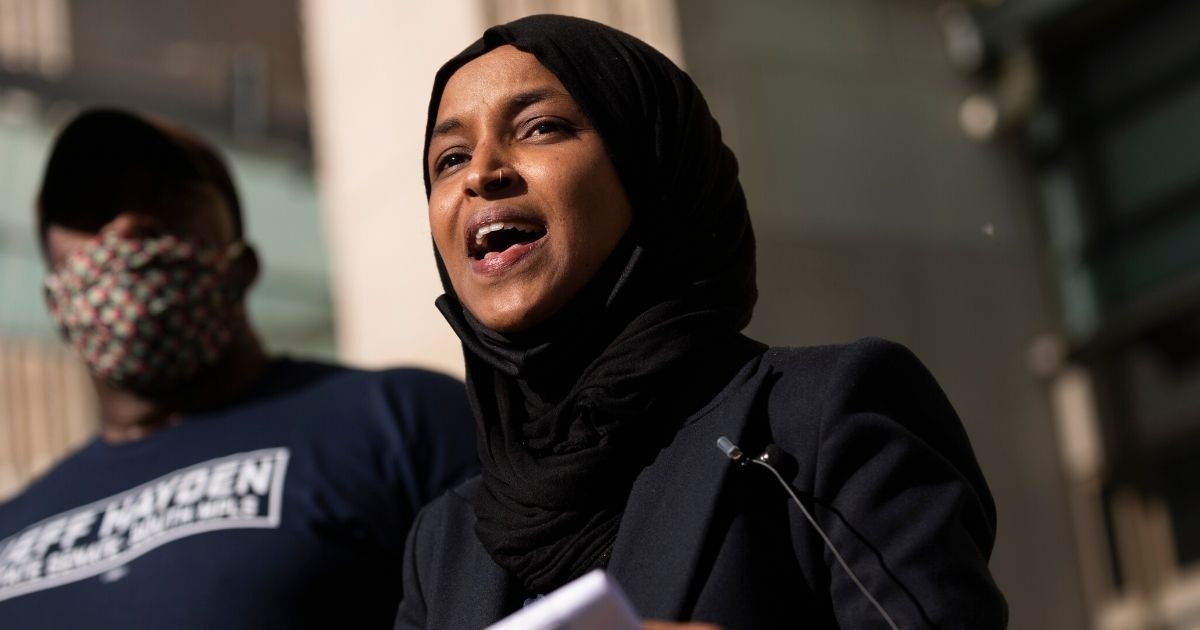
Her supporters responded by reminding the public that political debate must have boundaries, and that questioning someone’s legitimacy based on nationality, religion, or background endangers not only individuals but the health of the political system itself. Critics of Trump argued that language of this nature normalizes exclusion and xenophobia, even if wrapped in rhetoric about “transparency.”
Yet Trump’s supporters saw the situation differently. They claimed his comments reflected a push for accountability, not personal hostility. They argued that raising questions—whether or not they have been previously answered—was part of the democratic process. But the intensity of the reaction revealed how deep these divisions run, and how easily they ignite.
This clash is about more than two individuals. It represents a broader struggle within American identity—a fight over who is allowed to speak, who is allowed to lead, and who gets to define the national narrative. For some, Omar symbolizes progress, representation, and the evolving face of American democracy. For others, she represents change that feels unfamiliar or unwelcome. When Trump speaks about her, he is not simply talking about policy differences. He is speaking to the anxieties of those who fear the cultural shifts she represents.
This is why misinformation plays such a crucial role. False narratives are often more resilient than truth because they appeal to emotional certainty rather than factual clarity. The claims about Omar’s marriage, though debunked, persist because they serve as vessels for broader political anxieties. They allow critics to frame her as deceptive, untrustworthy, or foreign, regardless of documented evidence to the contrary. And once a false claim aligns with a political identity, it becomes far more difficult to dislodge.
Moments like this show how easily political criticism can morph into personal targeting. The shift is subtle but powerful: instead of challenging ideas, it challenges belonging. Instead of questioning actions, it questions identity. Instead of debating policy, it debates humanity.
Trump is skilled at exploiting this shift. His rhetoric often blurs the lines between political attack and personal delegitimization. For his supporters, this blunt style is refreshing—a rejection of what they see as overly sanitized political language. For his critics, it is reckless and corrosive, eroding the norms that protect democratic discourse.
In this case, the collision between rhetoric and identity became immediately visible. Omar is not simply a political figure; she is a symbol of multiple identities historically marginalized within American institutions: a woman, a Muslim, an immigrant, a refugee, and a person of color. When she is targeted, many communities feel targeted alongside her.
But Omar has not shied away from these moments. Her political career is built on navigating—and confronting—the realities of being both highly visible and continuously misrepresented. She often reminds the public that representation comes with resistance, and that voices challenging entrenched power structures are often met with disproportionate scrutiny.
The broader effect of Trump’s remarks was nothing short of predictable: political camps hardened, media cycles intensified, social platforms filled with arguments, and the debate once again centered not on policy but on identity, belonging, and truth. In some ways, this is the recurring tragedy of modern American politics: misinformation becomes a spark, rhetoric becomes a weapon, and identity becomes collateral damage.
Yet beneath the noise, this moment revealed something essential about the state of political discourse. It showed that the boundaries of acceptable rhetoric are shifting, tested constantly by figures who benefit from pushing them further. It showed that misinformation, even when disproven, can still wield enormous power. And it showed that America’s struggle over identity—who belongs, who is trusted, who is allowed to rise—remains unresolved.
In the end, this controversy was not merely about a comment at a rally. It was about the fragility of truth, the resilience of falsehood, and the enduring fight to ensure that political debate does not devolve into personal erasure. It was about a congresswoman asserting her place in a nation that is still learning how to reconcile its ideals with its conflicts. And it was about a country grappling, once again, with the question of who gets to call America home.