


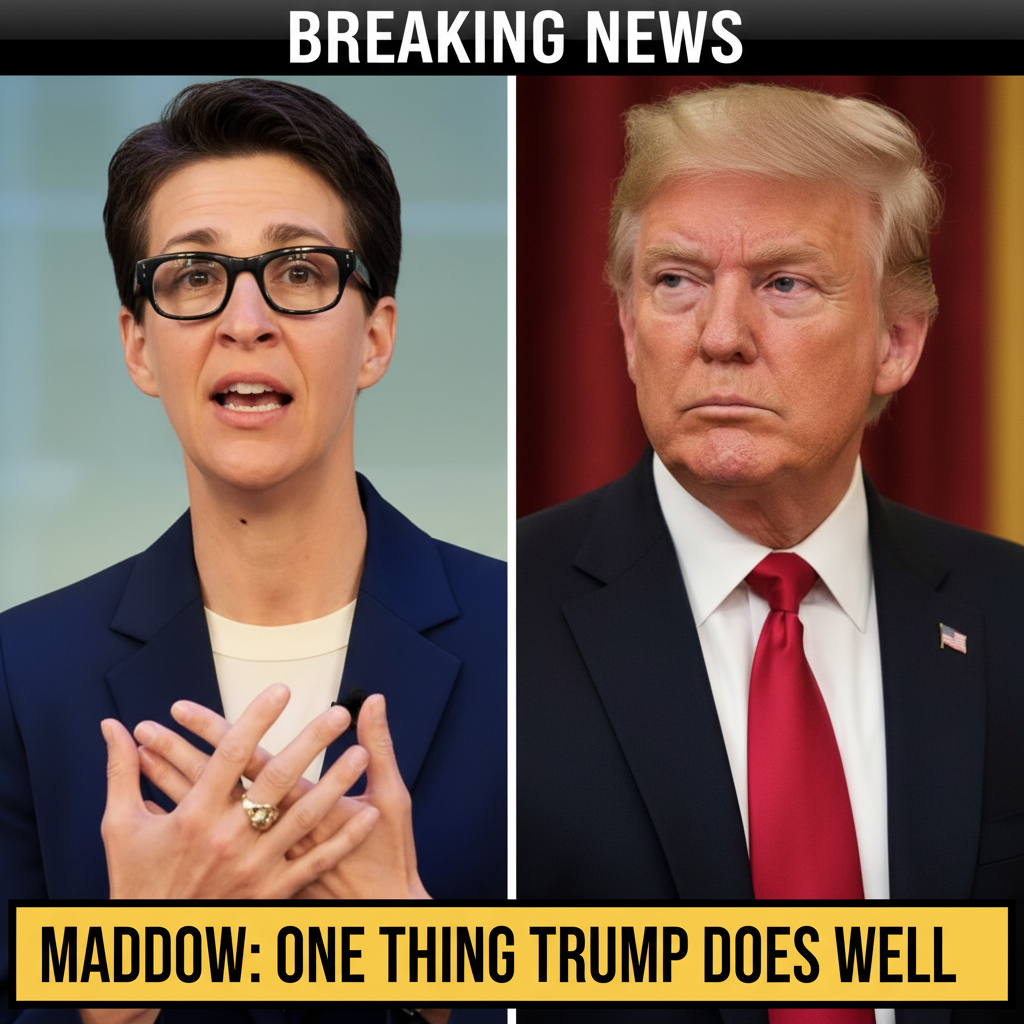
Rachel Maddow delivered a sharp and biting assessment of President Donald Trump on Monday night, arguing that while his administration appears to be struggling on nearly every front, there is one thing he is excelling at remarkably well: driving down his own approval ratings. In a segment that blended data, political analysis, and pointed commentary, the MS NOW host laid out what she described as mounting evidence that public support for Trump is collapsing, not only overall but specifically on the issues he cares about most.
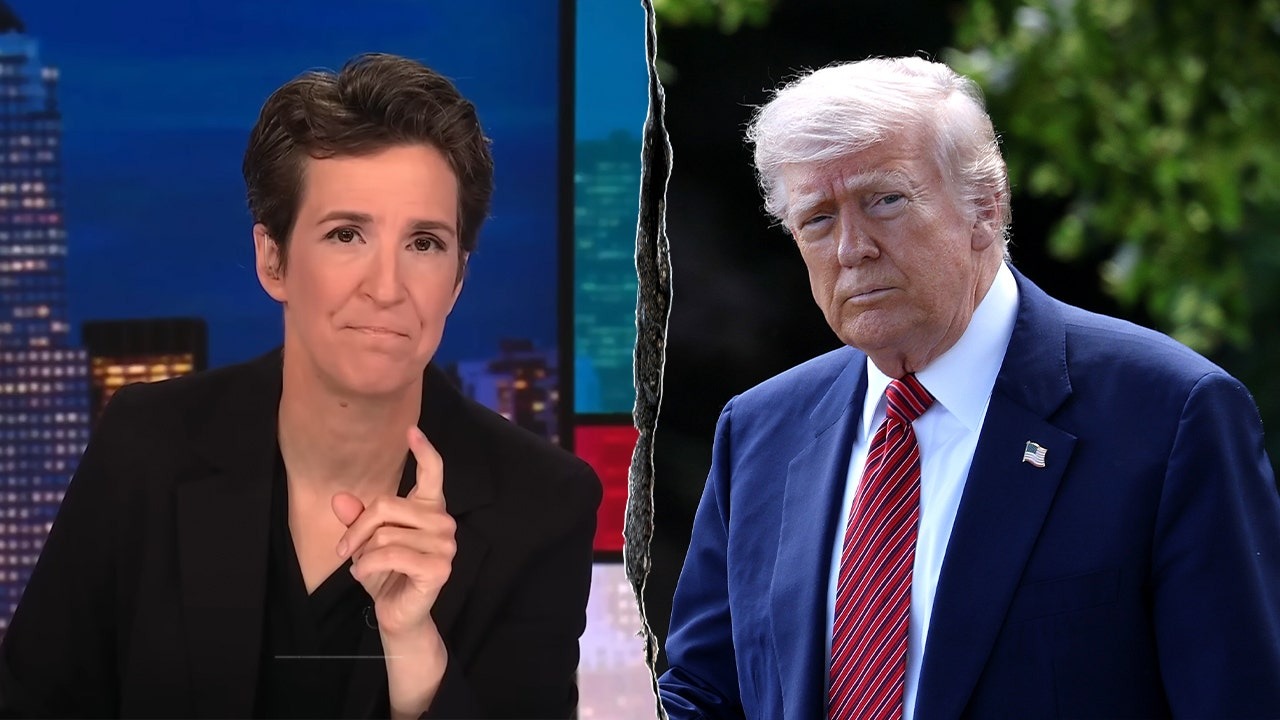
Speaking on her show, Maddow said that national news organizations are finally beginning to acknowledge what polling data has been showing for some time. According to her, Trump’s approval ratings are not simply slipping but “cratering,” especially on key policy areas that define his presidency. She framed the moment as a turning point in media coverage, suggesting that mainstream outlets are now catching up to the reality reflected in public opinion.
“I feel like everybody in the national news media is cottoning now to the fact that Trump’s approval ratings, not just in general, but on specific issues and all the issues that are most important to him, Trump’s approval ratings are just cratering,” Maddow said. She added that the national media appears to be realizing that the country, taken as a whole, is now sharply opposed to Trump’s leadership.
Maddow pointed out that this shift is not limited to traditionally liberal or progressive media spaces. She noted that even local news outlets in deep red states have begun covering dissatisfaction with Trump’s handling of major issues such as the economy, affordability, and immigration. To underscore that point, she played footage from FOX 23 Tulsa, a local Fox affiliate in Oklahoma, which aired coverage of an anti-Trump protest over the weekend.
The protest in Tulsa featured demonstrators calling for political unity, lower food prices, and solutions to homelessness. Maddow highlighted remarks from Susan Young, a co-leader of the Indivisible Tulsa County protest, who spoke bluntly about everyday frustrations facing Americans. “People don’t like being told how many dolls they should buy for their children,” Young said, referencing comments Trump has made urging Americans to accept the consequences of his economic policies.
Maddow seized on that moment as emblematic of a broader problem for the president. “When that’s the local nightly news in Oklahoma, you know things aren’t going great, my dude,” she remarked, emphasizing how unusual it is for such criticism to appear in conservative-leaning local broadcasts.
She then turned to recent polling data to illustrate the depth of Trump’s unpopularity. Citing the latest Associated Press poll, Maddow explained that Trump’s approval rating on the economy is deeply underwater. According to the poll, just 31% of Americans approve of Trump’s handling of the economy, while 67% disapprove, putting him at a net negative of 36 points on an issue that is typically central to presidential success.
Maddow noted that the situation looks even worse when it comes to health care. In that same polling, Trump’s approval rating on health care policy was underwater by 40 points. She stressed that this poll concluded before a major deadline related to the Affordable Care Act, when tens of millions of Americans needed to sign up for their health insurance plans.
According to Maddow, the timing matters because health insurance premiums are now “skyrocketing in price,” a development she attributed to the GOP’s widely promoted “big, beautiful” tax and spending bill. She emphasized that Trump’s approval on health care was already dismal even before the effects of those policy changes fully took hold, suggesting that public opinion could worsen further.
Her conclusion on the matter was blunt and unambiguous. “Listen,” Maddow said, “you do unpopular things and you end up unpopular.” The remark served as both a summary of her argument and a critique of what she portrayed as the administration’s failure to understand or care about public response.
Beyond polling numbers, Maddow also pointed to growing public demonstrations as another sign of rising opposition to Trump. She said protests against the president appear to be increasing in both size and frequency, reflecting widespread frustration with a range of policies. These include Trump’s deployment of U.S. troops in major American cities, his administration’s treatment of migrants, and the use of deadly military force against alleged drug smugglers in Caribbean and Pacific waters.
She highlighted protests that took place as Trump arrived at the Army-Navy football game over the weekend. Demonstrators held signs with messages such as “Don’t obey illegal orders,” “No war crimes with my tax dollars,” and “Baltimore says no to tyranny.” Maddow described footage showing protesters rolling out a massive photo display, underscoring the scale and intensity of the opposition.
According to Maddow, these protests are not isolated incidents but part of a broader pattern that aligns closely with the polling data. She argued that public anger over economic pressures, health care costs, immigration enforcement, and military actions is increasingly visible both on the streets and in surveys measuring public opinion.
Throughout the segment, Maddow’s tone mixed sarcasm with concern. While she framed Trump’s declining approval ratings as the one thing he is “doing well,” the underlying message was serious. In her view, the data and demonstrations together suggest a president increasingly out of step with the public, even in parts of the country that have traditionally supported him.
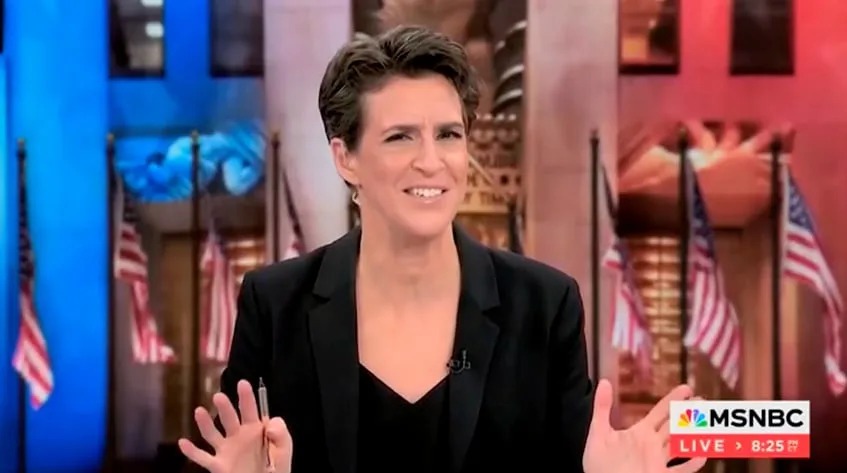
By weaving together polling statistics, local news coverage, and protest footage, Maddow painted a picture of a presidency facing mounting resistance on multiple fronts. Her argument was not that opposition to Trump is new, but that it has reached a level that is now impossible for national media outlets to ignore.
In closing, Maddow left viewers with the impression that Trump’s political problems are largely self-inflicted. The policies he champions, she argued, are widely unpopular, and the consequences are now clearly visible in both approval ratings and public demonstrations. If there is one thing Trump is excelling at right now, Maddow suggested, it is uniting large portions of the country against him.