


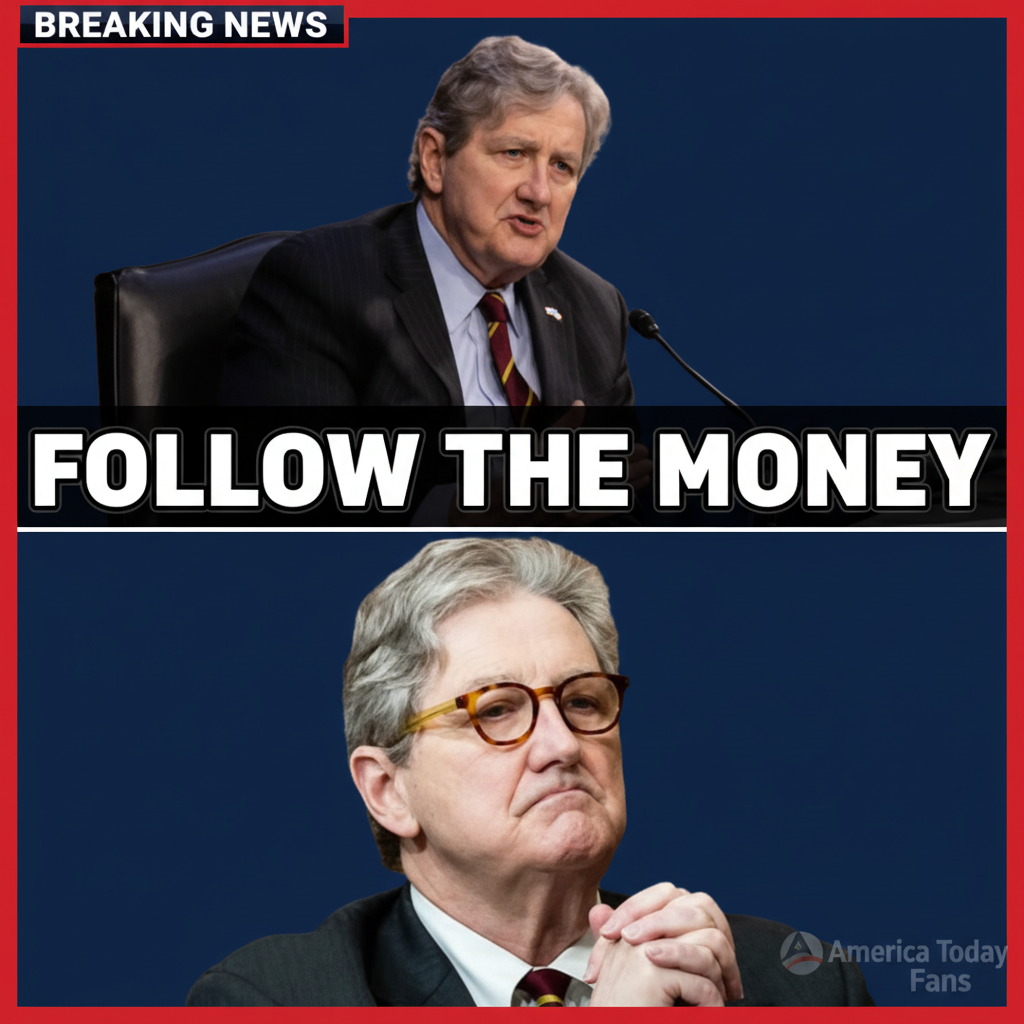
Washington has seen its share of outrage, but this time felt different. When Senator John Kennedy took the floor, there was no slow buildup, no cautious phrasing. He went straight for the jugular. What triggered the eruption was a number so large it stopped people cold: nearly $1 billion in taxpayer money allegedly lost to a massive welfare fraud scheme centered in Minnesota.
Kennedy didn’t frame it as a paperwork mistake or a bureaucratic slip. He called it a full-blown scandal—one of the largest welfare fraud cases in modern U.S. history. And judging by the reaction inside and outside the Capitol, many Americans are starting to agree.
At the heart of the controversy are allegations that funds meant to feed children and support struggling families were siphoned off through fake meal programs and nonprofit organizations that existed mostly on paper. According to investigators, these groups allegedly submitted inflated claims, created fictional food distributions, and used forged documents to unlock millions in federal aid. Over time, those millions reportedly stacked into something far more staggering.
Kennedy’s message was blunt: this was not a clever crime. It was an obvious one.
“How does this happen,” he demanded, “without someone noticing?” His answer was equally sharp. Either government oversight failed catastrophically, or people who were supposed to protect public money chose not to look too closely. In Kennedy’s telling, neither explanation is acceptable.
The Senator’s speech quickly went viral, not because it was polished, but because it sounded raw. He spoke the way frustrated taxpayers talk at kitchen tables—angry, incredulous, and fed up. He described a system that was “played like a cheap fiddle,” while honest families waited for help that never came. Every dollar stolen, he argued, was a dollar taken directly from people who actually needed it.
The Minnesota case has already resulted in multiple indictments, but Kennedy made it clear that prosecutions alone are not enough. He wants to know how such a sprawling operation survived for years without triggering alarms. Where were the audits? Where were the inspectors? And why did it take so long for anyone to connect the dots?
That’s where the story starts to get uncomfortable.
Critics say the scandal exposes deep weaknesses in how federal welfare programs are monitored, especially when money is funneled through layers of nonprofits and state agencies. Supporters of these programs argue that most organizations play by the rules and that one massive fraud shouldn’t be used to undermine aid for the poor. Kennedy pushed back hard on that idea, insisting that protecting the vulnerable requires cracking down on those who exploit the system in their name.
“If you care about the poor,” he said, “you should be furious about this.”
The political fallout is now spreading fast. Lawmakers from both parties are facing pressure to explain how such a large scheme could operate in plain sight. Some are calling for sweeping reforms to oversight rules. Others worry that the scandal will be weaponized to justify cuts to welfare programs nationwide. Kennedy, for his part, seems unfazed by the political risks. He framed the issue as moral, not partisan.
What makes the case especially explosive is timing. With public trust in government already fragile, a billion-dollar fraud tied to programs meant for children hits a nerve. Social media has amplified the anger, with taxpayers demanding names, resignations, and jail time. For many, the question is no longer whether the system is broken—but how deeply.
Minnesota officials have promised cooperation with investigators, and federal agencies say reviews are ongoing. Still, Kennedy warned that Americans shouldn’t settle for quiet reports and closed-door briefings. He wants accountability in the open, where voters can see it.
As the dust settles, one thing is certain: this scandal isn’t going away quietly. The numbers are too big, the allegations too ugly, and the public mood too volatile. John Kennedy may not control what happens next, but his message has already landed—hard.
And now Washington has to answer a question it would rather avoid: If this much money can vanish without notice, what else are we missing?