


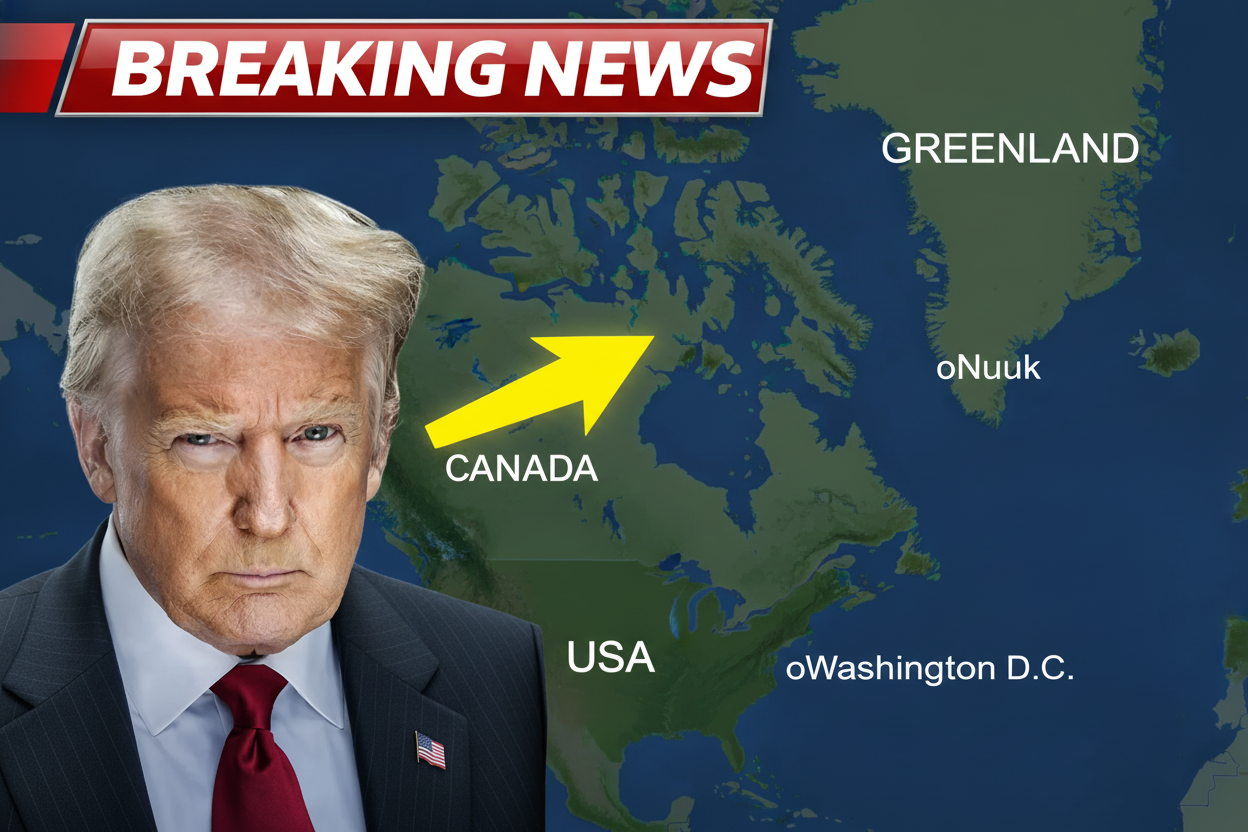
Trump Revives Greenland Ambitions—Denmark Fires Back as Global Tensions Rise
Just when global attention was fixed elsewhere, President Donald Trump has once again turned heads—and raised eyebrows—by reviving a controversial idea many believed had been permanently shelved: the prospect of the United States pursuing Greenland.
The reaction from Copenhagen was immediate and unmistakable.
Denmark’s Prime Minister dismissed the notion outright, calling it “absurd” and issuing a rare public warning to Washington. Greenland, she stressed, is not for sale, not open to negotiation, and certainly not subject to pressure—especially from a fellow NATO ally.
But behind the sharp words lies a deeper unease, one that extends far beyond the Arctic.
A Familiar Idea, A Far More Volatile Moment
Trump’s renewed focus on Greenland comes at a time of heightened international strain. With global tensions already simmering following recent U.S. actions in Venezuela, the reemergence of this idea has landed in a very different geopolitical climate than before.
What once sounded like a provocative but distant proposal now feels, to many diplomats, like a test—of alliances, boundaries, and patience.
“This is not just about territory,” one European analyst noted. “It’s about signaling power at a moment when the world is already on edge.”
Denmark Draws a Red Line
Denmark’s response was unusually direct. In a firm statement, the Prime Minister made it clear that Greenland’s status is not a topic for bargaining, intimidation, or strategic maneuvering.
The message was aimed not just at Washington, but at the international community: Denmark would not tolerate rhetoric that treats sovereign land—or its people—as an asset to be acquired.
Greenland, while geographically vast and strategically important, is home to a population that has increasingly asserted its right to self-determination. Any suggestion that its future could be decided elsewhere has long been a sensitive issue.
Why Greenland Still Matters
So why does Greenland continue to loom so large in Washington’s strategic imagination?
Its location in the Arctic places it at the crossroads of emerging shipping routes, military surveillance corridors, and untapped natural resources. As climate change reshapes the region, interest from global powers has only intensified.
But Denmark’s stance suggests a growing fear that strategic curiosity could slide into something more aggressive—especially when paired with forceful U.S. actions elsewhere on the global stage.
Allies on Edge
Perhaps most striking is the fact that this exchange is unfolding between NATO partners.
At a time when unity is frequently invoked as essential to global stability, public friction between allies sends a troubling signal. Diplomats worry that even rhetorical pressure could weaken trust within the alliance, particularly among smaller nations wary of being overshadowed by more powerful partners.
“The concern isn’t just what’s being said,” one senior European official remarked. “It’s what it implies about how power is being exercised.”
What Comes Next?
For now, there is no indication of formal negotiations or concrete action. But the words have already done their work—reviving old anxieties, exposing new fractures, and reminding the world how quickly geopolitical tensions can resurface.
Denmark has drawn its line. Greenland’s leaders are watching closely. And the rest of the world is left wondering whether this is merely political theater—or the opening move in a much larger contest.
One thing is certain: in an already unstable global moment, even the suggestion of crossing old boundaries can carry consequences far beyond the Arctic ice.