


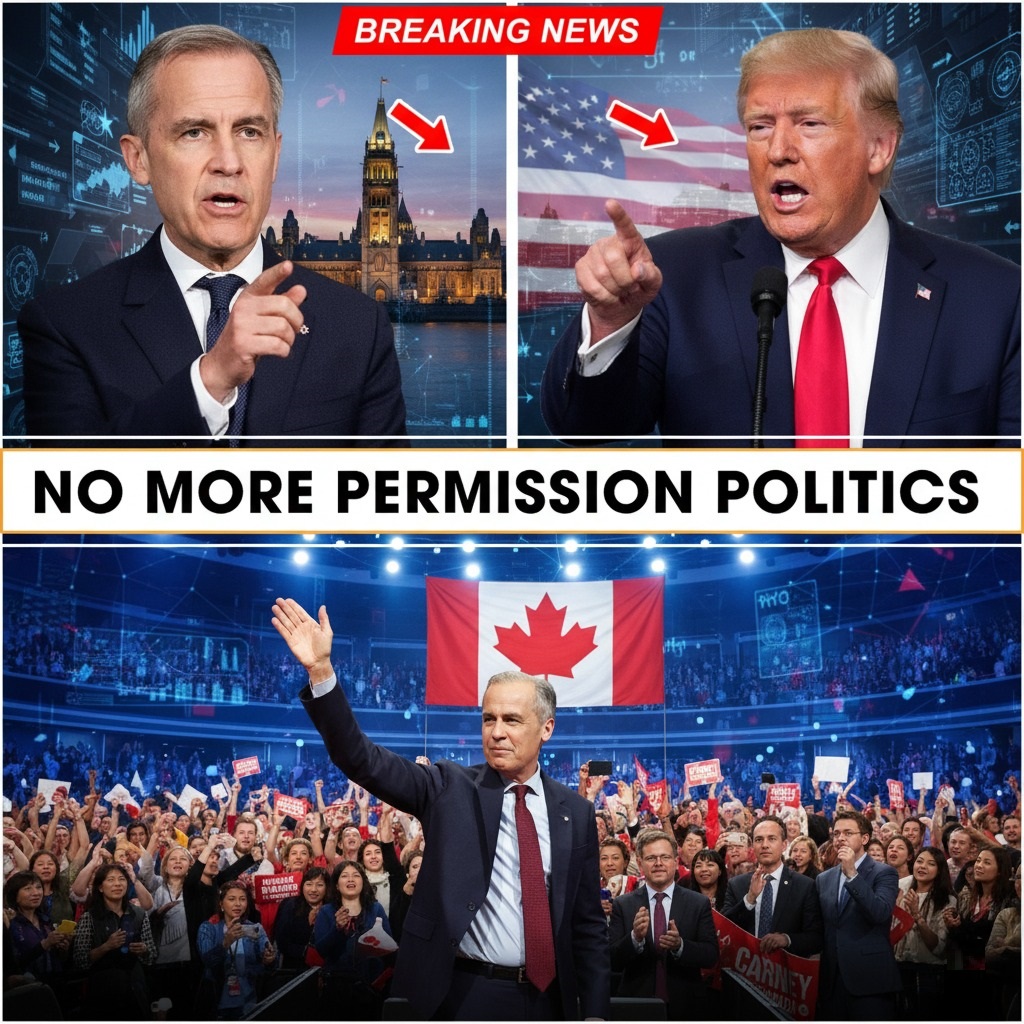
A viral YouTube video is circulating with a bold claim: Canada “did something no country has ever done to Trump.” In the clip’s telling, Prime Minister Mark Carney steps to a podium and effectively declares Canada is done waiting for Washington’s permission—done being yanked around by tariffs, threats, and the chaos-first style that defined recent U.S. trade pressure.
The video’s tone is cinematic, but the underlying theme points to something real and measurable: Canada is pushing a “Buy Canadian” procurement shift and launching new federal housing machinery designed to scale building fast—using public land and public capital—while reducing dependence on U.S.-linked supply chains.
Here’s what’s verifiable behind the spectacle.
First, Canada’s federal government has formally advanced a Buy Canadian Policy framework intended to prioritize domestic suppliers in strategic procurement. The Government of Canada describes it as a move to strengthen Canadian industry and supply chains, building on earlier reciprocal procurement steps taken amid trade tension. That matters because procurement is where power lives: whoever gets the contracts shapes the industrial base, the jobs, and the leverage.
Second, Carney’s government has rolled out a significant housing intervention: a new federal agency called Build Canada Homes, backed by an initial C$13 billion investment, designed to speed up affordable housing delivery and reduce project risk—using public lands and partnering with developers. In the video’s narrative, this becomes more than housing—it becomes a blueprint for “economic sovereignty.” That framing is exaggerated, but the mechanism is real: if you can build more at home, faster, with more domestic content, you reduce vulnerability to external shocks.
And there’s a third track that adds bite to the “Canada is diversifying away from the U.S.” argument: Canada has joined the EU’s SAFE defense fund, becoming the first non-EU country to access it—explicitly positioned as a way to broaden defense industrial options beyond heavy reliance on U.S. suppliers. This is the kind of strategic move that doesn’t need loud speeches to change the chessboard.
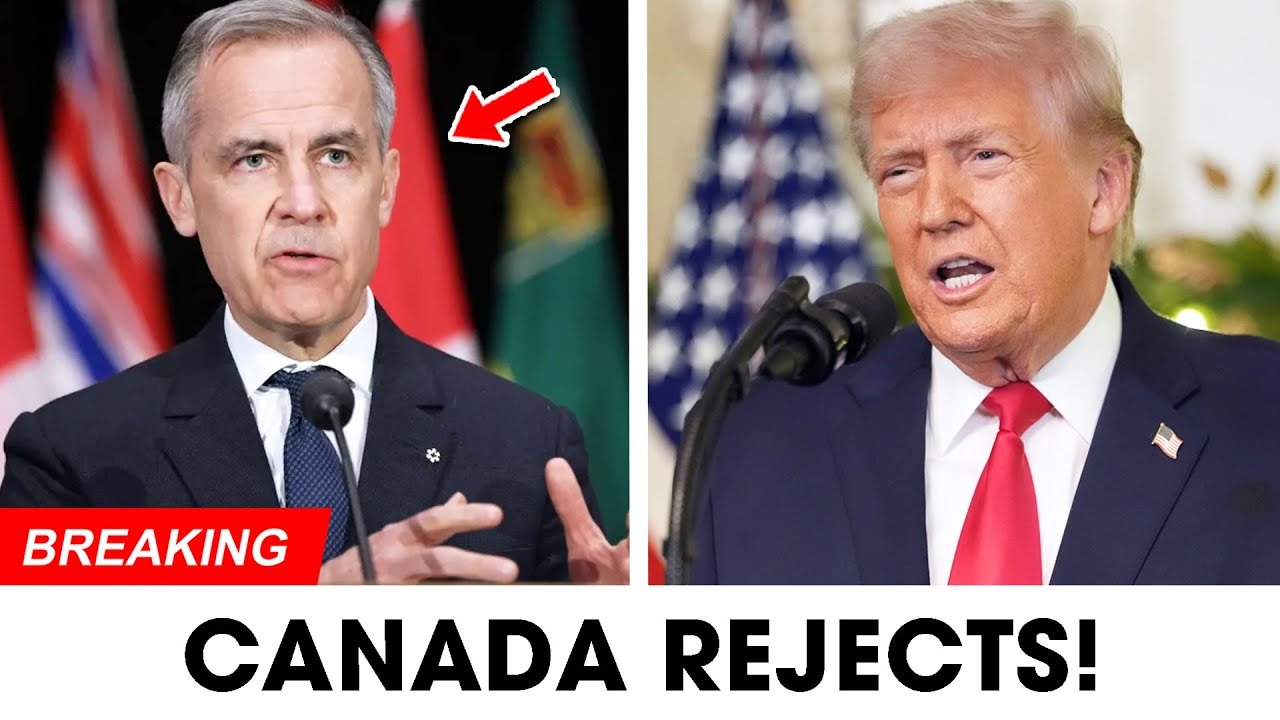
So did Canada do something “no country has ever done”? Not in the literal sense the video suggests. Countries diversify trade, procurement, and defense partnerships all the time. What’s unusual is the timing and packaging: Ottawa is threading together procurement rules, housing industrialization, and defense diversification into a single political message—Canada first capacity, without begging for stability from the Oval Office.
That’s why the Trump angle sticks. If U.S. policy becomes unpredictable—tariffs on/off, trade threats as pressure tactics—then Canada’s most rational response isn’t to “win the argument.” It’s to reduce the surface area where those threats can hurt. A Buy Canadian policy makes tariffs less terrifying when fewer inputs come from the place issuing them. A federal housing builder makes supply and delivery less hostage to market whiplash. And new defense procurement channels shrink dependence where it matters most.
Even the language in the video—“permission,” “leverage,” “ending an era”—tracks with the deeper logic of modern power: the side that needs the other less has the advantage. Carney doesn’t have to out-shout Trump to weaken Trump’s leverage; he just has to build alternatives that make leverage expire.
And that’s the headline beneath the headline: Canada’s move isn’t a mic-drop moment—it’s a structural pivot. If it works, it won’t trend for a day. It will quietly reshape how Canada negotiates for years.
The shift was subtle, but everyone in the room felt it.

Mark Carney wasn’t speaking like a partner anymore.
He was speaking like a country preparing for distance.
Not distance born of anger, but distance built from calculation.
With one blunt message, Canada’s prime minister signaled that Ottawa would no longer structure its economy around Washington’s mood swings, tariff threats, or informal permission slips.
This wasn’t theater.
It was a line being redrawn.
Carney didn’t threaten retaliation.
He didn’t invoke history or loyalty.
He reframed the relationship around one word that landed hard in every capital listening: survival.
Canada, he made clear, is done being structurally vulnerable.
The centerpiece of this shift is a sharp Buy Canadian doctrine, rolled out not as nationalism, but as insulation.
Domestic suppliers are being prioritized across infrastructure, defense-adjacent manufacturing, energy systems, and critical materials.
But this is not just procurement preference.
It’s being welded to a massive national build plan designed to accelerate domestic capacity at speed.
Factories, ports, processing facilities, logistics corridors, and workforce pipelines are all being pulled into a single strategic frame.
The logic is straightforward and unsettling for Washington.
Every time the United States uses pressure, Canada wants that pressure to matter less.
Tariffs only work if your supply chains are exposed.
Political leverage only works if dependence is baked in.

Carney’s bet is that independence doesn’t require confrontation—it requires contracts signed before the confrontation arrives.
That is why the tone changed.
Because this is not framed as a breakup.
It’s framed as risk management.
Canadian officials are careful to stress continuity in alliance language.
NATO commitments remain.
Security cooperation continues.
Diplomatic channels stay open.
But underneath the reassurance is a quiet rewrite of assumptions that governed North American economics for decades.
For years, Canada absorbed volatility from Washington as the cost of proximity.
Trade disputes came and went.
Tariffs were imposed, lifted, reimposed.
Exemptions were granted and revoked with changing administrations.
The message from Ottawa now is simple: that volatility is no longer acceptable input.
Carney’s approach treats U.S. pressure as a constant, not an exception.
And systems built for constants look very different than systems built on trust.
Instead of reacting to threats, Canada is designing around them.
Instead of lobbying after decisions, it is front-loading resilience.
This is why analysts say Washington felt rattled—not because Canada threatened to walk away, but because it signaled it could.
The difference is everything.
When an ally complains, it seeks reassurance.
When an ally prepares alternatives, it seeks options.
And options change power dynamics without a single word being raised.
The Buy Canadian push is already reshaping conversations inside boardrooms.
U.S. firms accustomed to preferential access are suddenly being asked uncomfortable questions about localization, control, and political exposure.
Canadian suppliers once considered secondary are being pulled into long-term planning.
And global partners outside North America are being quietly looped in as redundancy layers.
None of this happens overnight.
That’s the point.
Carney is playing a long game where leverage accumulates gradually, invisibly, until it’s no longer contestable.
If the strategy works, the next trade dispute won’t dominate headlines.
Because the impact will already be muted.
If the next tariff threat comes, it will hit fewer pressure points.
If the next political standoff erupts, Canada’s exposure will be narrower.
And when negotiations resume, the balance at the table will feel different.
This is what unsettles Washington.
Not defiance, but design.
Not anger, but architecture.
Carney isn’t betting against the United States.
He’s betting against unpredictability.
And in doing so, he’s redefining what partnership looks like in an era where alliances can no longer rely on goodwill alone.
The real confrontation, if it comes, won’t be fought with speeches.
It won’t be fought with press conferences or summits.
It will be fought with supply chains already shifted, factories already built, and contracts already signed.
By the time anyone notices, the leverage will be gone.
And that is exactly the point.