


Rep. Jasmine Crockett, the outspoken Democrat from Texas, sparked intense backlash this week after making controversial remarks comparing former President Donald Trump to Venezuelan strongman Nicolás Maduro.
Crockett made the comments during a high-profile appearance on the ABC talk show The View, where she weighed in on the U.S. military operation that captured Maduro and his wife in Venezuela.
The U.S. operation, known as Operation Absolute Resolve, resulted in Maduro’s capture in Caracas and his subsequent transfer to New York, where he faces federal charges including narco-terrorism conspiracy and weapons charge.
During the televised segment, Crockett drew a contentious parallel between Trump and Maduro, arguing that both leaders share attitudes that undermine democratic norms and free elections.
“As we sit here on January 6, I do want to be clear — somebody else was trying to be a Maduro of the United States,” Crockett said. “The difference is Maduro was successful.
Her remarks referenced Trump’s refusal to accept the results of the 2020 election and his supporters’ assault on the U.S. Capitol on January 6, 2021, which Crockett and others view as an attack on democratic institutions.
Crockett also connected Trump’s actions to redistricting battles in Texas and other states, accusing him of not believing in “free and fair elections,” which further fueled the controversy.
Her comments immediately caught the attention of both critics and supporters on social media and cable news, with Republican commentators condemning her comparison as extreme and unfair.
A spokesperson for the White House dismissed Crockett’s comments as out of touch, with one official calling her remarks “a braindead take” that did not merit serious response.
Republicans rallied behind Trump’s handling of the Venezuela operation, highlighting what they described as a decisive action taken to remove a long-time authoritarian ruler and disrupt narco-terrorism networks.
Senate Republicans and conservative commentators framed the raid as a success for U.S. foreign policy, underscoring bipartisan support for removing Maduro from power.
However, many Democrats, including Crockett, sharply criticized the legality and messaging of the Maduro operation, arguing that the Trump administration failed to secure congressional approval.
Crockett asserted the military action lacked constitutionally required backing from Congress, raising alarm about executive overreach in foreign affairs.
She questioned whether the operation’s true purpose was to serve the Venezuelan people, suggesting instead that political and energy interests were driving the mission’s timing and execution.
“Everything the Trump administration does is illegal,” Crockett said during the discussion. “This ain’t about Venezuelans.”
The remarks came as global reactions to the Maduro capture were mixed, with some nations and international bodies criticizing the operation as a violation of sovereignty and international law.
The capture of Maduro also resulted in significant casualties, including Venezuelan security personnel and Cuban nationals, further complicating international responses to the raid.
Critics in the U.S. Congress have called for a war powers resolution to clarify the legal basis for such actions, intensifying scrutiny of executive authority.
Meanwhile, the Trump administration and Republican allies emphasize that the raid was narrowly tailored, a precise operation that did not constitute a full-scale invasion requiring legislative approval.
Secretary of State Marco Rubio, speaking on national television, noted such actions did not require congressional authorization and defended the administration’s interpretation of executive war powers.
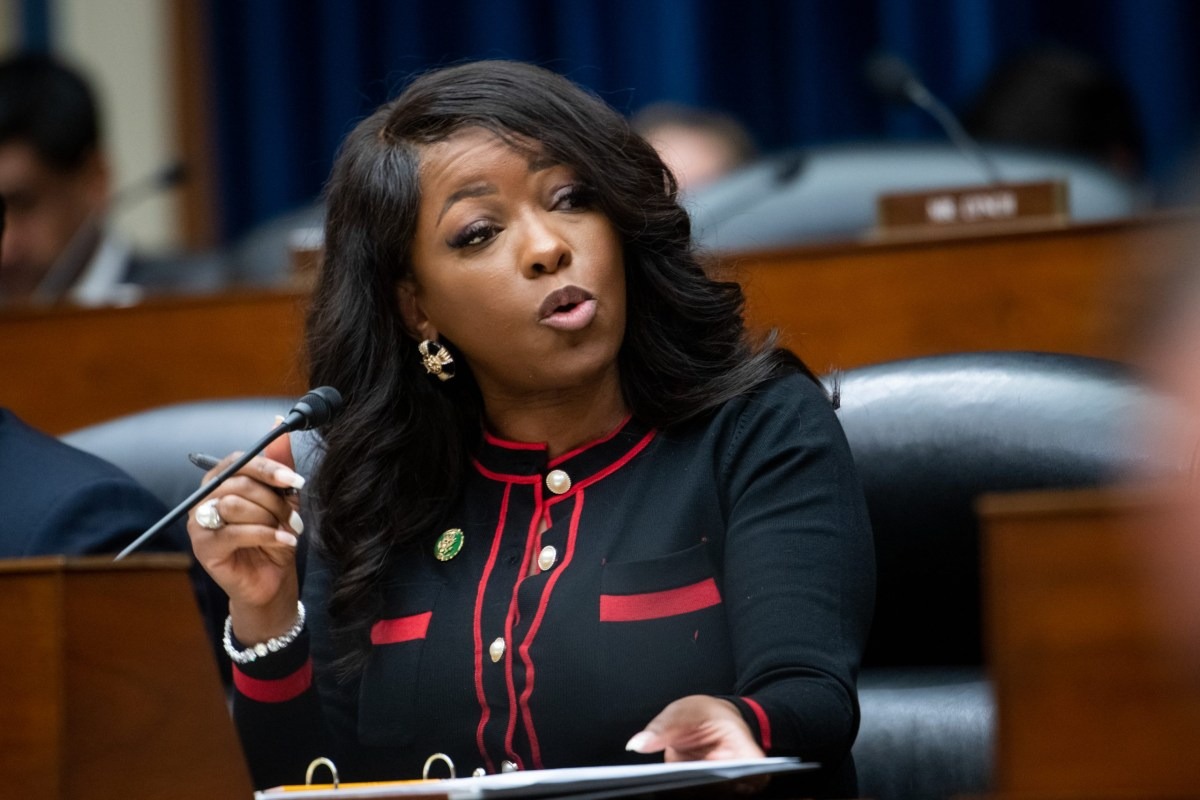
Backlash against Crockett’s comparison was swift among conservative media, some labeling her comments “hyperbolic” and pointing to Maduro’s entrenched authoritarian rule as a false equivalence.
Supporters of Crockett, including progressive advocacy groups, defended her stance, praising her willingness to challenge what they view as aggressive, unchecked presidential power.
They argue her remarks reflect broader concerns about democratic erosion, particularly in light of contested elections and political polarization within the United States.
The episode underscores deep partisan divides over how to interpret U.S. actions abroad and the role of presidential authority, especially in military and foreign policy matters.
Crockett, a former civil rights attorney, has also used the platform to promote her 2026 Senate campaign in Texas, emphasizing civil liberties and constitutional governance.
Her Senate bid, while ambitious in a traditionally Republican state, has drawn national attention as emblematic of rising progressive voices challenging conservative dominance.
Analysts note that Crockett’s comments may energize her Democratic base while triggering intensified scrutiny from political opponents determined to depict her as radical.
The clash over her remarks also highlights ongoing debates about the legacy of Trump’s presidency and its influence on U.S. institutions and global leadership.
The controversy shows how a single television appearance can quickly escalate into a broader political fight, shaping narratives on governance, democracy, and international intervention.
As the national debate continues, both sides are preparing for further clashes over Trump’s policies and the appropriate limits of executive power.
Whether Crockett’s remarks will have lasting political consequences remains uncertain, but they have already sparked widespread discussion across the country.
The episode will likely be remembered as another flashpoint in the ongoing culture war over governance, power, and the meaning of democracy in America’s post-Trump era.