



Trump Faces Republican Revolt as Focus on Venezuela Collides With Domestic Discontent
Washington — As President Donald Trump continues to dominate headlines with sweeping claims about U.S. control over Venezuela and aggressive rhetoric about expanding American influence abroad, a quieter but increasingly consequential revolt is unfolding inside his own party.
According to multiple Republican lawmakers and aides familiar with internal discussions, GOP senators and House members have spent the past several days inundating the White House — and particularly Chief of Staff Susie Wiles — with urgent calls demanding a shift in focus. Their message has been blunt: stop talking about Venezuela and start governing America.
The backlash follows Trump’s Saturday declaration that the United States would “run Venezuela,” remarks that were met with disbelief not only from foreign governments but from Republicans already bracing for the 2026 midterm elections. Several lawmakers privately described the comments as “political poison” in an election year defined by economic anxiety, rising living costs, and voter exhaustion with perpetual crisis politics.
Polling appears to support their concern. Surveys from YouGov and other major polling firms show that large majorities of Americans — often ranging between 60% and 80%, depending on question framing — oppose any U.S. effort to govern or militarily control Venezuela. When asked whether Washington should prioritize Venezuela over domestic issues, support collapses to single digits, hovering near 7%.
“That 7% might be the president and his cabinet,” one Republican strategist said privately, “but it’s not the electorate.”
A Party on Edge
The internal frustration has been building for months, but Trump’s renewed fixation on foreign dominance has intensified it. In recent weeks, he has floated or repeated claims about U.S. authority over Venezuela, mused publicly about Greenland, and warned that Colombia, Cuba, and Mexico could be “next” in America’s hemispheric ambitions.
Republicans on Capitol Hill say such rhetoric is triggering severe backlash in swing districts and suburban areas that once formed the backbone of Trump’s electoral coalition. Several lawmakers said constituents are asking why the administration is talking about renaming cultural institutions, staging grandiose retreats, and pursuing geopolitical theatrics while grocery prices, rent, and health care costs remain stubbornly high.

A Reuters report this weekend described top White House aides as openly frustrated that Trump and senior officials continue to emphasize foreign takeovers rather than affordability. The same report noted that during multiple economic-focused meetings since November, Trump frequently pivots to personal grievances, election conspiracies, or exaggerated claims about economic success — leaving staff scrambling to refocus discussions.
Privately, Republican leaders have questioned why the president appears disengaged from kitchen-table priorities at precisely the moment voters are demanding tangible relief.
The Kennedy Center Episode
One episode frequently cited by critics inside the GOP was Trump’s recent speech at the Kennedy Center — which he controversially rebranded with his name. According to attendees, the 84-minute address wandered through cultural grievances, perceived slights, and ideological battles, with minimal attention paid to inflation, wages, or housing.
Several Republicans reportedly referred to the event as emblematic of a broader problem: a presidency driven more by spectacle and grievance than governance.
“The MAGA coalition is fraying,” one senior Republican aide said. “People didn’t sign up for endless chaos. They signed up for results.”
A Stark Contrast in New York
That sense of frustration stands in sharp contrast to developments unfolding in New York, where Democratic governance has taken a markedly different tone.
Earlier this week, New York City Mayor Zohran Mamdani and Governor Kathy Hochul announced a $1.2 billion state commitment aimed at moving the city significantly closer to universal child care. The plan expands child care access for three-year-olds citywide and begins coverage for two-year-olds — a major step in addressing one of the city’s most acute cost-of-living pressures.
The announcement came just eight days into Mamdani’s administration, surprising critics who had dismissed universal child care as an unrealistic campaign promise. Child care in New York City averages between $22,000 and $25,000 per year per child, a cost that rivals — and often exceeds — tuition at public colleges.
In joint remarks and social media posts, Hochul declared that “universal child care is coming to New York,” signaling a rare moment of alignment between a center-left governor and a mayor widely described as a democratic socialist.
Political analysts note that the partnership challenges conventional narratives about ideological division on the left. Instead, it underscores a growing emphasis on material outcomes rather than partisan labels.
“Voters don’t ask how you describe your politics,” Mamdani said in a recent interview. “They ask whether your politics includes them.”
Lessons for 2026
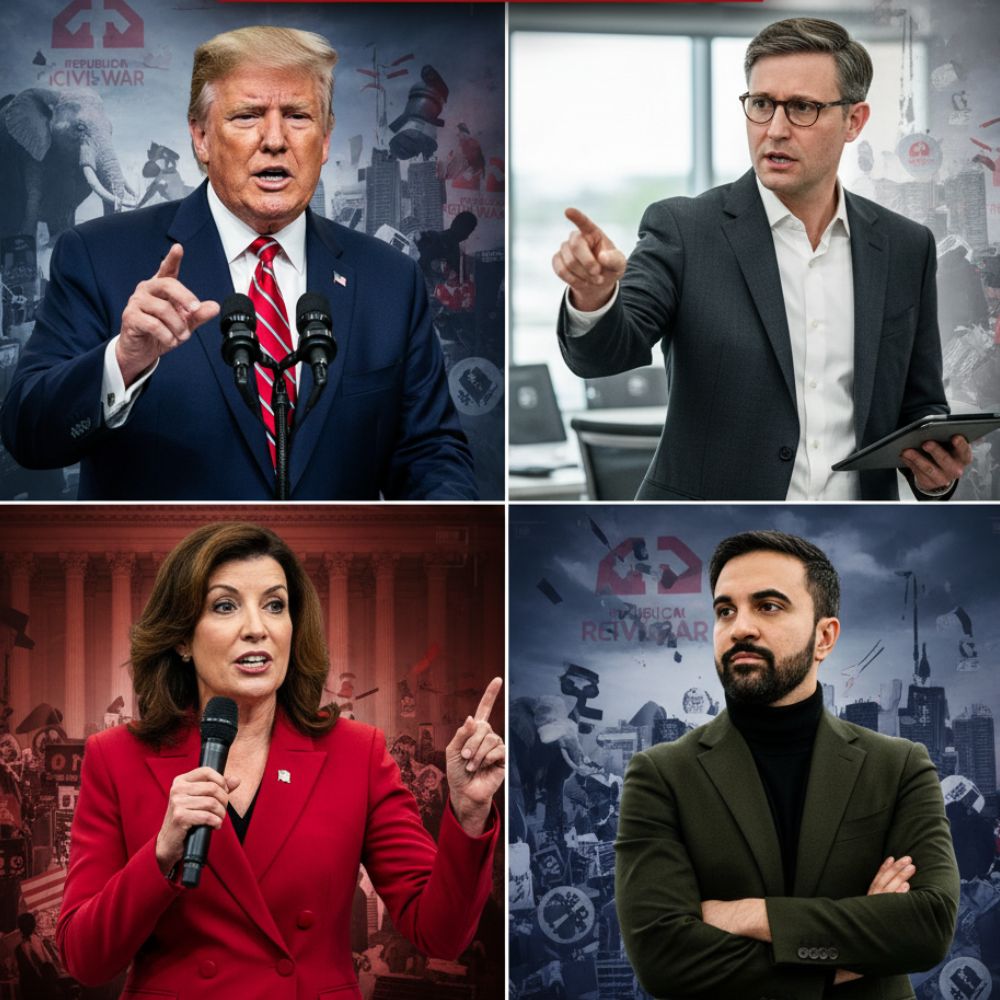
The juxtaposition has not gone unnoticed in Washington. White House officials reportedly fear that Democratic-led states delivering visible economic relief could sharpen voter dissatisfaction with federal leadership heading into the midterms.
Trump himself acknowledged the tension during a recent press appearance, taking a swipe at Mamdani after the mayor criticized the administration’s Venezuela rhetoric. “He hit me on the attack on Venezuela,” Trump said, suggesting surprise that criticism came so quickly.
But political observers argue that the exchange highlights a deeper vulnerability. While Trump continues to frame politics as a contest of personalities and dominance, many voters appear increasingly focused on whether government improves their daily lives.
Democrats watching the New York example see a broader lesson: bold policy promises paired with rapid execution can restore faith in governance. Mamdani’s early actions have fueled arguments within the party that delivering concrete benefits — rather than endlessly debating messaging — is key to rebuilding trust among working-class voters.
A Growing Disconnect
For many Americans, the question is becoming increasingly simple: What is the government doing for us?
As Trump touts foreign dominance and confrontational power abroad, critics say the administration risks appearing detached from domestic realities. Housing affordability, child care, health care, and wages dominate voter concerns — issues that rarely surface in Trump’s extended monologues.
Whether Republican pressure will succeed in refocusing the White House remains uncertain. Trump has long resisted internal constraints, and aides acknowledge that his instincts remain oriented toward spectacle and conflict.
But with 2026 approaching and polling trends hardening, the political costs of ignoring voter priorities are becoming harder to dismiss.
In an era marked by cynicism and fatigue, the contrast between federal theatrics and local delivery may prove decisive — not just for one party, but for public confidence in democracy itself.