


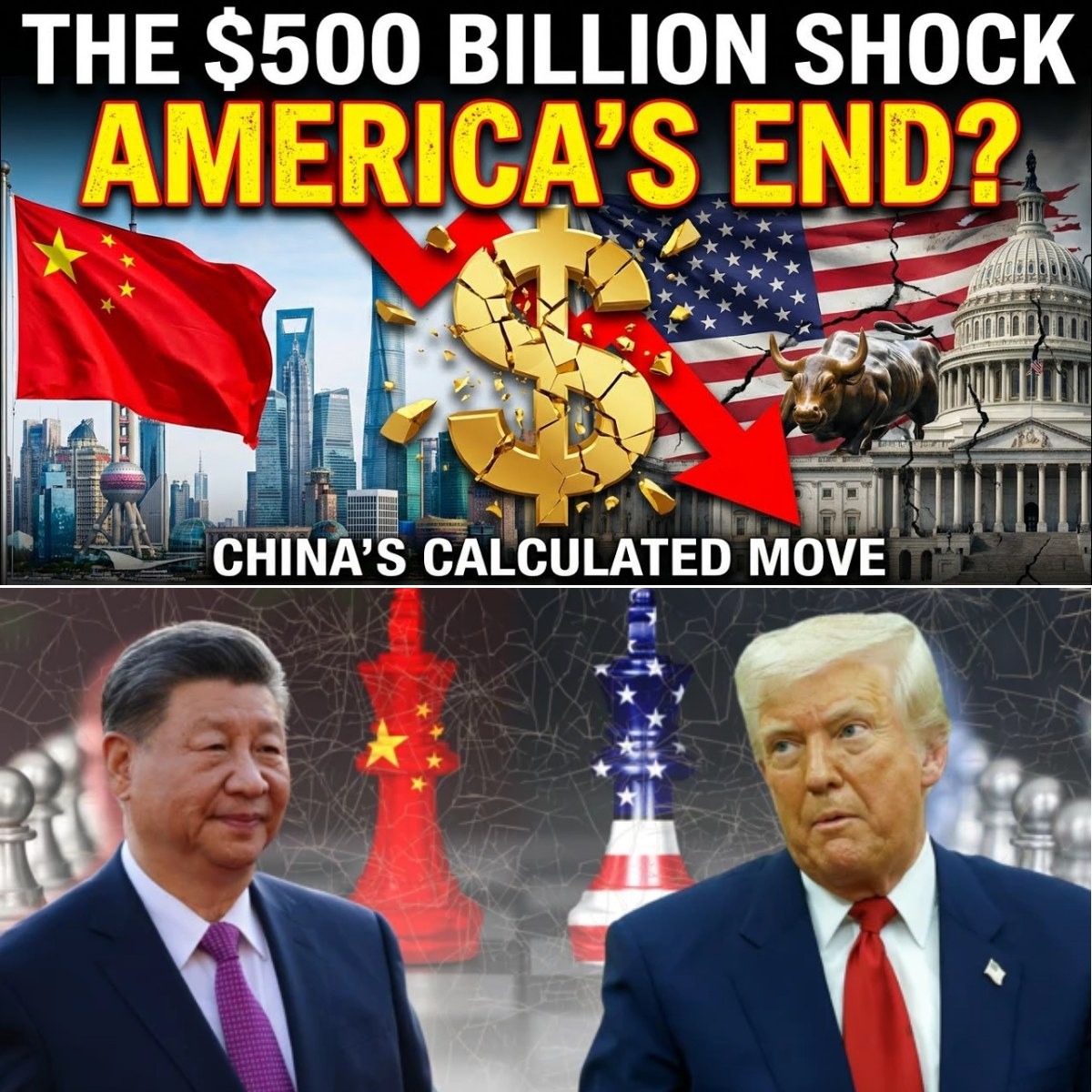
As China Scales Back U.S. Treasury Holdings, the Global Financial Order Shifts
The world’s largest economies have spent the past half-century building a financial order centered on one pillar: the U.S. dollar. For decades, that structure rested on a simple premise: the United States could borrow in its own currency indefinitely because the rest of the world needed those dollars to trade, to invest and to manage foreign exchange reserves.
That assumption is still true — but it is now under strain.
In the years since the global financial crisis, and especially over the past decade, China has steadily reduced its holdings of U.S. Treasury securities, the principal form in which the United States finances its large and growing budget deficits. Once the largest foreign holder of this debt, Beijing has cut its holdings from a peak of roughly $1.3 trillion in 2013 to around $689 billion as of late 2025 — the lowest level in nearly two decades. (IDN Financials)
That reduction has not been sudden or chaotic but measured and persistent. Yet taken together with broader shifts in how countries choose to hold foreign exchange reserves, it underscores a deeper transformation of the global financial system — one that could have lasting implications for the United States, China and the world.
From Creditor to Strategic Rebalancing
Foreign ownership of U.S. Treasury securities has long been a cornerstone of American fiscal policy. When the United States runs perennial budget deficits, it issues Treasury bonds and notes. Foreign central banks and sovereign investors traditionally buy those securities because they are liquid, safe and denominated in the world’s primary reserve currency.
For much of the 2000s and 2010s, China was the largest or second-largest foreign holder, alongside Japan. That reflected China’s large trade surpluses and its policy of accumulating foreign exchange reserves to stabilize the renminbi and hedge against financial turmoil. But official Treasury data and reporting show that China’s holdings have steadily declined over more than a decade. (IDN Financials)
This decline has several drivers:
Reserve diversification: Chinese policymakers have gradually shifted part of their $3.3 trillion foreign exchange reserve portfolio into other assets, including euro-denominated instruments and gold. Gold holdings alone have climbed to record levels, valued in the hundreds of billions of dollars — an allocation that can’t be frozen or controlled by foreign powers. (Investing.com)
Geopolitical considerations: Beijing’s financial strategists are acutely aware of how financial sanctions were used against Russia after its invasion of Ukraine in 2022 — including the freezing of roughly $300 billion in Russian reserves held abroad. (Carnegie) While China has not publicly tied its strategy to these events in that language, observers say the episode likely influenced China’s calculus about holding U.S. dollar assets deeply exposed to U.S. jurisdiction.
Market and economic considerations: Frequent Fed interest rate shifts, currency fluctuations and expectations about U.S. economic growth all influence reserve allocation decisions. Chinese officials have sometimes pointed to market considerations, such as yield movements and currency risk, as reasons for changes in U.S. Treasury holdings. (China Daily)
Critically, these shifts have not yet upended the global bond market. China’s reduction in Treasury holdings has been gradual, and other holders — including Japan, the United Kingdom and private international investors — have absorbed much of the supply. (IDN Financials)
The Dollar Still Dominates — But Not Uncontested
Despite talk of “de-dollarization,” both official and private data confirm that the U.S. dollar remains by far the dominant global currency. The Federal Reserve’s own review this year reiterated that the dollar’s role is supported by the unmatched liquidity and depth of U.S. financial markets, its legal infrastructure, and the openness of the U.S. economy. (Ngân Hàng Dự Trữ Liên Bang)
But what has changed is relative strength.
The dollar’s share of allocated global foreign exchange reserves has steadily declined over the past two decades, from well above 70% in the early 2000s to roughly 58% in recent quarters, the lowest since the early 1990s. (WebProNews) Other currencies — particularly the euro — have modestly increased their share, and China has actively sought to internationalize the renminbi through swap lines, currency clearing centers and bilateral arrangements. (Investing.com)
No currency currently rivals the dollar’s scale: it still accounts for a commanding share of global foreign exchange transactions and official reserves, and for most governments and corporations around the world there are no ready alternatives for liquidity or crisis-era safety. (Goldman Sachs Asset Management)
Yet the trend is unmistakable: after decades of near-absolute dominance, the dollar now shares space in a more diversified global currency landscape.
Why This Matters for the U.S. Economy
The decline in China’s Treasury holdings — and the broader diversification of dollar reserves — has several important implications for the U.S. economy and policy:
Interest rates and borrowing costs: If traditional foreign buyers purchase fewer long-dated Treasuries over time, the U.S. government may need to offer higher yields to attract buyers. That can push up borrowing costs across the economy, affecting everything from mortgage rates to corporate financing.
Federal Reserve policy: With less foreign demand for government debt, the Federal Reserve may be drawn into greater involvement in government bond markets (a process known as debt monetization) to stabilize yields. Large-scale purchases of Treasuries by the Fed were a defining feature of post-pandemic monetary policy and contributed to debates over inflation. (Ark Invest)
Dollar strength and imports: The dollar’s global status has helped keep U.S. interest rates relatively low and kept inflation in check by anchoring expectations. A gradual weakening of that status could make imported goods more expensive and import-related sectors of the economy more volatile.
At the same time, economists caution against overstating the immediate risk. The U.S. Treasury debt market remains the deepest and most liquid in the world, and its safety is a key reason investors — public and private — continue to hold it. The United States also runs a flexible monetary system capable of adjusting to shifts in foreign demand. (Ngân Hàng Dự Trữ Liên Bang)
A Multipolar Financial World
Beyond China’s actions, many central banks are recalibrating how they allocate reserves. Gold purchases by central banks reached multi-decade highs, demonstrating a desire for assets that cannot be frozen or controlled through geopolitical leverage. (EBC Financial Group)
Groups such as the BRICS nations — Brazil, Russia, India, China and South Africa — are discussing alternative settlement mechanisms and shared financial infrastructure, although no unified currency has emerged that could seriously challenge the dollar in the near term. (Investing News Network (INN))
The result is not an abrupt collapse of the dollar’s role but a slow evolution toward multipolarity in global finance: a system where multiple currencies and payment networks coexist, each with strategic and regional importance.
What Comes Next?
Analysts stress three points.
First, China’s reduced Treasury holdings reflect a deliberate, long-term reserve strategy rather than a dramatic repudiation of U.S. debt. The scale — nearly half a trillion dollars less than a decade ago — is significant in historical context but still far from a financial shock to global markets. (IDN Financials)
Second, the dollar’s preeminence is resilient, rooted in market liquidity, institutional credibility and network effects that are hard to replicate quickly. (Goldman Sachs Asset Management)
Third, structural change in global finance is a marathon, not a sprint. The trend toward diversification and multipolarity is real, but a world in which another single currency supplants the dollar appears distant.
For now, the dollar remains the anchor of the global financial system — even as its dominance is quietly being recalibrated.