


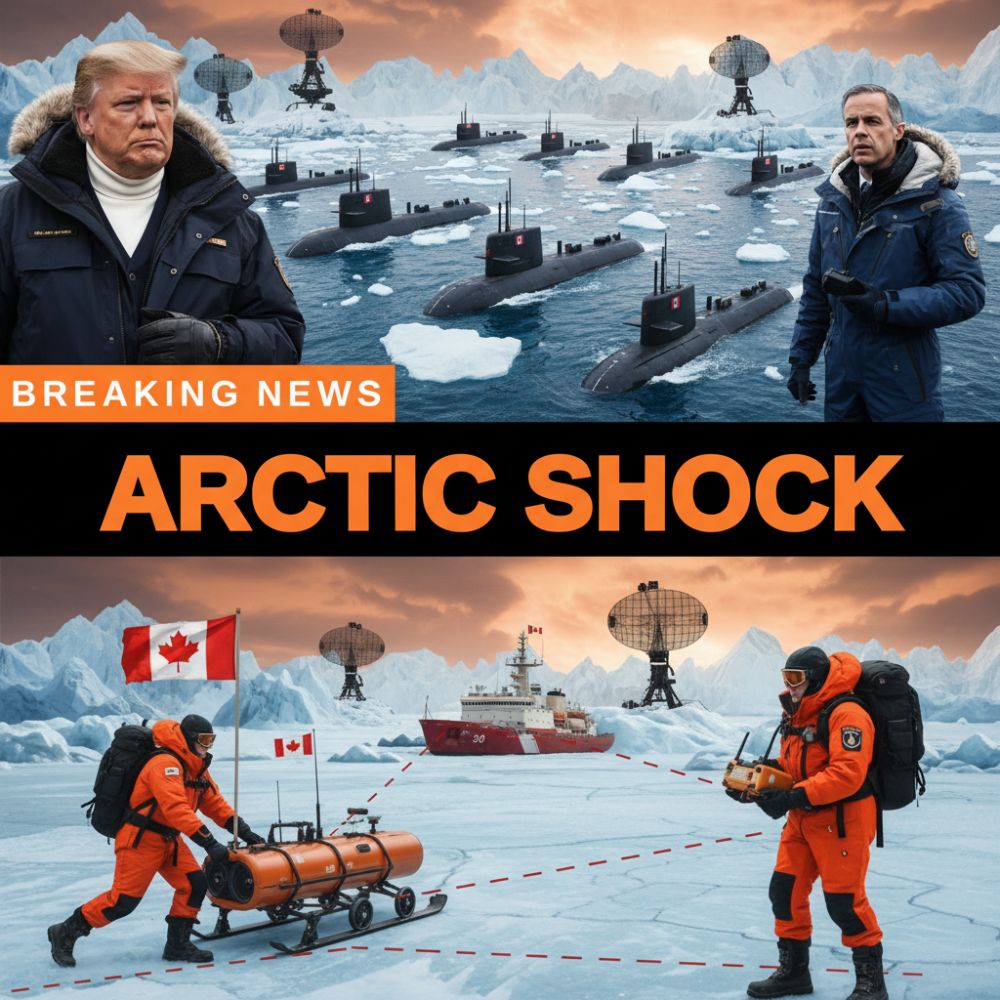
OTTAWA—In a sweeping strategic pivot driven by escalating geopolitical tensions, Canada has launched a historic defense expansion in the Arctic, a move experts say is fundamentally reshaping North American security dynamics and reasserting Canadian sovereignty in the face of explicit U.S. pressures.
The centerpiece of the buildup, approved by Prime Minister Mark Carney’s government, is the planned procurement of up to 12 advanced conventionally powered submarines, capable of operating for weeks beneath the Arctic ice. Valued between 20 and 60 billion Canadian dollars, it would be the largest single defense procurement in the nation’s history. Concurrently, Canada is fast-tracking a new, independently operated over-the-horizon radar network, licensed from Australia and set for initial construction next year, designed to detect airborne threats at ranges up to 3,000 kilometers.
Analysts note the timing is no accident. It follows the release of a U.S. national security strategy document in late 2025 under former President Donald Trump that explicitly called for establishing American dominance in the Western Hemisphere, terminated a long-standing diplomatic agreement on Arctic passage, and asserted unilateral access to the strategically vital Northwest Passage as a national security imperative.
“The intended effect was intimidation, to force Canada to accept American primacy in the Arctic,” said Dr. Alistair Sinclair, a senior fellow at the Ottawa-based Centre for Strategic Studies. “The actual effect has been the opposite: a rapid acceleration of independent Canadian capability. When sovereignty is threatened so overtly, the political calculus changes overnight.”
The submarine program, with two finalists—Germany’s ThyssenKrupp Marine Systems and South Korea’s Hanwha Ocean—specifically demands vessels with a 3,500-nautical-mile deployment range, 21-day covert patrol endurance, and under-ice operability. The first boat could be delivered by 2032, with the full fleet envisioned by the early 2040s.
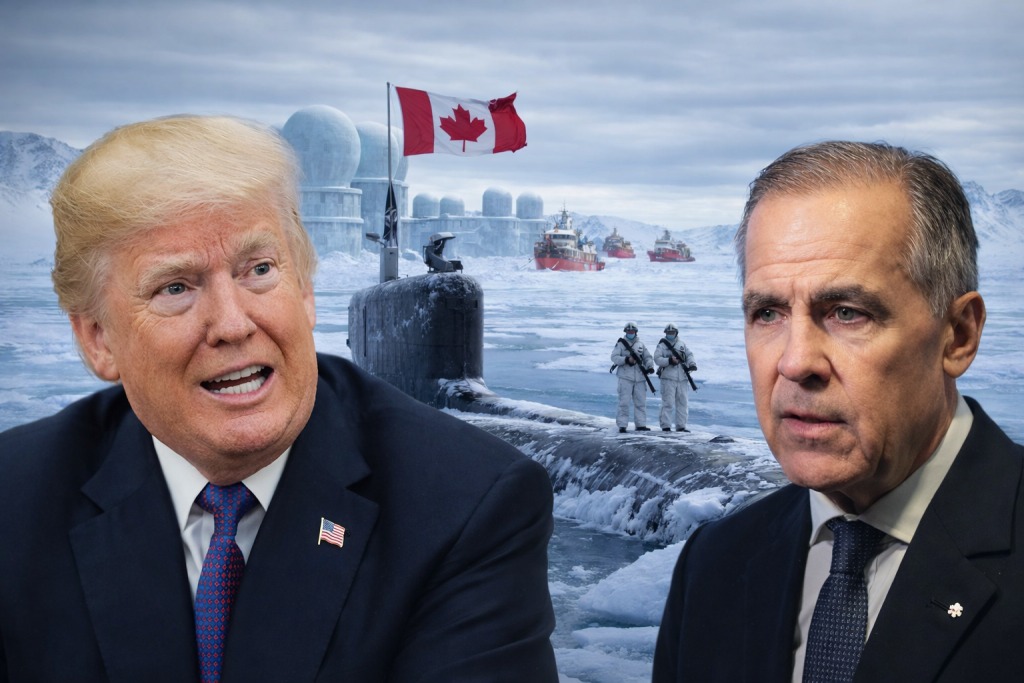
Perhaps more strategically significant than the hardware itself is the deliberate design for independence. Both the submarine and radar programs are being developed without reliance on American technology, logistics, or operational command. The radar system, adapted from Australia’s proven Jindalee network, will be built on Canadian soil, operated by Canadian personnel, and controlled by Canadian command.
“This creates a new form of strategic autonomy,” explained Lieutenant-General (Ret.) Simone Levesque, former commander of Canadian Joint Operations Command. “Once this infrastructure is cemented—the radar sites, the submarine fleet, the supporting ports and communications networks—it establishes a permanent, sovereign capability for half a century or more. Future governments inherit it. It becomes a non-negotiable fact.”
The political landscape within Canada has shifted markedly. Historically contentious multi-billion-dollar defense outlays now face little domestic opposition. Polls indicate overwhelming public support for asserting Arctic sovereignty, with a significant portion of Canadians even backing sanctions against the U.S. or military support for Greenland in response to potential American annexation rhetoric.
“Trump’s rhetoric united Canadians across the political spectrum,” said political analyst Michael Tan. “Prairie premiers who typically oppose federal spending are supportive. Ontario manufacturers see economic opportunity. Quebec recognizes the strategic necessity. The threat eliminated the traditional roadblocks.”
The Canadian strategy also signals a broader shift in alliance dynamics. By partnering with middle-power allies like Australia for radar technology and Germany or South Korea for submarines, Canada is demonstrating a path to building sovereign defense capabilities outside traditional U.S.-led frameworks.
“This is a template other nations are watching closely,” said Dr. Elise Park of the Institute for International Security. “It’s not about hostility toward the United States, but about reducing vulnerable dependency. When pressure is applied, the response is to build alternatives that restore bargaining power and control.”
The pace of the planned rollout is aggressive by military procurement standards, underscoring Ottawa’s perceived urgency. Radar construction is set to begin in the harsh Arctic winter of 2026, with initial operational capability targeted for 2029. Submarine delivery timelines are compressed, driven by the dire state of Canada’s current, aging Victoria-class fleet.
If executed, the plan would transform Canada’s Arctic posture. By the 2030s, its radar network could provide a sovereign picture of all northern approaches. By the 2040s, a full submarine fleet would enable persistent, covert patrols under the ice.
“The ultimate irony,” Dr. Sinclair concluded, “is that an American push for dominance has catalyzed the very independence it sought to prevent. Canada is not seeking military parity, but the autonomous capacity to monitor and defend its territory. In doing so, it is locking in a level of strategic self-reliance that will define the Arctic—and the transatlantic relationship—for generations to come.”