


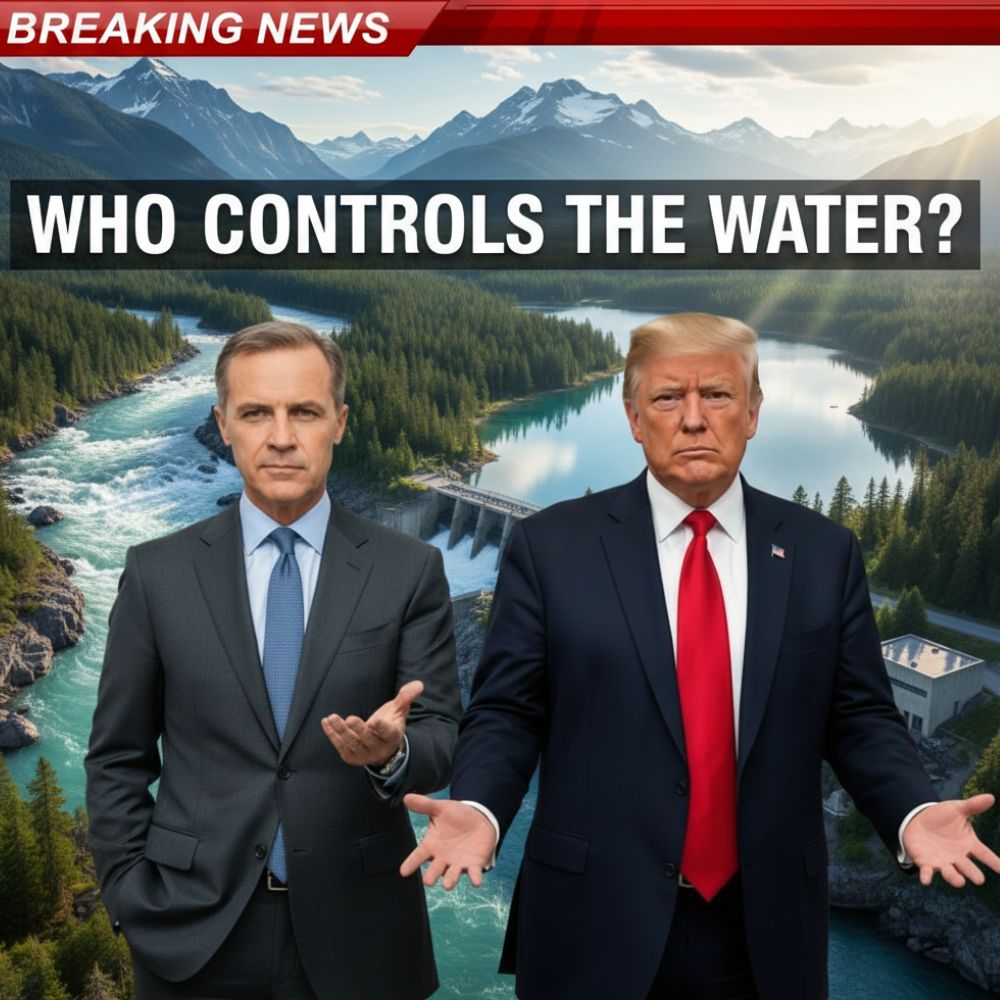
Trump’s Freeze on Water Talks With Canada Raises New Questions About Power, Scarcity, and Strategy
When Donald Trump ordered a suspension of bilateral water discussions with Canada this week, the announcement landed quietly. There was no prime-time address, no dramatic press conference, no explicit threat. Instead, the White House described the move as a “pause” — a procedural reset amid broader trade and security disputes.
But in Ottawa, and among water-policy experts across North America, the reaction was anything but casual. The decision has triggered urgent internal reviews inside the Canadian government and renewed concern that freshwater — long treated as a shared, technical issue — is being pulled into the realm of hard geopolitics.
Water, analysts warn, is no longer a neutral resource. In an era of accelerating climate stress, it is increasingly a strategic asset.
What Was Frozen — and Why It Matters
The talks in question were part of ongoing, low-visibility coordination mechanisms that manage shared waterways between the United States and Canada. These include data sharing, infrastructure planning, and long-term risk assessments related to rivers, aquifers, and especially the Great Lakes, which together hold roughly 20 percent of the world’s surface fresh water and supply drinking water to more than 40 million people on both sides of the border.
For decades, such discussions have been insulated from political swings. They are rooted in the International Joint Commission (IJC), established under the Boundary Waters Treaty of 1909, which commits both countries to manage shared waters cooperatively and prevent one side from unilaterally harming the other.
That institutional continuity is precisely why Trump’s move is unsettling.
“This isn’t about a single meeting being postponed,” said one former Canadian water negotiator, speaking on background. “It’s about breaking the norm that water sits above politics.”
A Strategic Shift, Not a Technical One
Officially, U.S. officials have offered little detail beyond citing “broader bilateral tensions.” Privately, however, American and Canadian sources say the pause reflects a wider reassessment inside the Trump administration of how shared resources fit into its leverage-first worldview.
Trump has already weaponized trade, tariffs, and regulatory approvals in negotiations with allies. Water, once excluded from such calculations, is now drawing attention as scarcity intensifies in the American West and Southwest.
The contrast is stark. While Canada is one of the most water-rich countries on Earth, the United States is facing historic stress in major basins like the Colorado River, which supplies water to more than 40 million Americans and is now governed by emergency rationing agreements.
Against that backdrop, shared northern water systems increasingly appear — in Washington’s strategic thinking — not just as environmental concerns, but as long-term security assets.
Climate Pressure Changes the Equation
For most of the 20th century, water governance between the U.S. and Canada was defined by abundance. The Great Lakes refilled themselves. Snowpack was predictable. Infrastructure planning assumed stability.
That era is over.
Climate models show rising evaporation, altered precipitation patterns, and increased competition among agriculture, industry, and urban centers. While the Great Lakes remain comparatively resilient, policymakers are acutely aware that today’s abundance can become tomorrow’s bargaining chip.
“Once scarcity becomes part of the narrative, control becomes political,” said a senior fellow at a U.S. water-policy think tank. “You start seeing the same dynamics we’ve seen with energy — pipelines, access, chokepoints — applied to water.”
Trump’s freeze, viewed through that lens, looks less like a diplomatic snub and more like a signal: water is no longer off the table.
Ottawa’s Quiet Alarm
Canadian officials have been careful not to escalate publicly. No formal protest has been lodged. No retaliatory steps announced. But behind the scenes, the pause has prompted what one federal source described as a “whole-of-government review” of water security, legal protections, and worst-case scenarios.
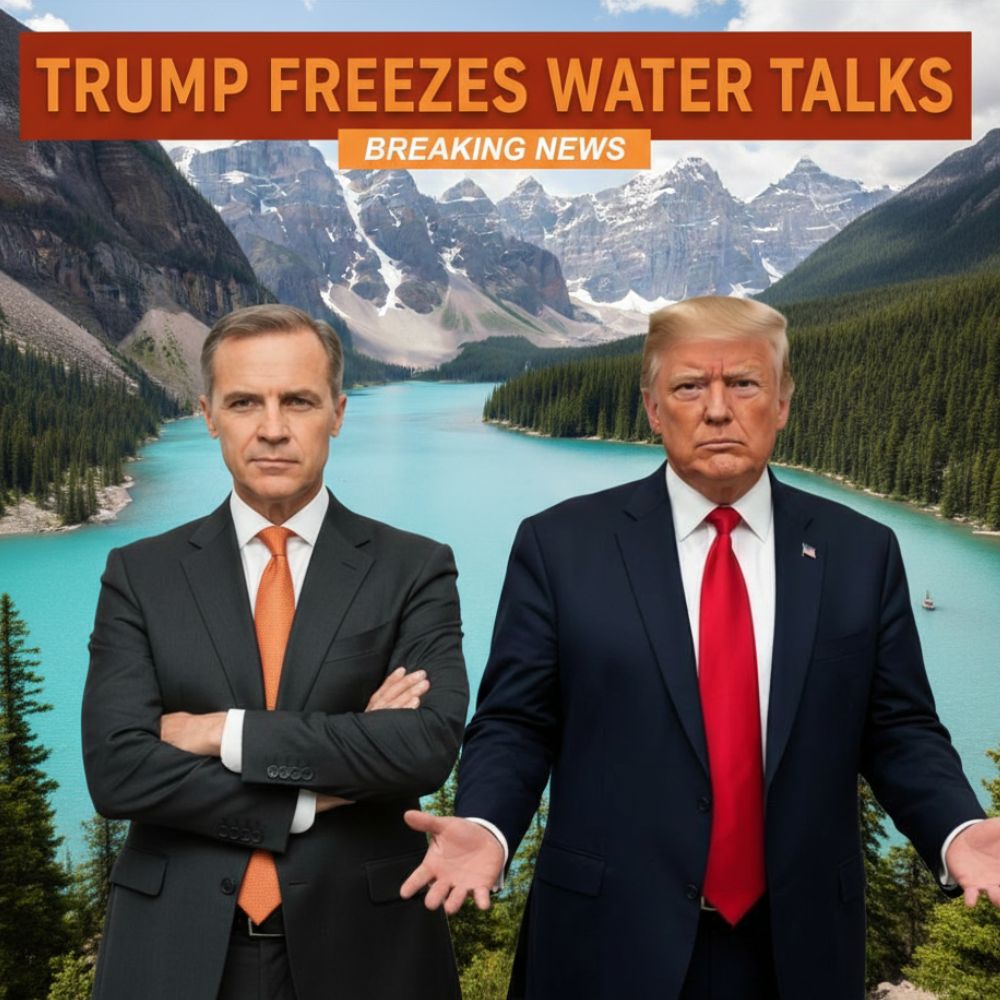
The central concern is not immediate diversion or extraction — which would face enormous legal and political barriers — but precedent.
If water coordination can be suspended as leverage, what stops future administrations from conditioning cooperation on unrelated demands? Trade concessions. Defense procurement. Regulatory alignment.
Canada’s longstanding position has been unequivocal: freshwater is not for export and not subject to commercial negotiation. That principle is embedded in federal and provincial law. But experts note that erosion rarely happens through frontal assault. It happens through normalization.
Legal Barriers — and Their Limits
To be clear, the United States cannot simply “take” Canadian water.
The Boundary Waters Treaty remains binding. Domestic laws in both countries restrict bulk water removals. The Great Lakes–St. Lawrence River Basin Water Resources Compact — adopted by U.S. states and mirrored by Canadian provinces — explicitly bans large-scale diversions outside the basin.
Yet law operates within political context.
Treaties rely on good-faith implementation. Commissions rely on cooperation. Data sharing, joint modeling, and infrastructure planning all depend on continuous engagement. When that engagement is paused, trust frays — and uncertainty grows.
“Water law is strong,” said a Canadian constitutional scholar. “But it’s strongest when everyone agrees not to test it.”
Trump’s Pattern of Leverage
Seen in isolation, the water freeze might look bureaucratic. Seen in context, it fits a broader pattern.
Trump has repeatedly treated alliances as transactional arrangements, not enduring commitments. He has threatened NATO withdrawal, imposed tariffs on allies, and openly questioned long-standing agreements if they do not produce immediate advantage.
Applying that mindset to water is new — but not inconsistent.
In Trump’s framework, leverage is not something to be preserved for emergencies. It is something to be exercised continuously. The problem, critics argue, is that once shared resources become tools of pressure, cooperation becomes fragile — and fragility in water systems carries real human cost.
Why This Matters Beyond Canada
The implications extend well beyond Ottawa.
If the U.S. signals that shared water governance is conditional, it sets a precedent other regions will notice. Cross-border rivers in Europe, South Asia, and Africa are already flashpoints. The U.S.–Canada relationship has long been held up as a model of peaceful water sharing.
Undermining that model weakens global norms at a moment when they are needed most.
“This isn’t just a bilateral issue,” said a former U.S. diplomat. “It’s about whether water remains a commons governed by rules — or becomes another arena of power politics.”
A Quiet but Profound Inflection Point
Trump’s decision has not sparked protests or market turmoil. It has not yet changed how water flows tomorrow. But it has altered something more subtle: assumptions.
For over a century, Canadians and Americans assumed that whatever their disputes, water would be managed together. That assumption is now in question.
As climate pressure mounts and strategic competition intensifies, the line between natural resource and national asset is blurring. The freeze on talks may be temporary. Or it may be the first sign that even the most fundamental shared systems are no longer immune from geopolitical strain.
Either way, one conclusion is already clear: in the 21st century, water is no longer just about environment or engineering. It is about power.