



A MAGA Rift Goes Public: JD Vance, Laura Loomer, and the Republican Party’s Growing Civil War
Washington — A public clash between Vice President JD Vance and far-right activist Laura Loomer this week has laid bare a deeper struggle within the Republican Party: a battle over power, messaging, and the future of Donald Trump’s political movement as it heads toward the 2026 midterms and an already simmering 2028 presidential race.
The dispute, which unfolded largely on X (formerly Twitter), was triggered by Vance’s appearance at the annual March for Life rally in Washington, where he attempted to strike a conciliatory tone toward anti-abortion activists frustrated by what they see as stalled progress since the fall of Roe v. Wade. Instead, the speech ignited backlash from some of Trump’s most aggressive online allies, exposing fractures between institutional Republicans and the party’s digital shock troops.
“This isn’t just a Twitter feud,” said a Republican strategist who has advised multiple presidential campaigns. “It’s a proxy war over who gets to define MAGA after Trump — and whether there even is a post-Trump MAGA.”
A Speech That Hit a Nerve
In his remarks, Vance acknowledged internal dissatisfaction within the anti-abortion movement, telling the crowd that debates over strategy were “good, honest, and natural,” and that activists’ pressure helped “keep people like me honest.” The language was unusually self-reflective for a movement that has often rewarded ideological absolutism.
But to Loomer — a pro-Trump influencer with more than 1.8 million followers and a history of incendiary rhetoric — the speech signaled weakness. Within hours, she accused Republican leaders of repeating mistakes that cost the party dearly in the 2018 midterms and in post-Dobbs elections, arguing that renewed focus on abortion would again alienate swing voters.
“Trump gets it,” Loomer wrote, insisting that the former president has urged Republicans to downplay abortion ahead of competitive elections. “The GOP will blow the midterms.”
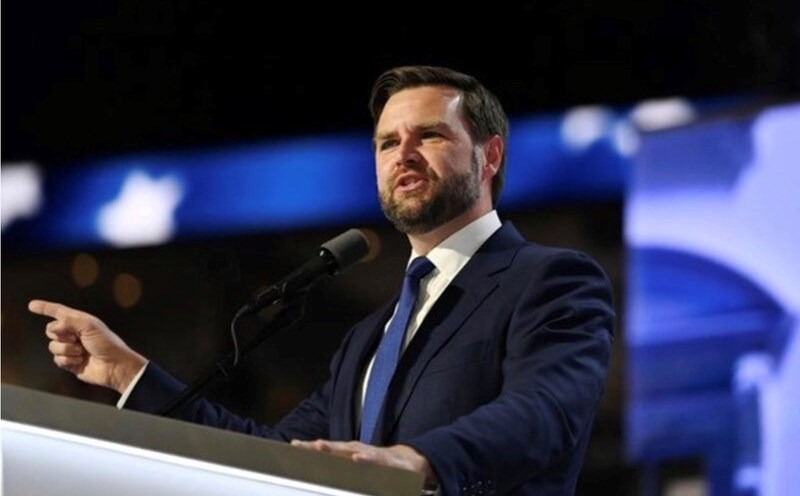
Vance responded publicly, noting that Trump himself had sent a video message to the event and had encouraged his participation. He criticized unnamed conservative influencers for “sewing division” and called their attacks “disgraceful.”
The exchange quickly escalated.
From Policy Dispute to Personal Warfare
What began as a disagreement over abortion messaging soon veered into personal and factional combat — a familiar pattern in the MAGA ecosystem, where ideological loyalty is often measured through public fealty rather than private coordination.
Loomer accused Vance of selectively condemning “division” while remaining silent about attacks on Trump from figures like Tucker Carlson and Rep. Marjorie Taylor Greene. She also alluded to long-standing rivalries within Trumpworld, including speculation about competition between Vance and Secretary of State Marco Rubio as potential 2028 contenders.
“This isn’t about abortion,” Loomer suggested in a series of posts. “It’s about ambition.”
Her language echoed a growing narrative among Trump loyalists: that Vance, despite his proximity to the former president, is ultimately positioning himself for succession rather than service.
Political analysts say the accusation is not new — but its public airing by one of Trump’s most visible allies is significant.
“Laura Loomer doesn’t freelance like this unless she believes she has cover,” said a media analyst who studies right-wing digital networks. “Whether that cover is explicit or implied is the real question.”
Trump’s Shadow Looms Large
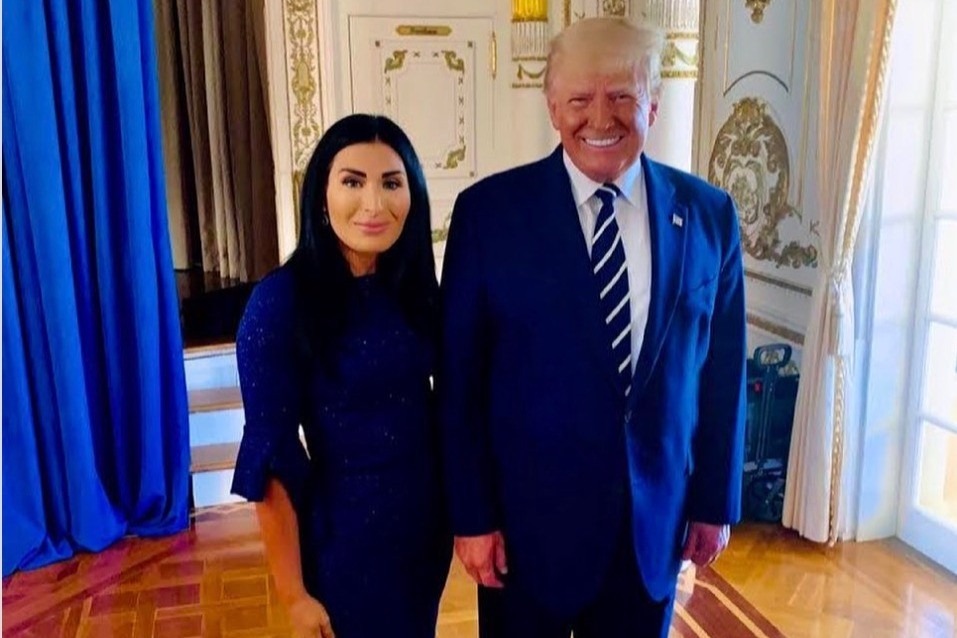
Donald Trump himself has not commented directly on the dispute. But his recent behavior has added fuel to speculation about internal maneuvering. According to reporting by ABC News’ Jonathan Karl and others, Trump has privately joked about running for a third — and even a fourth — term, remarks widely interpreted as trolling both constitutional norms and ambitious would-be successors.
Those comments, strategists say, function as a loyalty test.
“Trump has always used uncertainty as leverage,” said a former White House official. “By dangling the idea that he might never leave the stage, he keeps everyone beneath him off balance — especially JD Vance.”
Trump has also recently expanded calls for cognitive testing, suggesting it should apply not only to members of Congress but to vice presidents and future candidates — a move critics interpret as both deflection from concerns about his own fitness and a subtle prod at Vance.
Notably, Vance has offered no enthusiastic public defense of the idea.
The Influencer Power Struggle
The clash highlights another reality of modern Republican politics: the outsized influence of online personalities who operate outside formal party structures but command enormous attention.
Figures like Loomer, Carlson, and Charlie Kirk can amplify narratives faster than party leaders can contain them. Their approval — or opposition — can shape primary electorates, donor behavior, and media cycles.
“JD Vance represents the institutionalization of MAGA,” said a political scientist at a major university. “Laura Loomer represents its permanent revolution.”
That tension is increasingly difficult to manage as Republicans face unfavorable polling on abortion, declining approval ratings among independents, and persistent controversies ranging from immigration enforcement to unanswered questions surrounding Jeffrey Epstein’s associates — an issue that continues to roil the party’s base.
Vance, critics argue, has chosen his battles carefully, speaking forcefully on immigration while remaining comparatively restrained on issues that divide the MAGA coalition.
A Party at War With Itself
For Democrats, the spectacle has been met with open schadenfreude. For Republicans, it is a warning sign.
With the 2026 midterms approaching and early jockeying for 2028 already underway, the party faces a fundamental question: Can a movement built on loyalty to one man survive the moment when multiple heirs demand the crown?
“Every MAGA civil war follows the same script,” the Republican strategist said. “First it’s about policy. Then it’s about loyalty. And eventually it’s about who Trump smiles at last.”
For now, the smiles — and the silence — belong to Trump himself, as his would-be successors and most fervent defenders turn their fire on one another.
Whether that chaos ultimately strengthens or fractures the movement may determine not only the future of JD Vance’s ambitions, but the trajectory of the Republican Party in a post-Trump era that may already be arriving — even if no one is yet allowed to say it out loud.