



The halls of Congress are no stranger to theater, but every so often, a moment of raw, unvarnished truth cuts through the noise and demands the nation’s attention. Recently, Texas Representative and Senate candidate Jasmine Crockett provided exactly that—a masterclass in parliamentary procedure fueled by a refusal to let selective narratives go unchallenged.
The setting was a committee hearing ostensibly focused on rooting out fraud within government programs. The initial rhetoric from the Republican side of the aisle was predictable: a “whole-of-government approach” to chasing down billions in stolen taxpayer dollars.
However, the conversation quickly took a sharp, localized turn toward the Somali community in Minnesota. It was an attempt to frame fraud as a cultural or demographic issue rather than a systemic one.
Rep. Crockett, sensing the shift toward what she described as the “dehumanization and demonization” of an immigrant community, stepped in to level the set. She didn’t just offer platitudes; she demanded a “yes or no” from witnesses on whether they believed all Somali people were fraudsters.
The witnesses, cornered by the simplicity of the question, had to admit they did not. This small victory for common sense was merely the preamble to a much larger, more devastating critique of how justice is applied in America.
Crockett’s primary argument is that the current political climate uses the “one bad apple” theory selectively. When an immigrant or a working-class individual commits a crime, the entire community is often held up as a scapegoat.
Yet, when white-collar criminals or high-ranking officials engage in massive, multi-million dollar schemes, the response is often a shrug, a defunded oversight office, or a presidential pardon. This disparity is what Crockett refers to as a distraction from the “corporate socialism” happening at the highest levels of government.
One of the most jarring points raised during the hearing was the case of Tom H. Homan. Allegations were brought forward regarding $50,000 in taxpayer money given to him in an undercover FBI sting.
The money was allegedly part of a deal for contracts and kickbacks. Despite the DOJ investigation and the fact that the money was accepted in cash, the case was reportedly tossed once the administration changed.
This specific example served as a gateway for Crockett to list an exhausting array of alleged corruptions. She touched on $230 million payouts from the DOJ, hundreds of thousands of taxpayer dollars spent at branded properties, and the sale of branded wine at Coast Guard exchanges.
To the average American struggling with the rising cost of living, these details feel less like policy and more like a personal affront. It paints a picture of a government functioning as a private piggy bank for the well-connected.
Crockett didn’t stop at anecdotal evidence; she moved into the legislative record. She entered several reports into the record highlighting the “clemency” granted to various white-collar criminals.
These weren’t petty thieves. We are talking about executives who led $25 million Medicare fraud schemes and eye doctors found guilty of massive healthcare fraud.
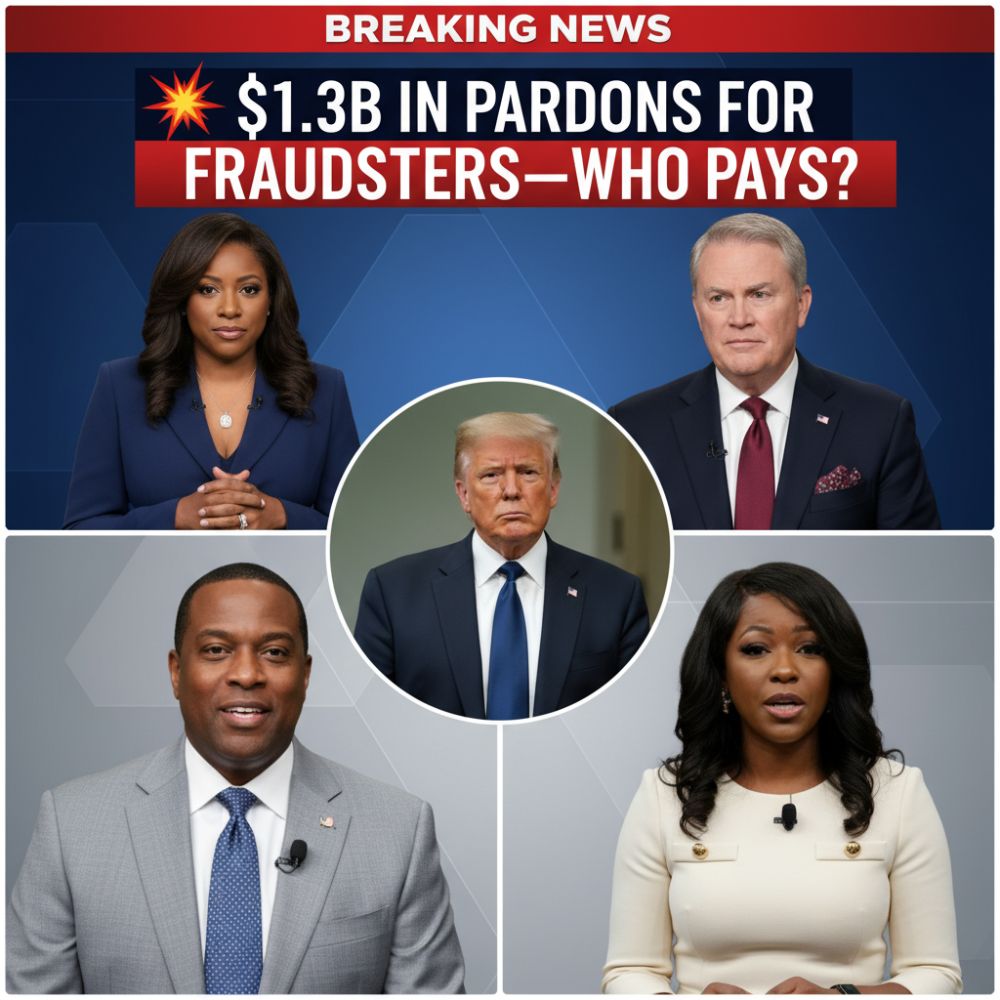
One report cited that pardons issued by the previous administration cost victims and taxpayers an estimated $1.3 billion. This is the “receipt” that silenced the room—a concrete number that dwarfs many of the smaller-scale fraud cases used to stir up partisan anger.
The irony of the situation was not lost on the Representative. She pointed out the absurdity of discussing “corruption” without addressing the lifelong history of the man at the top of the ticket.
From the billion-dollar deals with foreign governments to the refusal to divest from private businesses, the potential for conflict of interest is staggering. When state events are held at private properties, taxpayer money is effectively funneled directly into the pocket of the person holding the office.
This isn’t just a Republican or Democratic issue; it is a question of the fundamental integrity of the American experiment. If the “Public Integrity Section” of the DOJ is being defunded and decimated, who is left to watch the watchers?
Crockett highlighted a “Republican philosophy” that she finds deeply problematic. It’s a philosophy where, if the cost of living increases for a family, they are told to pull themselves up by their bootstraps.
But if the cost of doing business increases for a billionaire, the government is expected to step in with bailouts, subsidies, and tax cuts. This “socialism for the rich” is the real fraud that Crockett believes the American people should be concerned about.
The conversation eventually turned to the controversial “Epstein files” and the ties between the powerful and Jeffrey Epstein. Crockett noted the documentation of these long-standing friendships and the lack of full transparency regarding the files.
She also took aim at the deregulation efforts that target organizations like the Consumer Financial Protection Bureau. This bureau has successfully returned $13 billion to customers who were defrauded by financial institutions.
To target such an organization while simultaneously letting billion-dollar fraudsters off the hook is, in Crockett’s view, the height of hypocrisy. It suggests that the goal isn’t actually to stop fraud, but to control who is allowed to profit from it.
The hearing served as a microcosm of the larger battle for the soul of the country. It’s a battle between those who want to use fear and division to maintain the status quo and those who want to follow the money, regardless of where it leads.
Jasmine Crockett’s “brutal fact check” was more than just a political win; it was a reminder that facts are the greatest weapon against demagoguery. By bringing the receipts, she forced a conversation about the difference between justice and “just us.”
As the clip of the hearing continues to circulate on social media, the message is clear. People are tired of being told to look at the “immigrant threat” while their pockets are being picked by the people telling the story.
The “full of government approach” to fraud must start at the top, or it isn’t an approach to fraud at all—it’s just a PR campaign. Crockett’s performance suggests that the days of letting these narratives go unchallenged are over.
For the working-class Americans she mentioned, the takeaway is simple: pay attention to the hand that is pointing the finger, but watch the other hand even closer. That’s usually where the money is.
In the end, the hearing didn’t just expose fraud; it exposed a mindset. It exposed a system that is designed to protect the powerful while leaving the vulnerable to fend for themselves.
But as long as there are representatives willing to stand up and ask the hard questions, there is hope for a more equitable future. The road to accountability is long, but it starts with a single, “yes or no” question.
Jasmine Crockett has shown that she isn’t afraid to walk that road, receipts in hand. The question now is whether the rest of Washington is prepared to follow.