


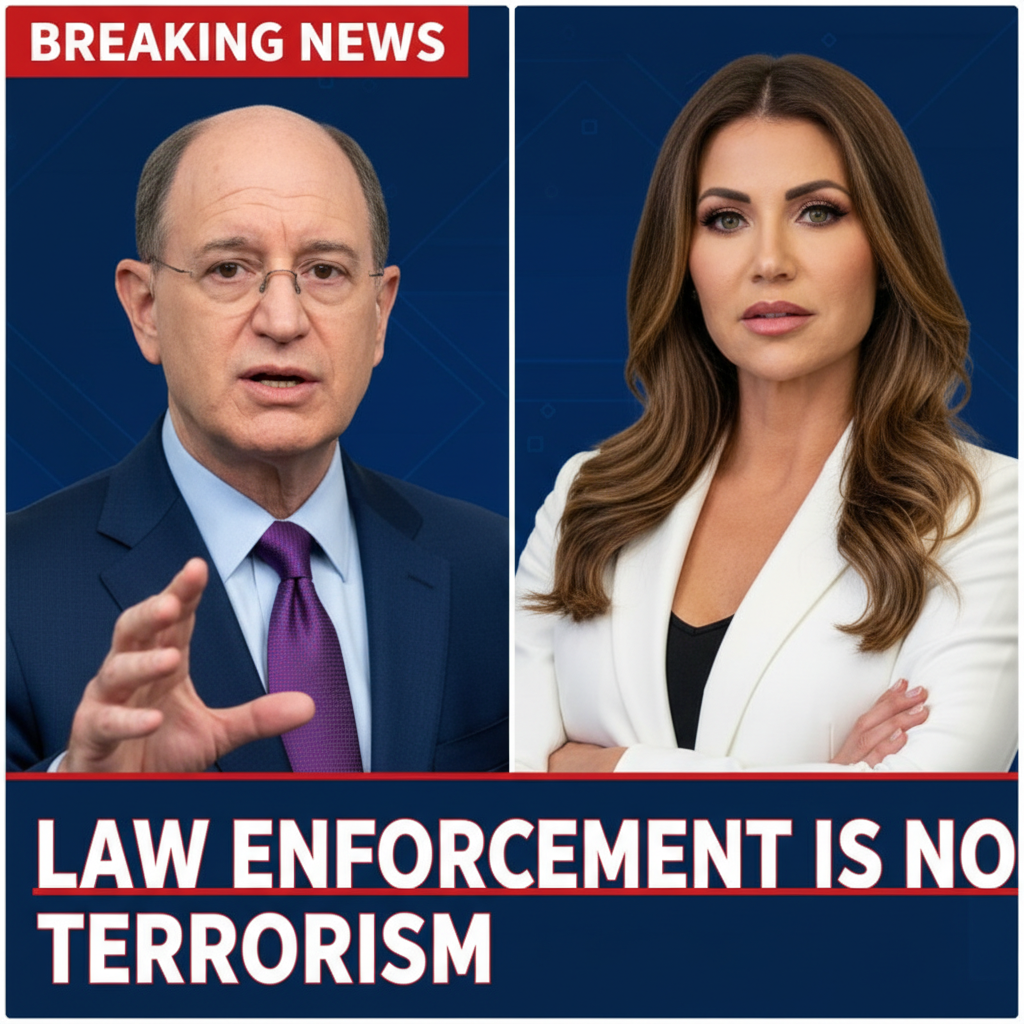
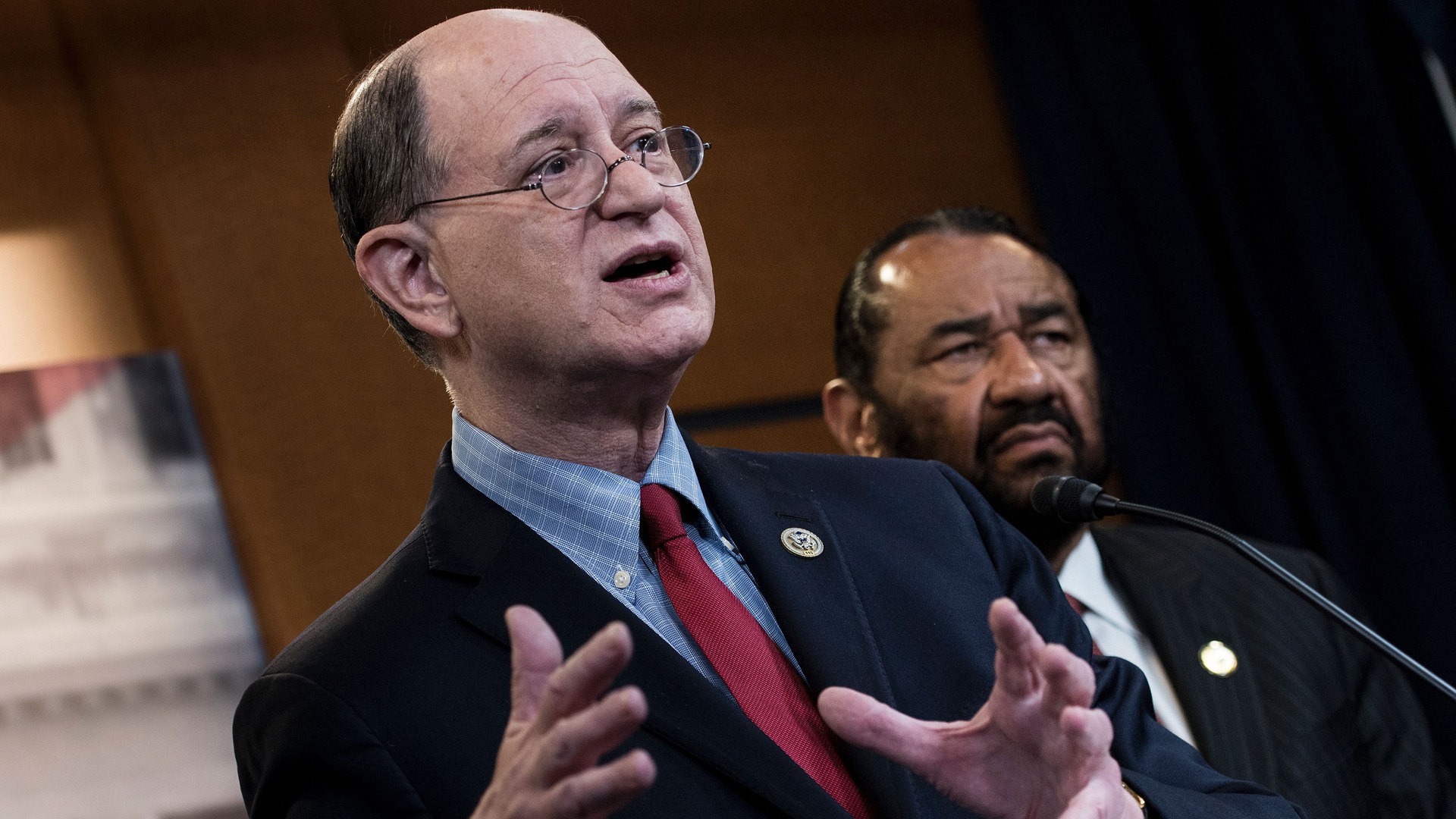
The political landscape in Washington D.C. has reached a volatile flashpoint that many observers believe marks a point of no return for civil discourse. On Monday, the House floor became the stage for one of the most inflammatory rhetorical attacks in modern political history when Representative Brad Sherman, a Democrat from California, stood before the nation to deliver a scathing indictment of the Department of Homeland Security.
Sherman did not merely criticize the current administration’s immigration policies; he fundamentally redefined the nature of federal law enforcement by labeling Immigration and Customs Enforcement (ICE) a “domestic terrorist organization.” This explosive terminology was coupled with a formal threat to introduce impeachment proceedings against DHS Secretary Kristi Noem, whom Sherman accuses of transforming a government agency into a vessel for state-sponsored violence and intimidation.
The atmosphere in the Capitol was thick with tension as Sherman’s voice rose, echoing through the chamber with a level of indignation that signaled a new, more aggressive phase of Democratic resistance. For years, the “Abolish ICE” movement has simmered on the fringes of the progressive left, but Sherman’s comments have effectively moved this radical sentiment into the mainstream legislative agenda.
By suggesting that impeachment is not just a possibility but a primary item on the Democratic agenda, Sherman has set the stage for a constitutional showdown that will likely dominate the national conversation for months to come. The crux of his argument rests on the claim that Secretary Noem is “ignoring the law” by pursuing a hardline enforcement strategy that includes increased workplace raids and ramped-up deportations across the country.
The California congressman specifically pointed to recent tragic events, such as the fatal shooting of Renee Nicole Good in Minneapolis, as the catalyst for his “terrorist” designation. He characterized the actions of ICE agents not as the difficult work of maintaining national security, but as a campaign of “terror” designed to victimize immigrant communities and tear families apart.
“These agents aren’t protecting us; they’re terrorizing us,” Sherman declared, a sentiment that was immediately amplified by the most progressive voices in his party, including Representatives Alexandria Ocasio-Cortez and Rashida Tlaib. This unified front of the radical left suggests a coordinated effort to delegitimize the DHS and cripple Secretary Noem’s ability to function as the head of the nation’s border security apparatus.
However, the reaction from the other side of the aisle was instantaneous and equally ferocious. Republicans and allies of the Trump administration have denounced Sherman’s rhetoric as not only irresponsible but actively dangerous to the lives of federal officers.
White House Press Secretary Karine Jean-Pierre took to the podium on Tuesday to deliver a blistering rebuttal, framing Sherman’s words as an insult to every American who values safe and secure communities. She pointed out the perceived hypocrisy of the Democratic platform, noting that the same individuals calling ICE “terrorists” were the ones who oversaw a border crisis that allowed millions of illegal crossings and a surge in fentanyl-related deaths during the previous administration.
The Press Secretary’s comments highlighted a fundamental truth about the current political climate: the definition of “law and order” has become entirely subjective depending on which side of the political aisle you occupy. For the Trump administration, ICE is a heroic shield protecting the country from an “invasion” of criminal elements and drugs; for the radical left, it is a “rogue agency” that must be dismantled to protect human rights.
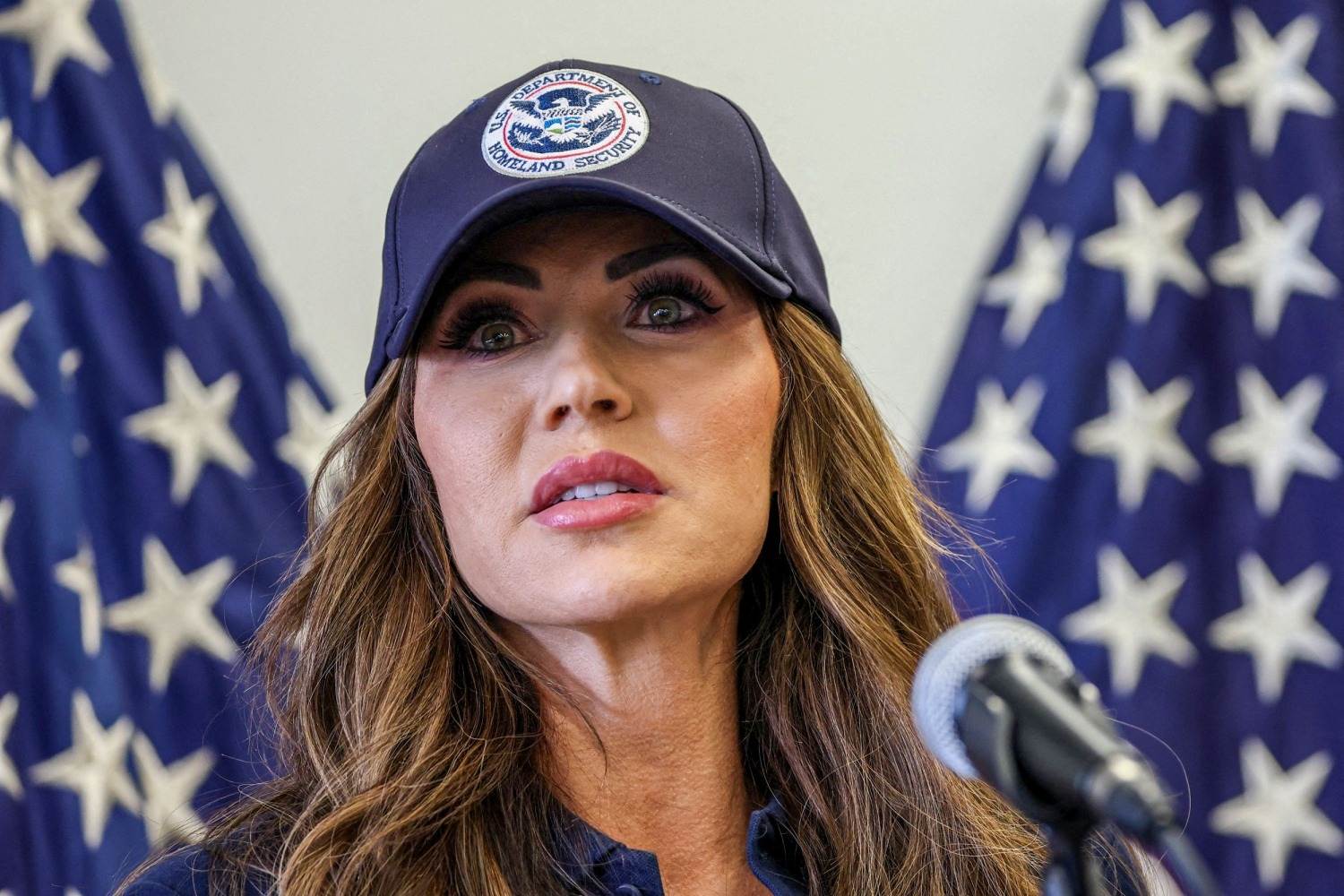
Secretary Kristi Noem, a woman who has built her political career on a foundation of toughness and unyielding resolve, did not shy away from the confrontation. Taking to social media, she framed the attack as being directed not just at her, but at the “heroes of ICE” who serve on the front lines.
Noem’s response—stating that if protecting citizens makes her a “terrorist,” then she is willing to accept the label—has become a viral moment of defiance that has energized her conservative base. Her supporters see her as a victim of a “deep state” and radical legislative overreach that is more interested in protecting non-citizens than it is in securing the American homeland.
The implications of Sherman’s rhetoric extend far beyond the walls of the Capitol. For the thousands of men and women who wear the ICE badge, being labeled a “terrorist” by a member of the government they serve is a psychological and professional blow of the highest order.
An anonymous agent, speaking on the condition of anonymity for fear of reprisal, expressed a sense of deep betrayal, noting that they face daily threats from some of the world’s most violent criminal organizations. To have a congressman equate their service to the tactics of the very cartels they fight is a reality that many in the agency find difficult to process.
The timing of this escalation is particularly sensitive, as it coincides with a wave of protests in cities like Minneapolis, where Democratic leaders have been vocal in their condemnation of “militarized” police and federal tactics. The shooting of Renee Nicole Good has become a symbol for the left, a “George Floyd moment” for the immigration debate, used to justify the most extreme language possible against the DHS.
As the Department of Justice continues its review of that specific incident, the political firestorm sparked by Sherman ensures that the investigation will be viewed through a hyper-partisan lens. There is no middle ground left in this debate; you are either with the agents of ICE or you are with those who wish to see the agency abolished.
Representative Jim Jordan, chair of the House Judiciary Committee, has been vocal in his defense of Secretary Noem and the ICE workforce. He argues that the left’s playbook is predictable: they demonize law enforcement to create a vacuum of power that can be filled by their own radical social agendas.
Jordan and other GOP leaders have pointed out that while Sherman and his colleagues focus on “rhetorical weapons,” the actual weapons being used by cartels are killing Americans in record numbers. The focus on impeaching Noem is seen as a tactical distraction from the success her department has had in finally getting a handle on a border that many believe was intentionally left open for years.
The divide has also reached the highest levels of the executive branch, with President Trump weighing in on Truth Social to offer his full-throated support for Noem. The President’s involvement ensures that the “terrorist” label and the impeachment threat will be central themes in the upcoming political cycle, as he uses the attacks to illustrate what he calls the “radicalism” of the modern Democratic party.
For the American public, the spectacle is both confusing and alarming. The sight of a federal agency being branded as a terrorist group by a lawmaker suggests a level of internal instability that is rarely seen in established democracies. It raises the question of how a government can function when its members view its primary law enforcement arms as the enemy.
The hashtag #AbolishICE has seen a massive resurgence in the wake of Sherman’s speech, but it has been met with an equally powerful #BackTheBlue movement. This digital warfare reflects the deep-seated cultural divisions that have made immigration the most contentious issue of the decade.
The radical left’s strategy appears to be one of “total war” against Noem’s DHS. By threatening impeachment, they are attempting to tie up the agency in endless hearings and legal battles, effectively slowing down the pace of deportations and border wall construction.
If the Democrats are successful in framing the debate around “state-sponsored violence,” they believe they can win back the suburban voters who might be uncomfortable with the optics of enforcement. However, Republicans are betting that the majority of Americans are more concerned with crime, drugs, and the rule of law than they are with the feelings of those who have entered the country illegally.
The tragedy of Renee Nicole Good continues to be the emotional heart of the Democratic argument, but critics argue that using a single, complicated incident to brand an entire national agency as “terrorists” is the height of political opportunism. They point to the thousands of successful operations where ICE has removed violent gang members and human traffickers as the true measure of the agency’s value.
The fallout from Sherman’s speech is likely to result in increased security for ICE offices and personnel, as the “terrorist” label could be seen as a green light for extremist groups to target federal agents. This is the “dangerous” aspect of the rhetoric that Karine Jean-Pierre warned about—words have consequences, and in a country already on edge, such accusations can lead to real-world violence.
As the investigations proceed and the impeachment articles are drafted, the nation will be forced to choose between two diametrically opposed visions of America. One vision sees a country defined by its borders and the strict enforcement of its laws, while the other sees those very laws and their enforcers as obstacles to a more “equitable” and “borderless” world.
Secretary Noem remains at the center of this storm, a lightning rod for the frustrations of the left and a hero for the aspirations of the right. Her tenure at DHS will likely be defined by this moment, a test of her resolve against an onslaught of political and rhetorical attacks that show no signs of slowing down.
Ultimately, the battle over ICE is a battle for the soul of American governance. If the “terrorist” label sticks, it will change the way every federal agency operates moving forward. If the impeachment succeeds, it will set a precedent that policy disagreements are grounds for removal from office.
The stakes could not be higher. For the families living in border towns, for the agents working in the shadows, and for the citizens watching the chaos unfold in Washington, the outcome of this conflict will determine the safety and security of the United States for a generation.
Brad Sherman’s words have cut deep into the fabric of the nation, and the wound is unlikely to heal anytime soon. As the radical left escalates its attacks, the “guardians” of the border remain focused on their mission, waiting to see if their own government will stand behind them or continue to cast them as the villains in a political drama of the highest order.
The fight for law and order continues, but the weapons being used are no longer just legal—they are linguistic, and they are designed to destroy. The American people are the ultimate jury in this trial of rhetoric versus reality, and their verdict will be delivered at the ballot box.
In the meantime, the men and women of ICE will continue to bleed for a country that, at least in the halls of Congress, seems to be turning its back on them. The tragedy of the current political moment is that those who protect us have become the targets of those who lead us.
Secretary Noem’s defiance, the White House’s anger, and the left’s fervor all point to a long and grueling conflict ahead. There will be no easy resolutions, only more heated speeches, more trending hashtags, and a deepening of the great American divide.
As we look toward the future, one must wonder if the term “domestic terrorist” can ever be retracted once it has been aimed at the heart of the American security state. The damage to the reputation of ICE and the morale of its agents may already be permanent, a legacy of a political era where words are used as weapons and the truth is the first casualty of war.