


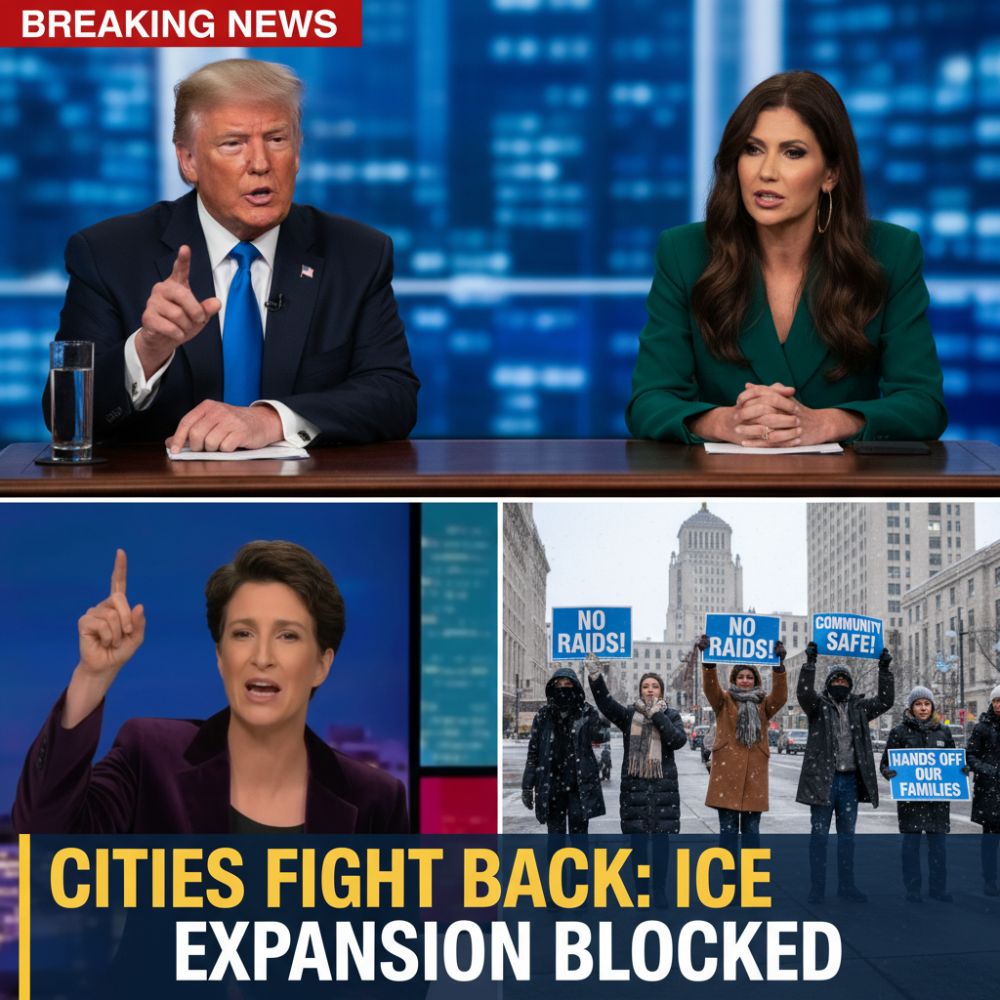
In episode of The Rachel Maddow Show, host Rachel Maddow delved into the Trump administration’s aggressive push to expand immigration detention facilities, only to face fierce backlash from American communities.
Maddow’s analysis painted a picture of widespread defiance, where local residents in states like Virginia, Utah, and Oklahoma rallied against proposed “ICE prison camps,” echoing concerns over human rights and infrastructure strain.
This resistance comes amid Trump’s second-term immigration crackdown, which has seen detention numbers surge to over 66,000 by late 2025, with plans for even larger facilities.
Maddow’s style was characteristically in-depth, weaving together local news clips, official statements, and on-the-ground footage to illustrate the urgency.
She emphasized how communities are “fighting tooth and nail” to prevent these sites, using her serious, investigative tone to highlight the democratic pushback without overt humor.
Her presentation built a narrative of hope, showing how sustained pressure can force retreats from federal plans.
The episode spotlighted Hanover County, Virginia, where DHS aimed to convert a Canadian-owned warehouse into a detention center.
Residents braved freezing weather to pack a city council meeting, resulting in a unanimous rejection and the owner’s withdrawal just days later.
This local victory reflects broader protests against Trump’s policies, which critics compare to WWII Japanese internment camps due to their scale and intent.
In Salt Lake City, Utah, a proposed facility twice the size of the state’s prison system sparked outrage.
The mayor and locals organized rallies, pressuring the real estate firm to back out amid chants of “Abolish ICE.”
Such actions align with nationwide trends, where immigration detention has expanded 75% since Trump’s return, funded by billions in congressional allocations.
Maddow also covered Oklahoma City, where extended council hearings led to denying ICE access to a local site.
Similar rejections occurred in New Hampshire, Georgia, and San Antonio, demonstrating cross-partisan opposition in red-leaning areas.
These efforts underscore historical contexts of U.S. immigration enforcement, where mass detentions have often targeted vulnerable groups without due process.
Expanding her analysis, Maddow discussed Roxbury, New Jersey, where a Republican-led council passed an anti-detention resolution citing overwhelmed sewers and water systems.
Kansas City, Missouri, imposed a five-year moratorium, ready to sue if needed, highlighting practical barriers to Trump’s ambitious expansion to 108,000 beds.
In Arizona locales like Surprise and Tucson, thousands protested, with over 1,000 in Surprise and 6,000 in Tucson decrying the facilities as “concentration camps.”
Maddow shifted to Maryland, noting Hagerstown and Howard County’s revoked building permits, with County Executive Calvin Ball stating the move ensures “clarity, restraint, and compassion.”
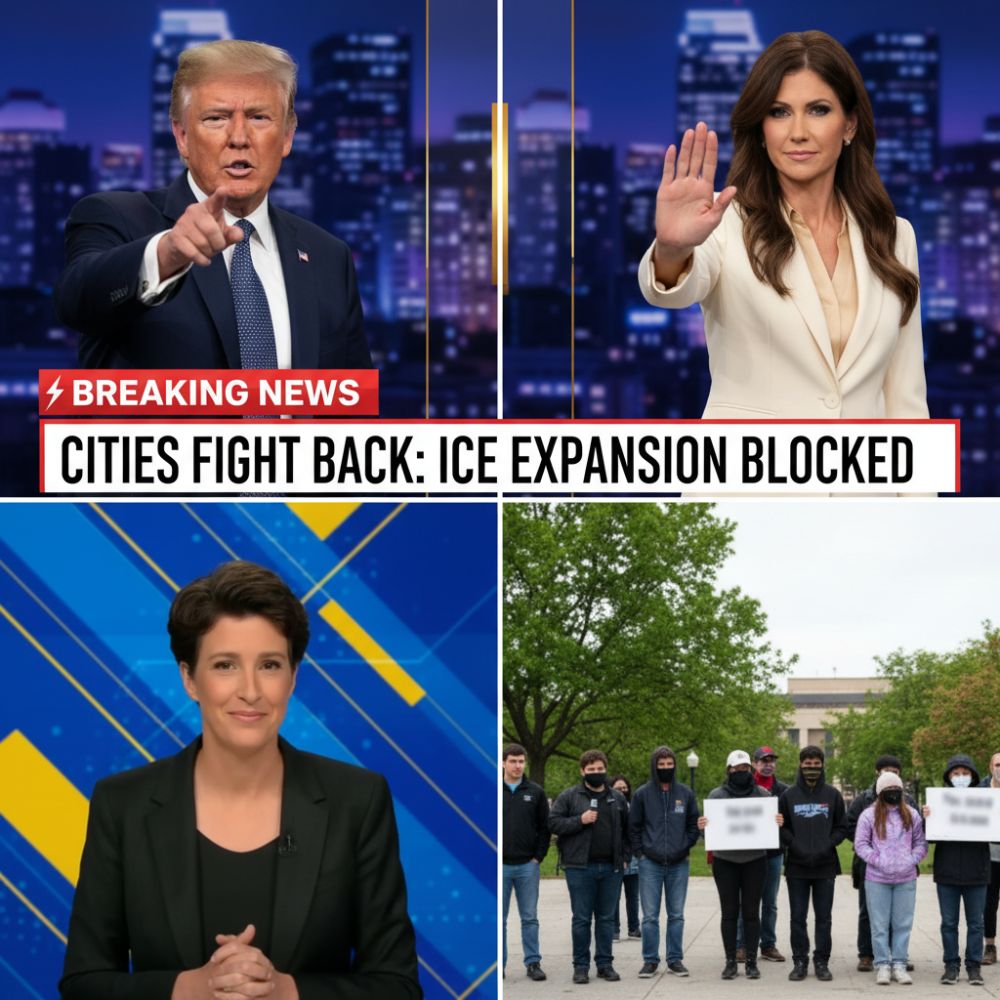
Protests there drew crowds chanting “We have eyes. No more lies. Abolish ICE,” amid reports of measles outbreaks in existing centers like Dilley, Texas.
These incidents tie into larger critiques of Trump’s policies, which have led to lethal enforcement actions and calls for investigations from both parties.
The show also addressed broader federal retreats, including a court ruling blocking the revocation of legal status for 330,000 Haitians, preventing mass arrests.
Maddow noted DHS Secretary Kristi Noem’s mandate for body cameras in Minneapolis following controversial killings, signaling administrative “wobbling.”
She critiqued figures like Ed Martin, demoted at DOJ for overzealous pursuits, using chiding nicknames like “Eagle Ed” to underscore policy failures.
A poignant segment focused on journalist Georgia Fort, arrested while covering an anti-ICE protest in St. Paul, labeled a “co-conspirator” in what Maddow called propaganda, not justice.
Fort’s Emmy-winning career in independent journalism was highlighted, drawing parallels to threats against press freedom under authoritarian tactics.
This case exemplifies how Trump’s immigration agenda intersects with broader assaults on due process, as seen in expanded detentions without criminal records.
Maddow connected these events to nationwide protests, from Los Angeles to Minneapolis, where demonstrators occupied stores like Target, chanting against ICE’s presence.
She urged viewers to join “No Kings Day” on March 28, emphasizing that “the pressure on a would-be authoritarian state is never more important than when they’re wobbling.”
Her delivery was urgent, blending facts with calls to action, reinforcing the episode’s theme of community power.
President Donald Trump’s vision of an “archipelago of facilities” outside legal norms has met stiff resistance, with protests swelling and subpoenas flying in response to enforcement excesses.
In Minneapolis, fatal shootings of citizens like Renee Good and Alex Pretti ignited massive demonstrations, prompting Trump to order federal agents to avoid certain protests unless requested.
These events reveal the human cost of policies that prioritize quotas over rights, with detention populations exceeding 60,000 under inhumane conditions.
Maddow’s episode serves as a rallying cry, showing how local actions can derail national agendas.
As communities continue to stand firm, the fate of Trump’s immigration overhaul hangs in the balance—will democratic flex prevail, or will escalation define the era?