


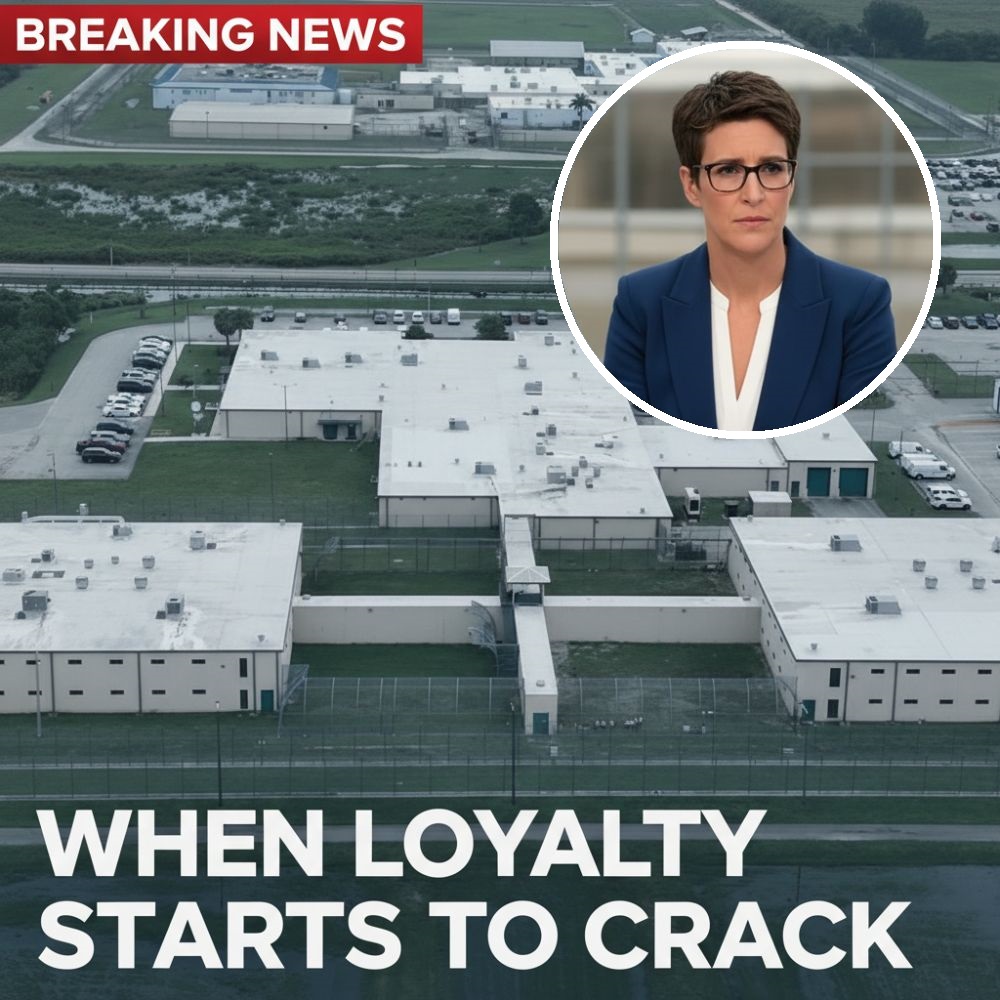
For weeks, the narrative around President Donald Trump’s expanded immigration detention plans followed a familiar script: federal authority moves forward, resistance protests erupt, and eventually the machinery rolls on. But something different happened in late January — and the change was subtle enough that many missed it.
On Monday night, Rachel Maddow opened The Rachel Maddow Show with a lengthy monologue that stitched together a series of quiet reversals across deeply Republican regions of the country. Not court rulings. Not dramatic federal interventions. Just deals that suddenly… stopped.
In Hanover County, Virginia — a jurisdiction Trump carried by 26 points — residents learned through local reporting that a massive warehouse in Ashland was being considered as a future Immigration and Customs Enforcement detention facility. Officials framed it procedurally: the board of supervisors would “consider next steps” at a scheduled meeting.
Then the weather turned brutal.
Snow, ice, and dangerous roads didn’t keep residents home. Instead, the board meeting overflowed. Locals were told only county residents could speak. The public comment period stretched for hours. Those locked outside stayed anyway, lining icy sidewalks without knowing whether their presence would matter.
When the vote finally came, it wasn’t followed by speeches or celebrations inside the room. Outside, word filtered through quietly. Then cheers broke out. The proposal had been rejected.
What followed was even quieter.
The board’s written statement opposing the facility did not attack the federal government. It didn’t accuse ICE of wrongdoing. It simply asked state and federal representatives to intervene — a rare move from a local body in a deeply conservative county. Less than 48 hours later, the Canadian billionaire who owned the property released a single-sentence statement: the sale would not proceed.
No explanation. No follow-up. Just silence.
A similar pattern emerged in Utah.
There, local organizers focused their attention not on ICE, but on the real estate firm brokering a potential detention site near Salt Lake City. Calls flooded offices. Reviews appeared online. Protests gathered outside buildings that had never expected to become political symbols.
Then local officials stepped in.
The mayor of Salt Lake County publicly warned that the proposed facility would hold more detainees than the entire Utah Department of Corrections combined. She pledged to use zoning authority, regulatory reviews, and intergovernmental coordination to oppose it. Soon after, the Salt Lake City mayor directly contacted the real estate group involved.
By the weekend, the company issued its own brief declaration: it had no plans to sell or lease the building to ICE or any federal agency.
Again, no debate. No press tour. Just withdrawal.
Throughout her segment, Rachel Maddow framed these moments as proof that local resistance works — even in “deep, deep red” areas. But the striking detail wasn’t the protests themselves. It was how quickly private actors disengaged once pressure appeared — and how little they said afterward.
There were no lawsuits filed. No federal overrides announced. Just transactions that quietly evaporated.
Critics have labeled the proposed detention sites “concentration camps,” a phrase Maddow referenced carefully while emphasizing the scale and secrecy surrounding the plans. Supporters of the administration argue the facilities are necessary for enforcement. Yet neither side fully explains why these deals collapsed without a fight.
What changed behind the scenes?
Why did companies walk away instead of pushing forward?
And why are some of the strongest objections now coming from places least expected to resist?
For now, the answers remain unstated — and that silence may be the most revealing part of the story.