


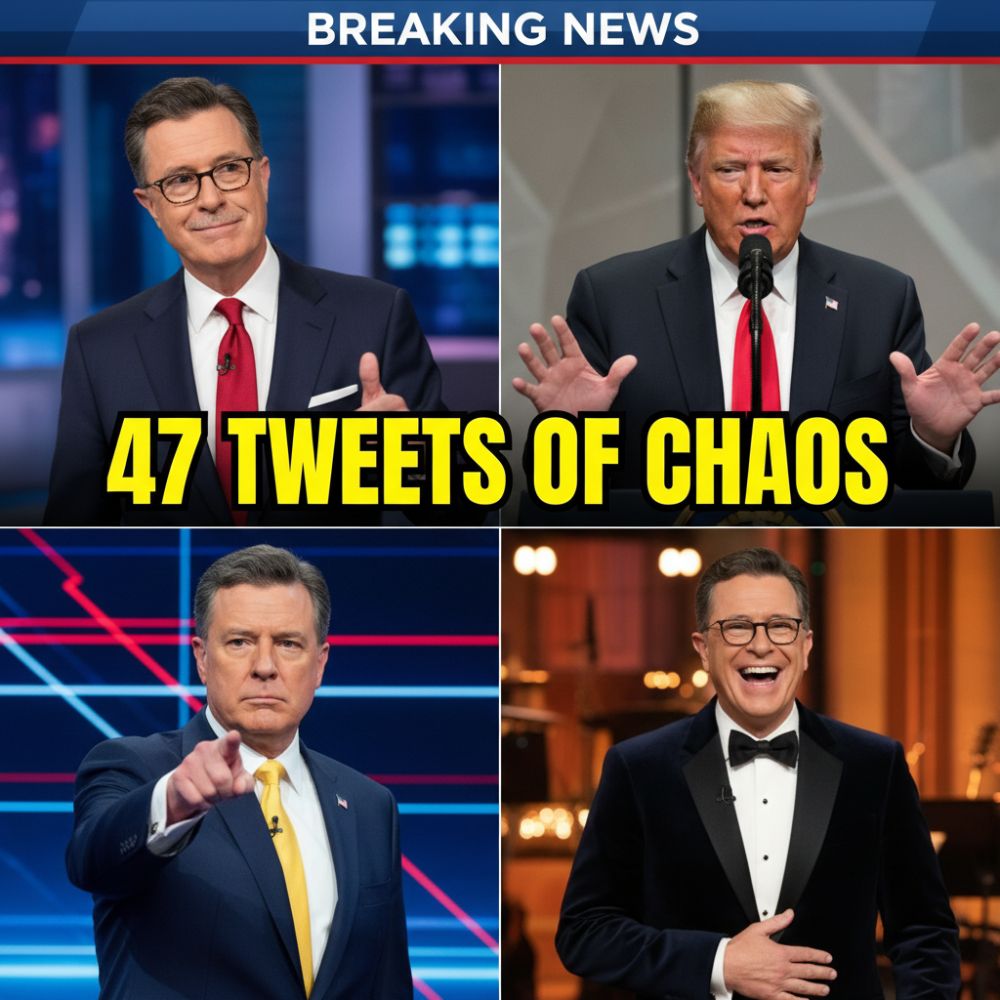
Trump vs. Colbert: What 47 Tweets Reveal About Power, Comedy, and Obsession
By any reasonable historical measure, the presidency of the United States is a job defined by gravity. Wars, markets, pandemics, alliances — these are the subjects that traditionally consume the attention of the person holding the office. And yet, over the course of several years, Donald J. Trump devoted a striking amount of his public energy to something far smaller, far lighter, and far more revealing: a late-night comedian.
Donald Trump has attacked Stephen Colbert on social media at least 47 times. Some of those posts were familiar fare — complaints about ratings, claims of lack of talent, demands that CBS intervene. Others were bursts of irritation that barely rose above insult. But taken together, they form a portrait less about Colbert than about Trump himself, and about how power behaves when it feels mocked rather than challenged.
Late-night television has long served as a pressure valve in American politics. Presidents are teased, caricatured, and occasionally skewered, but most learn to absorb the jokes or ignore them altogether. Barack Obama appeared on comedy shows and laughed at himself. George W. Bush pretended not to watch. Trump, by contrast, watched closely — and responded loudly.
Colbert, in particular, seemed to strike a nerve. As host of The Late Show, he turned Trump into a recurring character, not merely as a political opponent but as a cultural figure defined by vanity, grievance, and spectacle. The jokes landed. The clips went viral. And Trump noticed.
At first, the tweets followed a predictable pattern. Trump questioned Colbert’s ratings, declared him untalented, and insisted that anyone off the street could do better. These posts fit neatly into Trump’s longstanding worldview, where success is measured numerically and criticism can be dismissed by attacking its source.
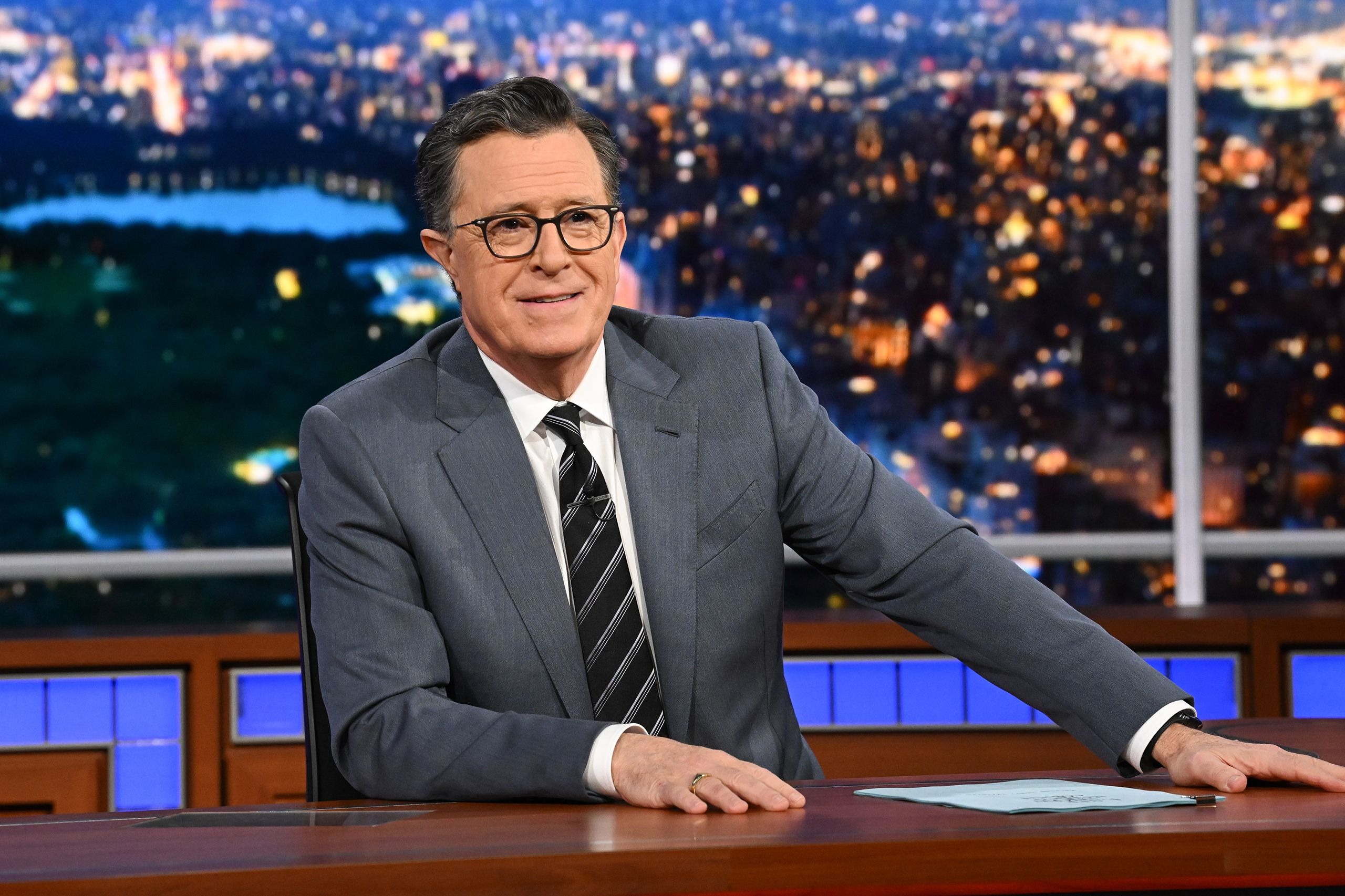
But as time went on, the tone shifted. The tweets grew more frequent and more personal. What began as performative bluster began to resemble fixation. A sitting president, with access to the world’s most sensitive intelligence, was spending his evenings rage-posting about a comedian.
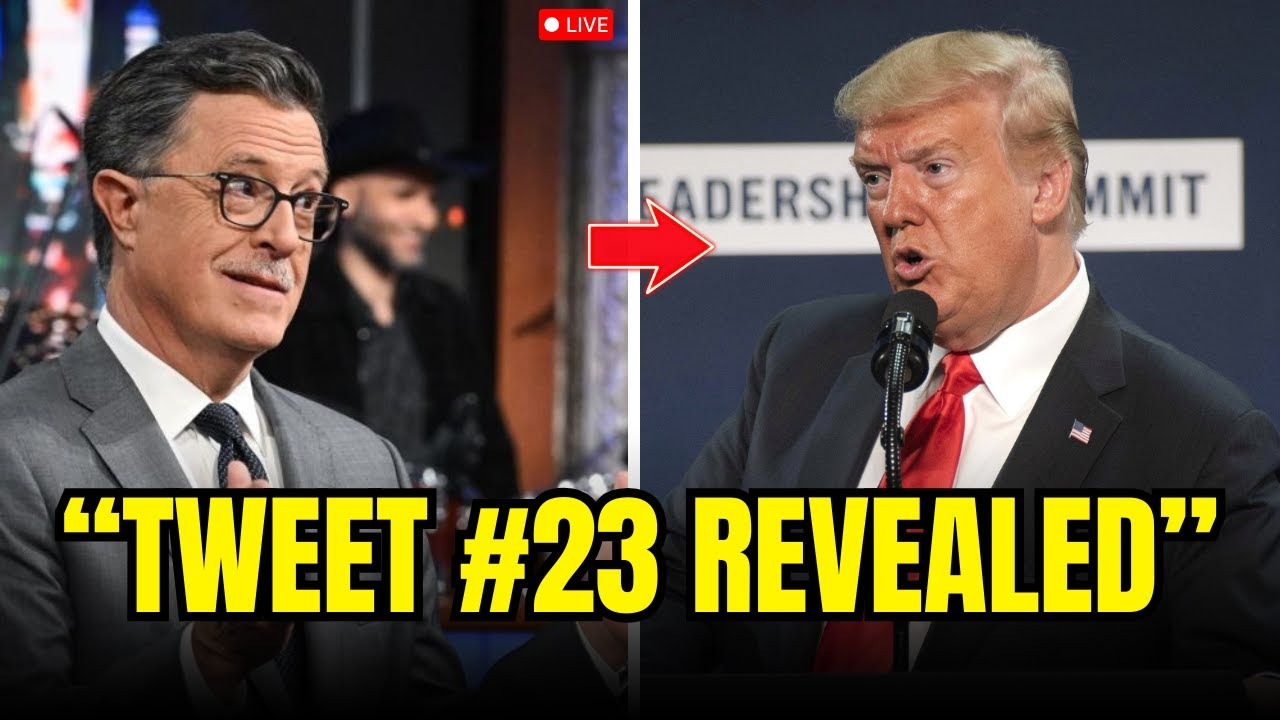
Then came what many Trump observers now refer to as “tweet number 23.”
Posted late at night, the tweet broke from Trump’s usual script. Instead of ratings or network complaints, it veered into personal insinuations — about Colbert’s character, his motives, and his family. It crossed a line, even by Trump’s standards. Within hours, it was deleted.
But deletion did not erase it. Screenshots circulated instantly, turning the absence itself into a story. The following night, Colbert addressed the tweet on air. He did not shout. He did not retaliate in kind. He read it aloud, paused, and asked a single, quiet question: This is what keeps him up at night?
The audience understood the implication immediately.
What made that moment resonate was not merely its pettiness, but its timing. The tweet arrived during a week of genuine national consequence, when policy decisions and international events demanded attention. Instead, the president had chosen to fight a personal battle against satire.
Supporters waved it away as Trump being Trump — irreverent, combative, unfiltered. Critics saw something more troubling: a leader unable to tolerate mockery, even when delivered by a comedian, even when the stakes of his office were vastly higher.
The larger story is not about Trump versus Colbert. It is about what happens when political power collides with cultural ridicule in an age of instant communication. Social media has collapsed the distance between the Oval Office and the comment section. Every irritation can become a proclamation. Every slight can demand a response.
Trump built his public identity on never backing down, never letting an insult pass unanswered. Colbert built his career on exposing that instinct through humor. The result was not a fair fight, as Colbert himself once observed — “I have jokes. He has the launch codes.” But it was an illuminating one.
Those 47 tweets tell us less about late-night television than about modern leadership. They reveal how attention has become a currency, how grievance can override governance, and how a joke can wield unexpected power when it punctures self-image rather than policy.
In the end, the question lingers, unresolved and uncomfortable: What drives a president to obsess over a comedian? Perhaps the answer lies not in the insults that stayed online, but in the one that was deleted — the moment when satire hit close enough to expose something Trump could not laugh off.
That silence, more than the shouting, may say the most.