


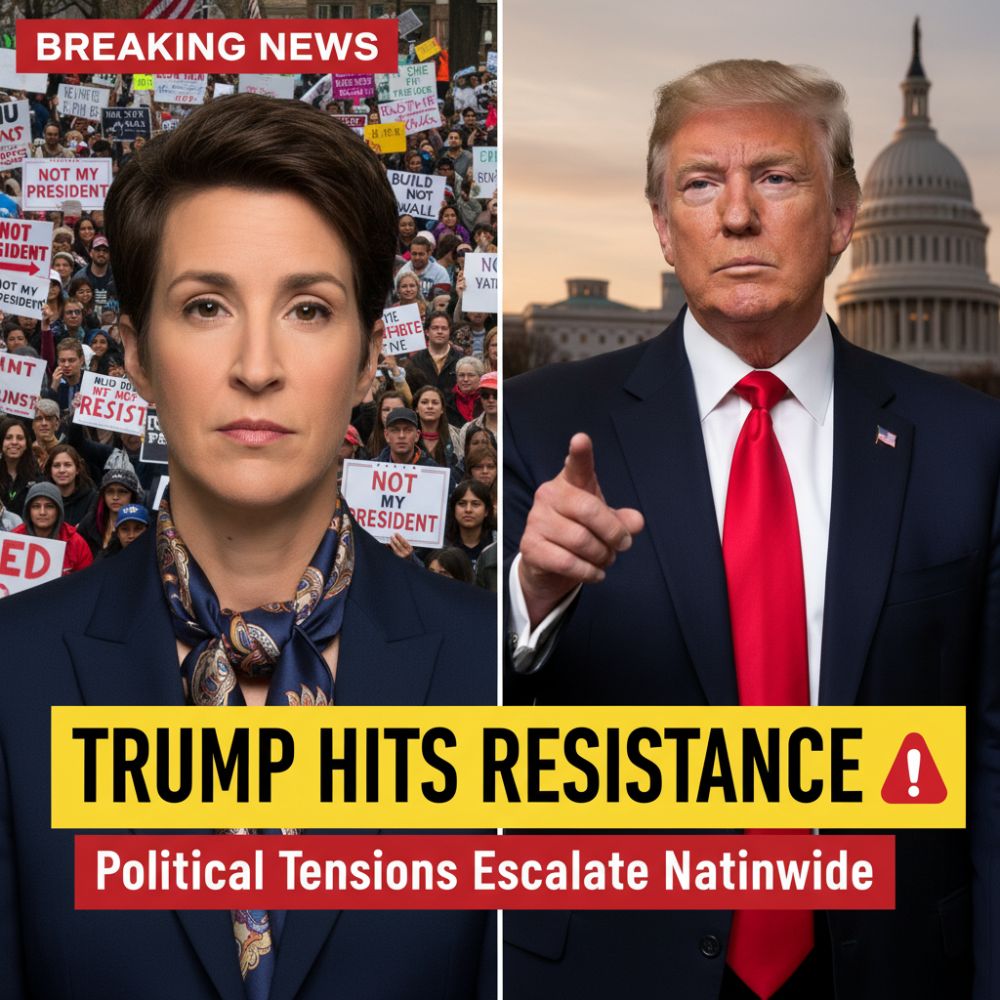
In the February, 2026, episode of The Rachel Maddow Show, host Rachel Maddow delivered a sharp, analytical breakdown of President Donald Trump’s faltering immigration policies.

She highlighted how escalating violence and public outcry are forcing a retreat from his mass deportation plans.
Maddow’s presentation, marked by meticulous storytelling and a focus on connecting local events to national implications, painted a picture of democratic forces rallying against the administration’s aggressive tactics.
Trump’s second term has seen a rapid push for expansive detention facilities to support deporting millions, building on his 2016 and 2024 campaign promises of strict border control.
However, as Maddow explained, these efforts echo his first administration’s challenges, where legal battles and public resistance limited large-scale operations.
Recent data shows ICE holding over 73,000 people, with plans for new mega-camps that could double capacity, but community pushback is derailing construction.
In Hanover County, Virginia—a reliably Republican area where Trump won by 26 points in 2024—residents protested a proposed 500,000-square-foot warehouse for ICE use.
The facility, built by Canadian billionaire Jim Pattison’s company on a former cattle farm, faced hours of public testimony at a packed county meeting amid cold weather.
Within 48 hours of the January 21 Department of Homeland Security announcement, the county board opposed the sale, leading Pattison to cancel the deal.
This victory spurred boycotts in Canada, with labor unions and advertisers distancing from Pattison’s businesses, showcasing cross-border ripple effects.
Maddow underscored the irony: even in “red” strongholds, locals are rejecting what she called “prison camps outside the law.”
Similar resistance emerged in Salt Lake City, Utah, where plans for a massive warehouse conversion drew outrage over its size—larger than all state prisons combined.
The mayor vowed to use every legal tool, including zoning and partnerships, to block it, prompting the real estate firm to abandon ICE dealings.
Maddow analyzed this as part of a pattern, noting how Trump’s agenda is meeting bipartisan opposition from business leaders and clergy.
In Oklahoma, cities like Durant and Oklahoma City passed resolutions barring ICE facilities, with protests halting sales.
Protests extended to existing sites, like the South Texas Family Residential Center in Dilley, Texas, holding men, women, and children.
A peaceful inmate uprising followed news of nationwide unrest, amid a measles outbreak and the release of a 5-year-old boy from Minneapolis.
At Camp East Montana on Fort Bliss in El Paso, at least three deaths in two months, including one ruled a homicide, fueled demonstrations.
Maddow’s tone grew pointed here, questioning the humanity of expanding such systems, which she said history shows could be repurposed indefinitely.
The episode also critiqued arrests of journalists covering enforcement, escalating what Maddow termed an “information war.”
She tied this to broader chaos, including reshuffles like Tom Homan replacing Greg Bovino after fatal shootings in Minneapolis.
Shifting gears, Maddow dissected Trump’s February 2 podcast interview with Dan Bongino, where he floated Republicans “nationalizing the voting” in 15 places.
Trump claimed immigrants vote illegally and vowed scrutiny in Georgia, prompting FBI raids on Fulton County’s election office last week.
Maddow highlighted the constitutional barriers—states manage elections—and warned of threats to democracy, noting Trump’s past suggestions to skip elections.
Another segment focused on South Dakota Governor Kristi Noem’s tweet, which backfired in a court ruling protecting Haitians from deportation.
Maddow used her chiding style to illustrate how coarse rhetoric undermines legal efforts, amid Trump’s broader agenda facing lawsuits.
Resistance includes growing bipartisan calls for reform, with proposals gaining traction in Congress to address undocumented immigrants humanely.
Maddow concluded by emphasizing the episode’s core: Trump’s “wobbling” agenda is crumbling under pressure from everyday Americans, leaving open questions about its long-term viability.
The forces of democracy, she argued, are proving resilient against authoritarian overreach, offering a glimmer of hope amid the turmoil.
This resistance, amplified through Maddow’s lens, underscores a pivotal moment in U.S. politics, where local actions challenge national policy.