


When Late-Night Comedy Stops Joking and Starts Recording
Donald Trump has long treated attention as a form of power. Whoever controls the spotlight, in his view, controls the story. When focus drifts, he pulls it back with insults, nicknames, and a fresh burst of outrage—because outrage travels faster than explanation. It is a political style honed over years of reality television and campaign rallies, one that relies on constant motion to prevent sustained scrutiny.
Last week followed a familiar script. Late at night, Mr. Trump posted a message attacking “late-night losers,” insisting they were obsessed with him, insisting he never watched them, insisting he was winning anyway. The post was a provocation, designed to bait a response. A response keeps him centered.
What followed was not the response he expected.
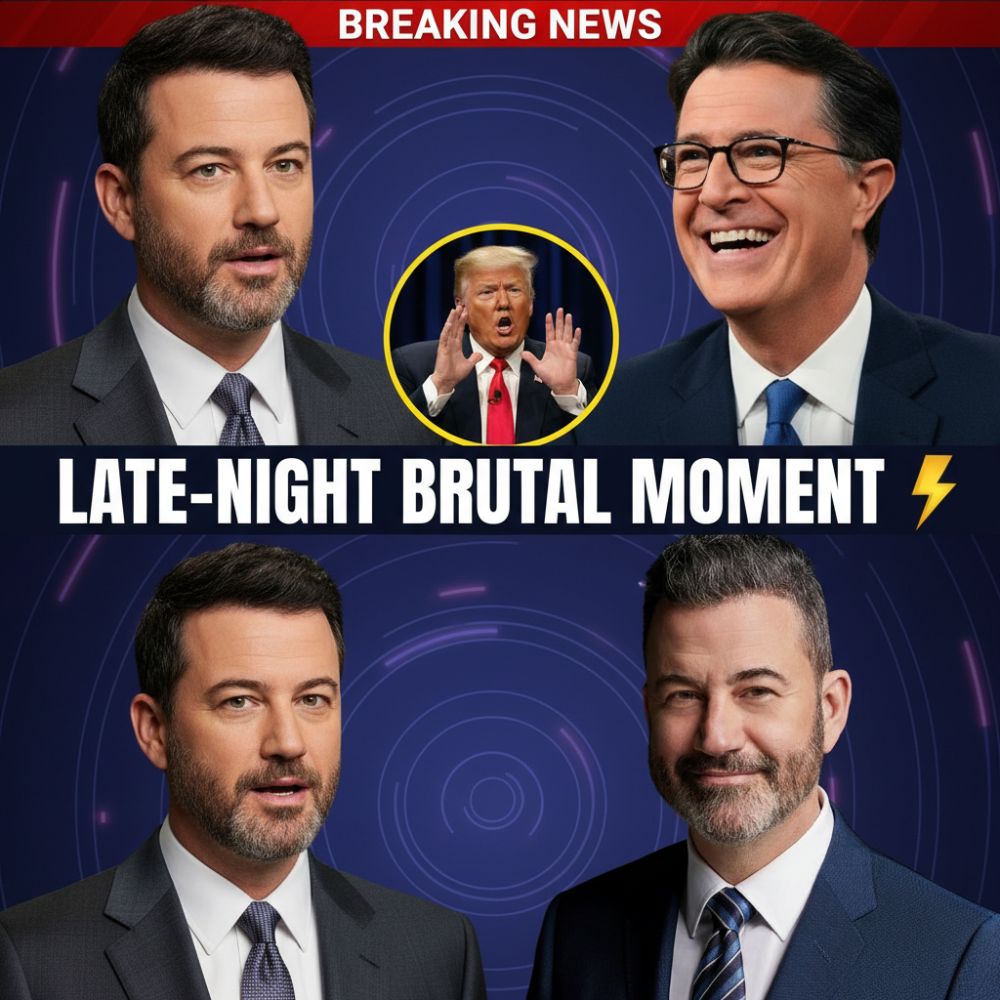
On Monday night, Jimmy Kimmel walked onto his stage with an uncharacteristically calm posture. He did not open with a nickname or a punchline. He opened with a printed sheet of paper. He read Mr. Trump’s insult slowly, then set the paper down, as if filing it rather than fighting it. The audience laughed, then quieted. Mr. Kimmel asked a question that landed less as a joke than as an indictment: Did anyone ever imagine a president celebrating the unemployment of hundreds of Americans?
The power of the moment was not in its cruelty, but in its restraint. Mr. Kimmel suggested that insults are often a shortcut around a more uncomfortable task: answering questions. Are groceries cheaper? Are schools safer? Does anyone sleep better because a celebrity was mocked? The laughter that followed sounded less like delight than recognition. He let it fade before offering a simple rule: confidence shows up as clarity, not constant bragging.
Instead of declaring Mr. Trump immoral or unfit, Mr. Kimmel let contrast do the work. He played a brief montage of the former president calling himself the smartest, toughest and most honest, then paired it with clips of contradiction and deflection. The timeline argued back. Power, he implied, hates replays because they turn performance into record.
On Tuesday, Stephen Colbert approached from another angle. He did not mock Mr. Trump’s appearance or cadence. He mocked the method. Mr. Colbert proposed a test: how many times can one person change the story before it stops being strategy and becomes habit? He played short clips, pausing after each long enough for the contradiction to register on its own. One line traveled especially fast online: some politicians don’t flip-flop because they’re complex; they flip-flop because they’re auditioning.
Mr. Colbert waved off the applause and let the silence sit. The silence weighed more than the laugh. He then described the attention tactic with clinical calm. When a leader can’t defend a claim, he attacks the messenger. When he can’t answer a question, he reframes it as loyalty. When facts won’t cooperate, he floods the room with feeling and hopes everyone forgets what was asked. It sounded less like satire than instruction.
By midweek, the clips fused online into a single narrative. Mr. Kimmel and Mr. Colbert were not merely joking; they were documenting. They treated Mr. Trump’s chaos as a pattern that could be labeled, replayed and understood. That shift mattered. Comedy did not escalate the noise; it slowed it down.
Mr. Trump’s response completed the picture. He did not rebut the points. He attacked the frame. He posted rapidly, calling the hosts irrelevant while demanding attention. He claimed their audiences were rigged while reacting as if the laughter were dangerous. He insisted he didn’t care, then returned again and again. If they did not matter, why chase them? If the jokes were weak, why respond as if they were a threat?
What viewers often describe as “losing it” is not a single tantrum but a public accumulation of contradiction. It is the inability to leave a stage even while insisting the stage is beneath you. In this case, the loudest response came not from a sharper insult but from composure.
Mr. Kimmel closed by saying that debate is welcome, but humiliation is not leadership. Mr. Colbert added that facts do not grow weaker because they are laughed at; they grow clearer. Neither line sought to win the night. Both sought to fix the record.
There is an old American argument about satire and power. Presidents have always bristled at mockery, but democracies depend on the freedom to ridicule the powerful. Laughter can be frivolous, but it can also be forensic. When humor stops racing toward the next punchline and starts replaying the tape, it becomes something else: a ledger.
In a political culture fueled by speed and spectacle, silence can be the loudest rebuttal of all. When it refuses to move, even a man who thrives on noise finds himself exposed—not by insults, but by the calm insistence that the story stay still long enough to be seen.