


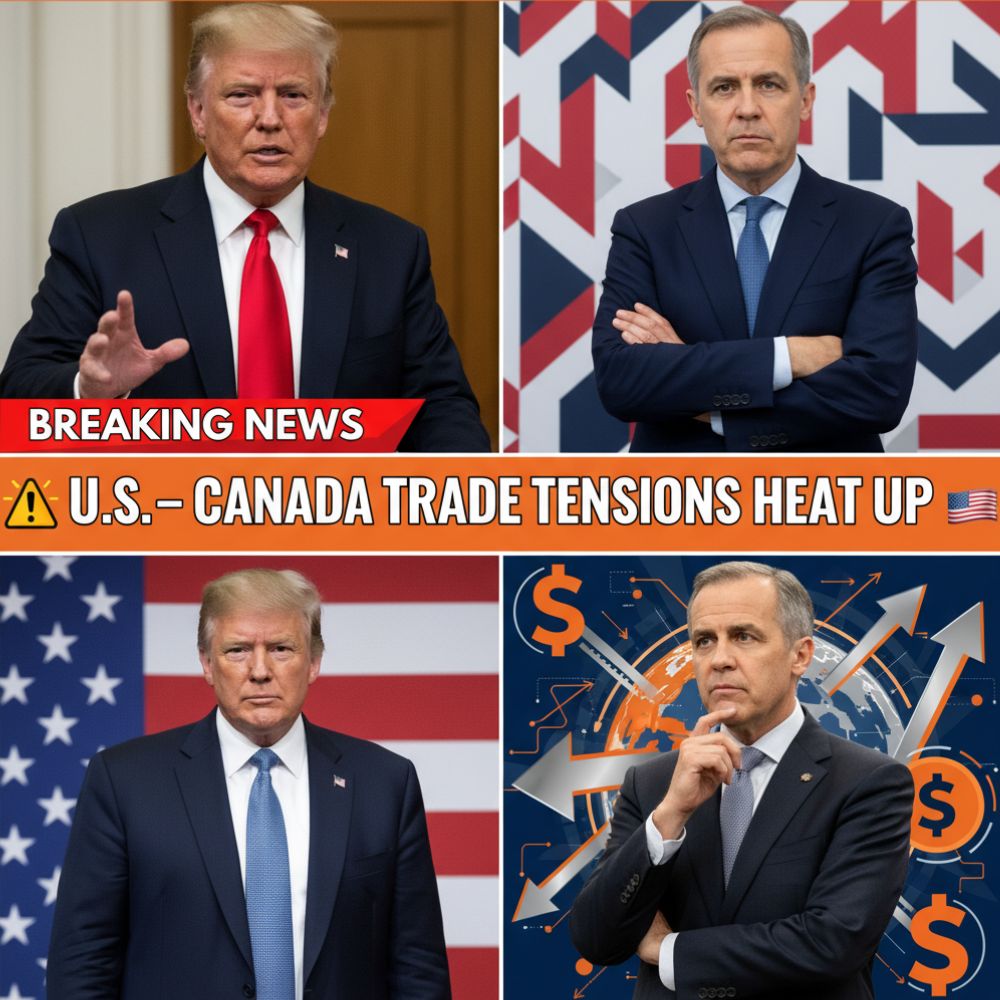
JUST IN: Trump Pressured Canada Week After Week — And Carney Turned Each Threat Into Leverage
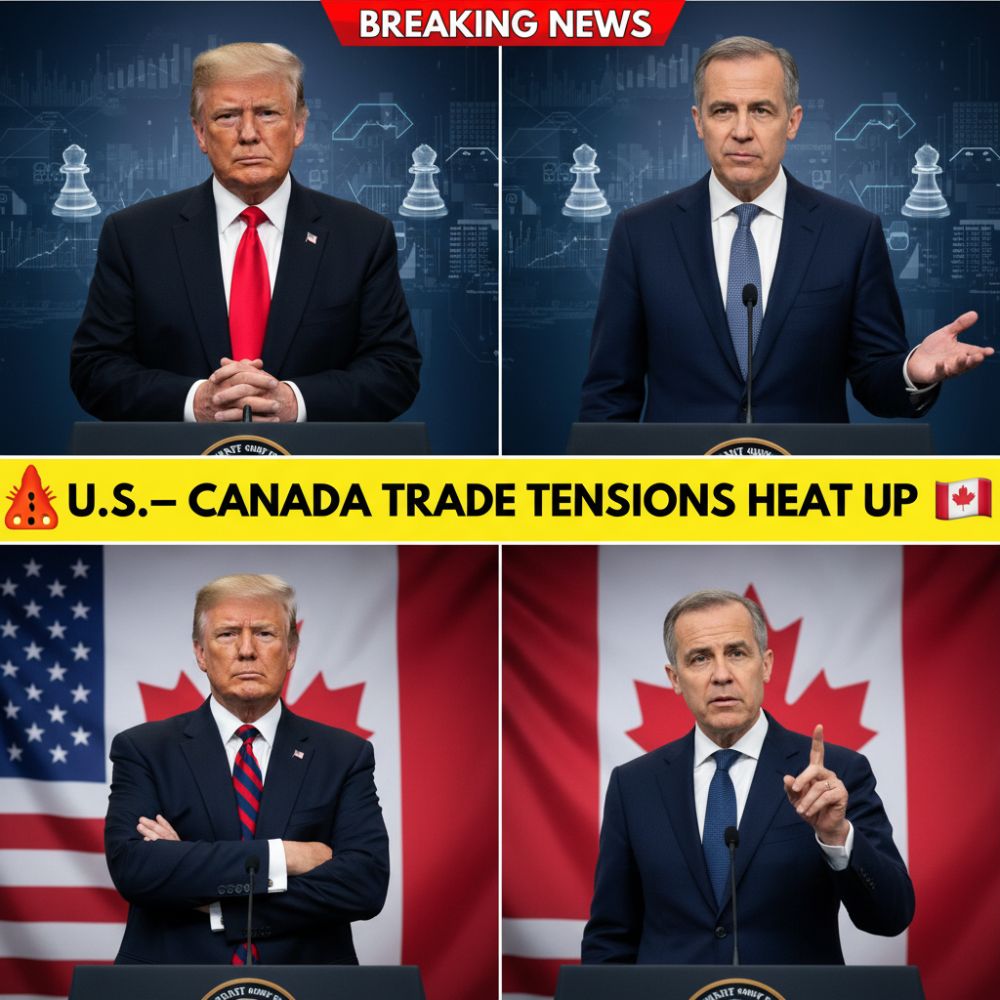
Throughout 2026, tensions between Washington and Ottawa escalated into a near-weekly cycle of threats and counter-moves.
Tariffs. Trade freezes. Aircraft restrictions. Arctic sovereignty rhetoric. Even provocative language about annexation.
What the White House appeared to expect was economic pressure forcing Canadian concessions.
What emerged instead was a calculated counter-strategy led by Prime Minister Mark Carney — one that treated every threat not as a crisis, but as a signal.
A signal of what the United States needed most.
The Core Calculation
At the center of the dispute was a structural reality: Canada controls resources and trade corridors that the U.S. cannot easily replace.
Critical minerals essential for EV batteries and defense systems
Major oil reserves integrated into U.S. refining networks
Fertilizer inputs central to American agriculture
Hydropower exports to northern U.S. states
Arctic shipping routes and the Northwest Passage
From Washington’s perspective, tariffs and public pressure were tools to extract concessions without long negotiations.
From Ottawa’s perspective, the strategy revealed American dependence.
Turning Pressure Into Diversification
Rather than escalate rhetorically, Carney’s government responded asymmetrically.
When tariffs were introduced under emergency justifications, Canada imposed calibrated countermeasures while simultaneously accelerating trade diversification talks.
When inflammatory rhetoric surfaced — including references to Canada as a “51st state” — domestic political reaction consolidated support around sovereignty and economic independence.
Consumer boycotts gained traction. National unity sharpened.
Instead of destabilizing Ottawa, the pressure appeared to harden its domestic mandate.
Carney’s broader strategy became clearer over time: reduce single-market exposure before the next threat lands.
The Global Pivot
At international forums, including Davos and other multilateral platforms, Carney framed the dispute within a larger narrative — that middle powers must diversify supply chains or risk economic coercion in a fragmented global order.
Meanwhile, Canada quietly expanded negotiations with Europe, India, and parts of Asia. When Washington signaled concern over closer Canada–China economic engagement, Ottawa emphasized that diversified trade reduces vulnerability — not alliance commitment.
The sequencing mattered.
Build first. Announce later.
By the time new agreements were publicly highlighted, alternatives were already in motion.
When Leverage Cuts Both Ways
Several pressure tactics reportedly stalled once U.S. domestic impacts became clear.
Restrictions affecting Canadian aircraft faced resistance from U.S. carriers reliant on cross-border supply chains.
Infrastructure disputes surrounding cross-border trade routes triggered concern from governors and industry groups whose states depend heavily on Canadian commerce.
Energy and mineral flows proved more intertwined than headline rhetoric suggested.
In highly integrated economies, economic pressure is rarely one-directional.
The deeper the integration, the higher the collateral cost.
The Political Dimension
The confrontation also carried domestic political consequences in both countries.
In Canada, external pressure reinforced nationalist sentiment and strengthened Carney’s political standing. Sovereignty became a unifying message across party lines.
In the United States, business groups and agricultural stakeholders expressed concern about instability in supply chains that underpin manufacturing and food production.
Trade volatility introduces risk — and markets react to risk.
A Shift in the Balance
By late 2026, the dynamic appeared to shift.
Canada remained economically intertwined with the United States — that reality did not change. But it was no longer positioned as economically cornered.
Diversification does not eliminate dependence overnight. However, it changes negotiating posture.
Washington’s strategy relied on the assumption that Canada had limited alternatives.
Ottawa’s response focused on creating them.
The Strategic Lesson
The episode underscores a broader principle of modern geopolitics:
Economic leverage works best when asymmetry is clear and substitution is feasible.
In cases where supply chains are deeply integrated and resource geography favors one side, coercive tactics can expose mutual vulnerability instead of unilateral strength.
Canada cannot easily replace the U.S. market overnight.
But the U.S. cannot easily replace Canadian resources, energy flows, or mineral supply chains either.
That mutual dependence defines the relationship.
What Comes Next
As trade agreement reviews and future negotiations approach, both governments face a recalibrated landscape.
The United States remains Canada’s largest trading partner.
Canada remains one of America’s most critical suppliers.
But the tone of negotiations may change.
Weekly threats revealed something fundamental: economic interdependence limits how far coercion can go before it begins to backfire.
For Ottawa, the lesson was diversification.
For Washington, the lesson may be that leverage has limits when the other side controls inputs you cannot manufacture.
In geopolitics, pressure can compel.
But sometimes, it teaches the other side how to operate without you.