


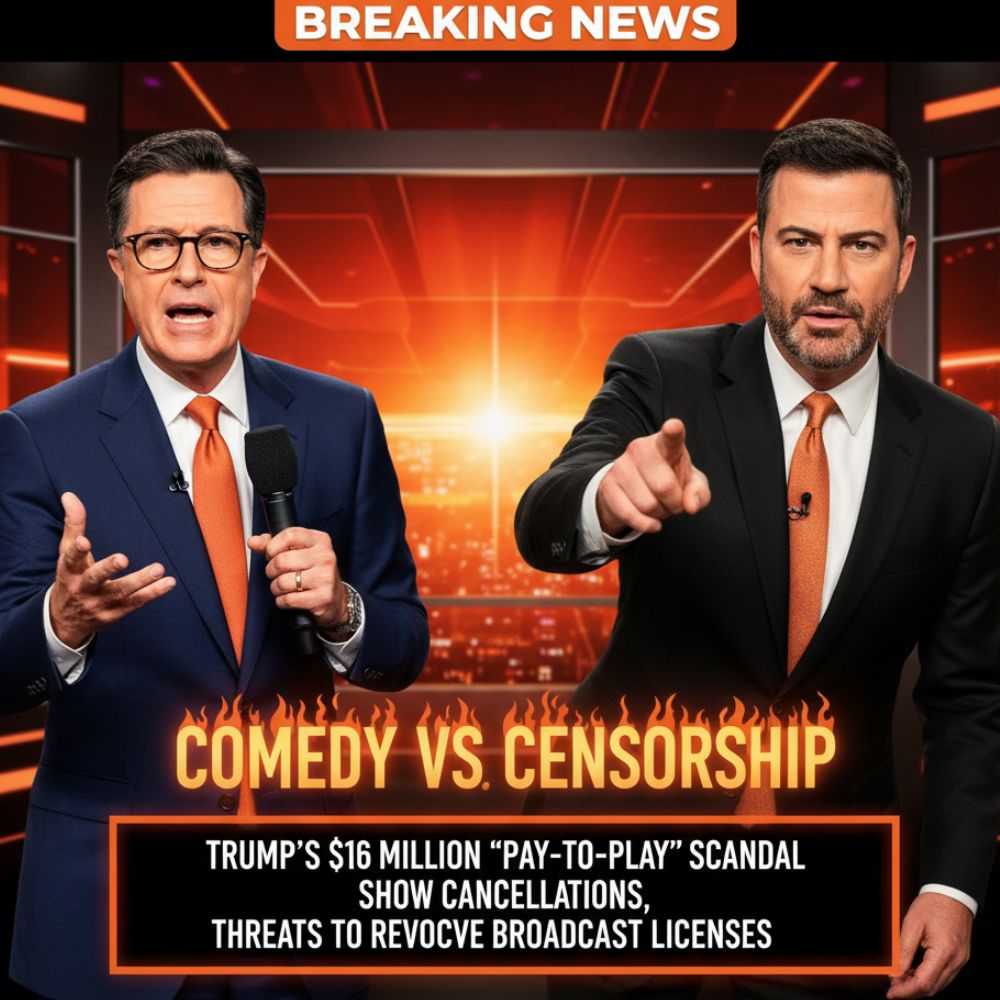
The $16 Million Silence: How Colbert and Kimmel United to Expose Trump’s War on Free Speech and Corporate Complicity
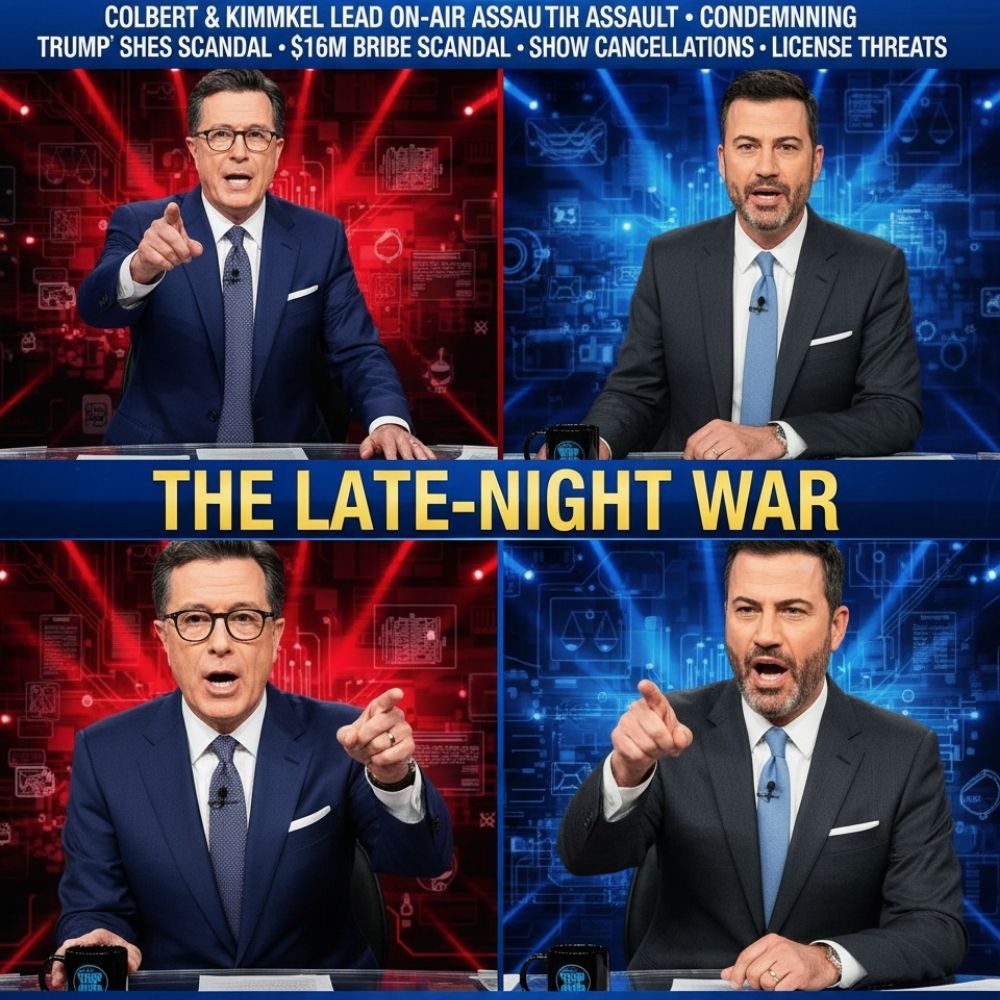
In the summer of 2025, the landscape of American late-night television—long considered a safe haven for political satire and cultural commentary—experienced a shockwave that threatened to silence its most prominent voices forever. What began as a series of legal maneuvers and corporate settlements has evolved into a historic confrontation between the executive branch and the comedians who hold it accountable. At the center of this firestorm are Stephen Colbert and Jimmy Kimmel, two hosts who decided that the cost of silence was far too high.
The conflict reached a fever pitch on July 14, 2025, during a Monday monologue that would ultimately serve as Stephen Colbert’s cancellation notice. Colbert addressed a $16 million settlement paid by Paramount, the parent company of CBS, to Donald Trump. The settlement was ostensibly to resolve a lawsuit regarding a 60 Minutes interview with Kamala Harris, which Trump claimed had been deceptively edited. While CBS had previously called the lawsuit “completely without merit,” the sudden payment raised eyebrows across the industry. Colbert, with his signature bluntness, labeled the payment for what many suspected it truly was: a “big fat bribe.”
The context of this payment was critical. At the time, Paramount’s owners were seeking FCC approval for a massive $8.44 billion merger with Skydance Media. With FCC Chairman Brendan Carr—a Trump appointee—making it clear that he would consider the 60 Minutes issue during the merger review, the settlement appeared to be a strategic move to clear a path for regulatory approval. Three days after Colbert’s monologue, CBS announced the immediate cancellation of The Late Show with Stephen Colbert, effective May 2026. Despite being the number one rated late-night show in America, it was being “erased,” with the network claiming the decision was purely financial.
However, the silence didn’t last long. The cancellation of Colbert’s show sparked an unprecedented wave of solidarity. When Jimmy Kimmel was subsequently suspended for six days following his own criticisms of the administration, the two hosts realized they were facing a coordinated “censorship playbook.” FCC Chairman Carr had openly threatened ABC’s broadcast license, mirroring the tactics used against CBS. Trump, meanwhile, took to social media to celebrate, stating he “absolutely loved” that Colbert got fired and demanding that Kimmel “rot” in his supposedly bad ratings.
The response from Colbert and Kimmel was a masterclass in defiance. They chose to stop fighting for their individual shows and start fighting for the principle of free speech. On September 30, 2025, the two hosts appeared on each other’s programs in a historic crossover event. They didn’t just exchange jokes; they laid out the receipts. They exposed a “side deal” involving Skydance CEO David Ellison—son of billionaire Trump ally Larry Ellison—who had allegedly promised that CBS would embrace “varied ideological perspectives” in exchange for the administration’s blessing of the merger.
While Trump was delivering speeches to dwindling crowds in Rome, Georgia, bragging about “winning affordability” and jokingly suggesting he give himself the Congressional Medal of Honor for “bravery,” Colbert and Kimmel were documenting the reality of his war on dissent. They highlighted how government power was being weaponized to extort money through lawsuits and intimidate networks into compliance. Senators like Elizabeth Warren and Bernie Sanders have since launched investigations into whether these corporate side deals violated anti-bribery laws, but for the late-night hosts, the damage—and the message—was already clear.
Colbert’s guest on the night of his cancellation announcement, Senator Adam Schiff, tweeted that if the show was ended for political reasons, the public deserved better. That sentiment has become the rallying cry for a new era of late-night resistance. Kimmel’s emotional 18-minute monologue upon his return from suspension wasn’t just about his own job; it was an indictment of a system where a president celebrates when Americans lose their jobs for speaking their minds.
This saga serves as a sobering reminder of the fragility of the First Amendment in an era of corporate consolidation and authoritarian pressure. Stephen Colbert and Jimmy Kimmel didn’t just lose their platforms; they found a new one in their shared brotherhood. They proved that while you can cancel a show, you cannot cancel the truth—especially when those telling it refuse to be silenced. As the Ed Sullivan Theater prepares for its final season under Colbert, the conversation he and Kimmel started is only getting louder, reminding us all that in the battle for free speech, the punchline is often the most powerful weapon of all.