


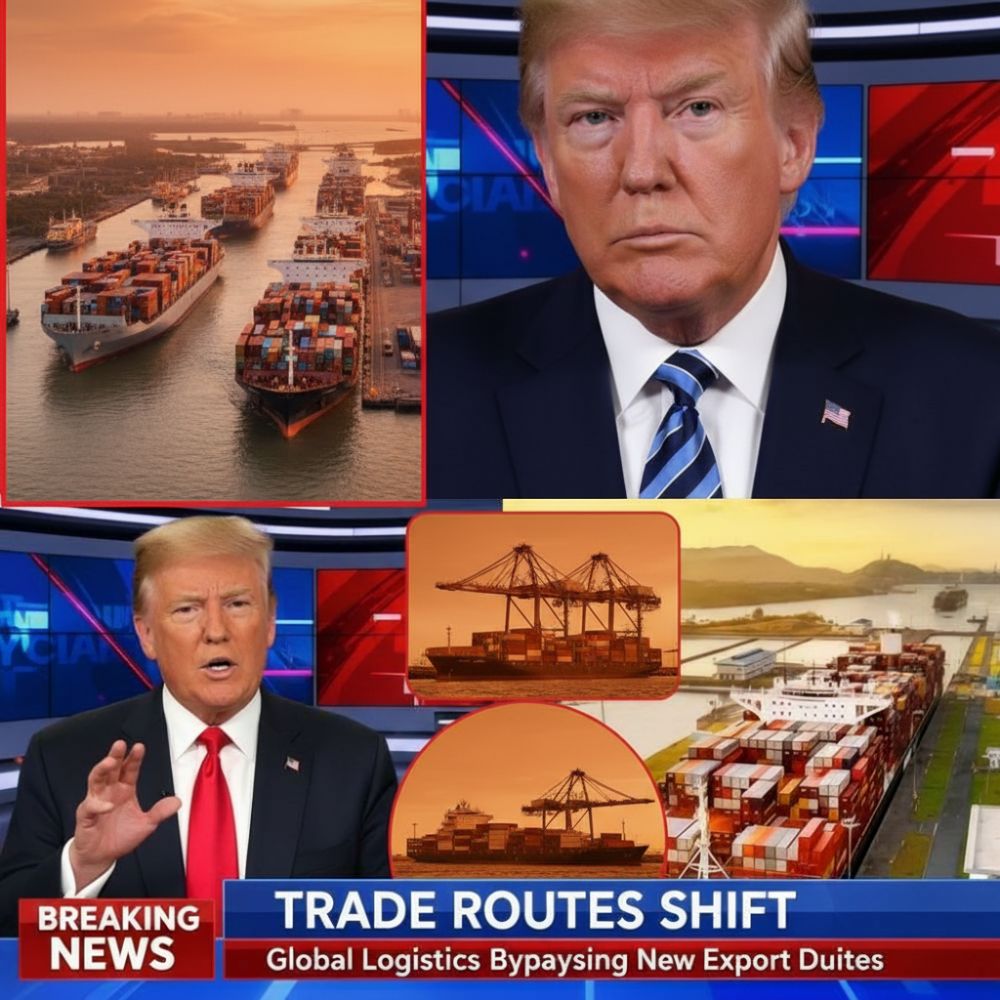
Trump triggered a wave of what he called “killer tariffs,” worth $18–22 billion per year, targeting agricultural exports. But the move quickly exposed an uncomfortable reality: when Washington pulls the tariff trigger, global supply chains do not stand still and wait.
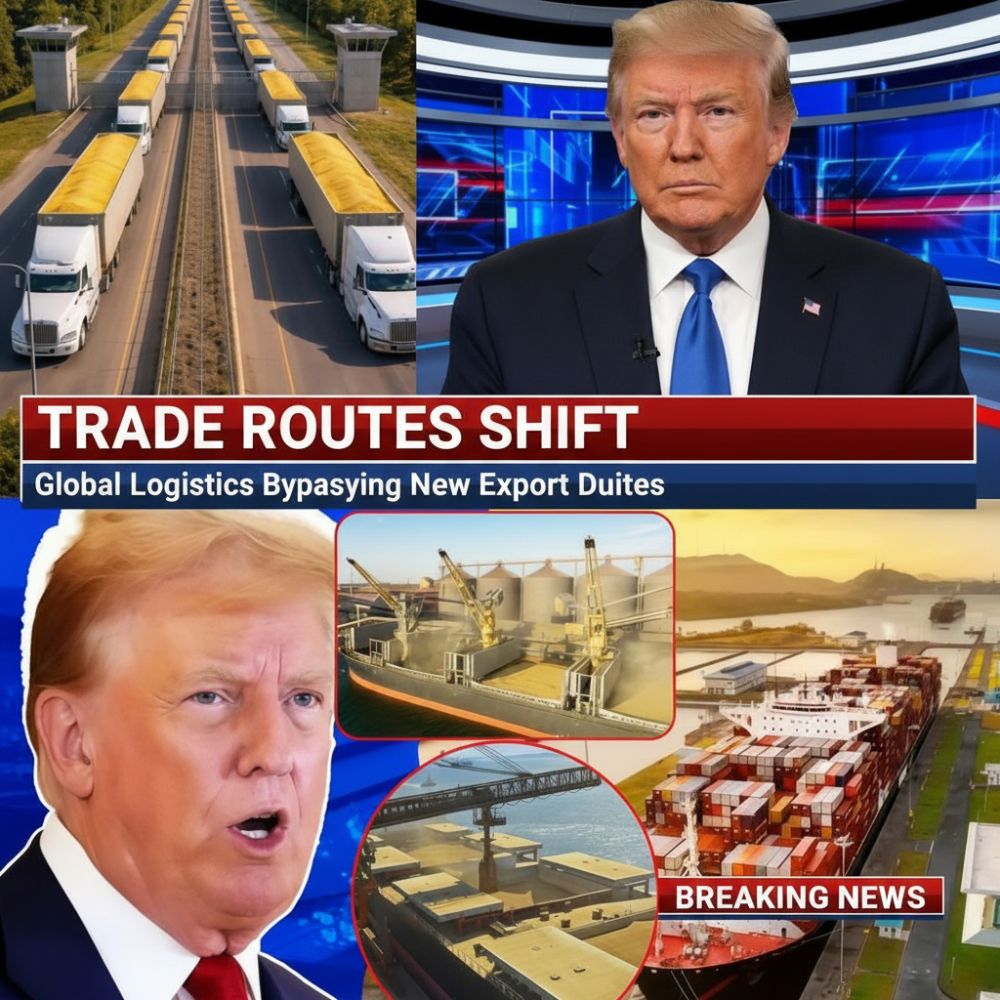
For decades, U.S. policymakers have relied on tariffs as one of their most visible tools of economic leverage. The logic is straightforward—raise the cost of foreign goods entering the American market and pressure trading partners into negotiations or concessions. But in a world of increasingly flexible logistics networks and diversified shipping routes, the effectiveness of that strategy has begun to face new tests.
Within days of the tariff announcement, analysts and trade observers noticed shifts rippling through international transport networks. Trade routes that had long depended on infrastructure, ports, and logistical corridors closely tied to U.S. systems started adjusting their direction. Freight forwarders, commodity traders, and shipping companies quietly began reorganizing the flow of goods to reduce exposure to the newly imposed duties.
The scale of the shift quickly drew attention. According to industry estimates, more than 35 million tonnes of grain per year—representing nearly $40 billion in trade value—were affected by the changing dynamics in export logistics. Instead of moving through long-established channels that had dominated North American trade for decades, shipments began exploring alternative pathways through different ports, rail corridors, and maritime routes.
What surprised many experts was not simply the magnitude of this movement, but its speed. Modern supply chains operate with a level of agility that would have been unimaginable only a generation ago. Digital logistics systems, flexible shipping contracts, and globally integrated commodity markets mean that traders can redirect enormous volumes of goods in remarkably short periods of time.
By the moment Washington’s tariffs officially took effect, much of the global trading system had already begun adapting. Shipping schedules were revised, contracts renegotiated, and logistical flows recalculated. In practical terms, that meant the United States’ tariff pressure arrived after supply chains had already started shifting.
For many economists, this episode highlights a broader structural issue with the increasing reliance on trade restrictions as a geopolitical tool. Tariffs can still influence markets, but their effectiveness depends heavily on one critical factor: dependency. As long as trading partners depend on a particular market, infrastructure network, or financial system, tariffs can serve as powerful leverage.
However, once alternatives emerge, the balance begins to change.
Over the past decade, international trade networks have gradually diversified. New shipping hubs have expanded, rail corridors have multiplied across continents, and emerging economies have invested heavily in port infrastructure. These developments have created a web of logistical options that did not previously exist.
When such alternatives are available, tariffs may produce unintended consequences. Instead of forcing compliance, they can encourage companies and governments to accelerate their search for routes and systems that reduce reliance on the United States.
Trade experts often describe this dynamic as the risk of “weaponizing trade.” When economic tools are used too aggressively or too frequently, they may lose their strategic impact over time. Rather than reinforcing influence, they can motivate partners to design workarounds that permanently reduce exposure to those tools.
This does not mean tariffs are irrelevant. The United States remains one of the world’s largest consumer markets and a central pillar of the global financial system. Any change in U.S. trade policy still sends shockwaves through international markets. But the ability of tariffs to dictate long-term outcomes is increasingly uncertain in a world where supply chains are capable of rapid reconfiguration.
Industry insiders note a simple but important reality about global logistics: once supply chains shift, they rarely return exactly to their previous form. Businesses invest enormous resources into building new transport routes, negotiating contracts, and optimizing shipping networks. After those investments are made, reverting to older structures is often inefficient and costly.
That is why episodes like this one attract so much attention from economists and policymakers. They offer a glimpse into how the global trading system may respond to future economic conflicts.
The larger question now facing Washington is not merely about one set of tariffs or one trade dispute. Instead, it touches on the long-term effectiveness of a strategy that relies heavily on economic pressure to shape global behavior.
If tariffs push trading partners to diversify their logistics networks and reduce dependency on American systems, the result could gradually reshape the architecture of international commerce.
In that sense, the true consequences of the March 7 tariff announcement may not be visible immediately. The most significant impact could unfold slowly, as companies, traders, and governments adjust their strategies in response to an increasingly uncertain trade environment.
Whether Washington’s aggressive tariff approach ultimately strengthens U.S. economic influence—or unintentionally accelerates the world’s effort to operate beyond it—remains one of the defining questions of the current global trade era.