


U.S. Alcohol Sits Idle as Canada’s Boycott Enters Second Year, Inflicting Billions in Losses
WASHINGTON — When President Trump launched a broad trade war against Canada last March, he expected economic pressure to force America’s northern neighbor to the negotiating table. Instead, Canada responded with a silent but devastating countermove: provincial governments simply pulled American alcohol off the shelves.
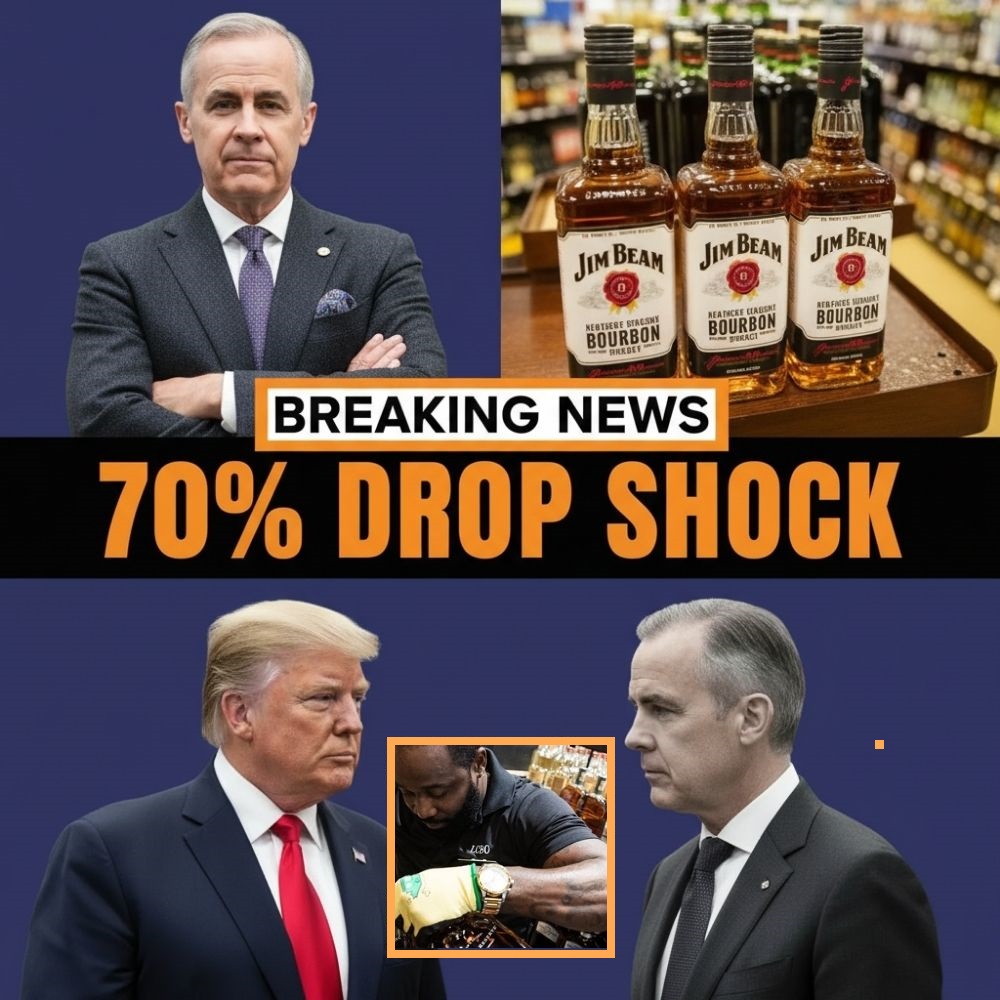
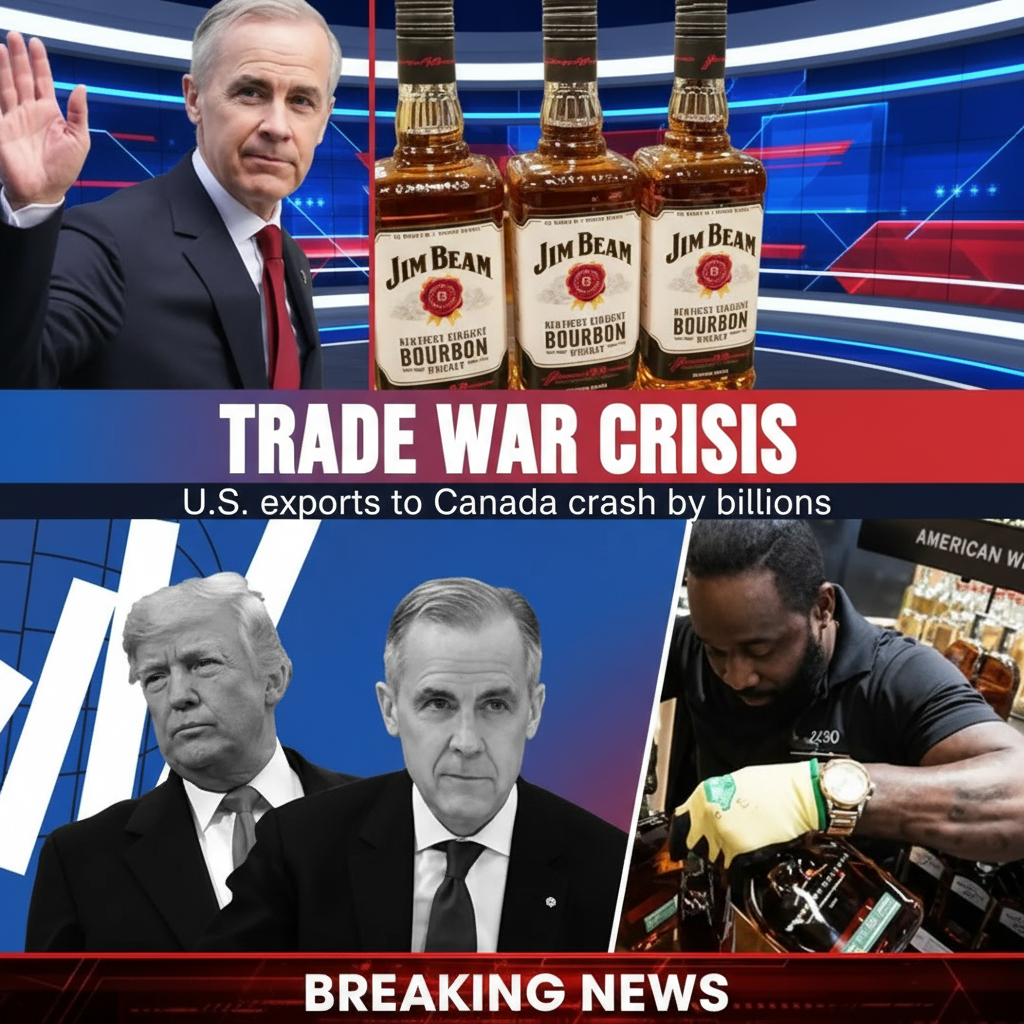
One year later, that decision has metastasized into a full-blown commercial crisis for U.S. distillers and vintners. More than $80 million worth of American beer, wine and spirits has vanished from Canadian inventory, with approximately $2 million already expired or expiring in the coming months . The broader economic toll is staggering: U.S. spirits exports to Canada plunged from $203 million in 2024 to just $60 million between March and December 2025 — a drop of nearly 70 percent .
“One year after U.S. spirits were removed from retail shelves across Canadian provinces, the damage to American distillers is unmistakable,” said Chris Swonger, president and CEO of the Distilled Spirits Council of the United States. “This policy has caused real and avoidable harm to an industry that has long championed open markets” .
‘Worse Than a Tariff’
The boycott, enacted by provincial liquor control boards in Ontario, Quebec, British Columbia and elsewhere, has proven far more damaging than a simple tariff increase. Brown-Forman Corp., the Louisville-based maker of Jack Daniel’s, reported that Canadian organic net sales plummeted more than 60 percent in the first half of fiscal year 2026 .
Chief Executive Officer Lawson Whiting called the boycott “worse than a tariff” and a “very disproportionate response” . While Canada accounts for only about 1 percent of Brown-Forman’s total sales, for smaller distillers the impact has been existential.
Minnesota’s Phillips Distilling Co. saw Canadian sales decline by roughly 70 percent — a loss equivalent to 15 percent of its branded business, according to CEO Andrew England. The company was forced to shift production of its Sour Puss liquor to a contract manufacturer in Montreal simply to remain in the market .
“It was very frustrating,” England told Bloomberg News. “If you take away 15% of our branded business, that’s a big problem. I have no idea how this is going to settle out with the U.S. and Canada, which is why we need to operate separately in Canada, and just get on with it” .
The pain extends beyond spirits. U.S. wine exports to Canada — once America’s largest wine market — have fallen 91 percent, according to an industry complaint filed with the U.S. Trade Representative . In October alone, U.S. wine exports to Canada dropped 84 percent year-over-year, while distilled spirits exports fell 56 percent .
Canadians Dig In
The Trump administration has pressed Canada to end the boycott, with U.S. Trade Representative Jamieson Greer warning that lifting provincial booze bans is a key condition for securing a successful review of the U.S.-Mexico-Canada Agreement this year .
But Canadian public opinion has moved in the opposite direction. A December poll by Nanos Research Group found that nearly three-quarters of Canadians support keeping American alcohol off store shelves, while only 20 percent favor resuming sales . Another survey showed that 71 percent of Canadians are now “less likely” to purchase U.S.-made goods than before the trade war — an increase of eight percentage points from May .
The hard line reflects deepening anger over Trump’s approach to Canada, which has included tariffs on steel and aluminum, threats to crush the Canadian automotive industry, and repeated suggestions that Canada should become America’s “51st state” through “economic force” .
Prime Minister Mark Carney has been unequivocal in response. “America is not Canada, and Canada never, ever will be part of America in any way, shape or form,” he said after taking office .
The LCBO’s Empty Shelves
Ontario, Canada’s most populous province and home to the Liquor Control Board of Ontario — one of the world’s largest alcohol purchasers — has been at the forefront of the boycott. Premier Doug Ford has refused to back down, insisting that American products will remain off LCBO shelves until U.S. tariffs are completely removed .
“We have been clear: until tariffs are completely removed, U.S. alcohol will remain off shelves,” a Ministry of Finance spokesperson said . Ford himself has urged Canadians to remain steadfast, arguing that the boycott has “clearly worked” as a negotiating tool .
The LCBO imported roughly $965 million worth of American alcohol annually before the ban . Now, the government says approximately $2 million worth of U.S. products — primarily beer, ready-to-drink beverages and wine — have already expired or will expire in the coming months . Documents obtained through freedom of information requests show provincial officials have been closely monitoring the expiring inventory, though many details remain redacted .
Other provinces have taken more nuanced approaches. Quebec announced in February that some American alcohol would return to stores — but only products that risked deteriorating by March 2027, with proceeds going to food banks . The sale is expected to generate up to $8.6 million for charitable causes .
Only two provinces, Alberta and Saskatchewan, have fully restored American spirits to retail shelves, largely because they rely on privatized liquor systems rather than government-controlled boards .
A Strategic Advantage for Canada
As American distillers struggle, Canada has quietly capitalized on the moment. Sales of Ontario-made alcohol products increased roughly 22 percent after the ban, with craft products up 35 percent and VQA Ontario wines soaring 52 percent .
For U.S. producers, the path forward remains uncertain. While the Supreme Court ruled last month that Trump lacks authority to impose sweeping tariffs under the International Emergency Economic Powers Act, the president has signaled he intends to continue his tariff strategy .
Negotiations over the CUSMA review remain frozen, though Canadian Minister Dominic LeBlanc has indicated he will meet with Greer in the coming weeks to discuss the impasse . For now, American alcohol remains in limbo — sitting in warehouses, slowly expiring, while Canadians pour their own.
“This is not just about trade,” one Canadian official said, speaking on condition of anonymity. “It’s about principle. And on that front, Canadians are not backing down.”