


Canada’s Pursuit of Gripen Jets Signals Shift in Defense Strategy Amid U.S. Tensions
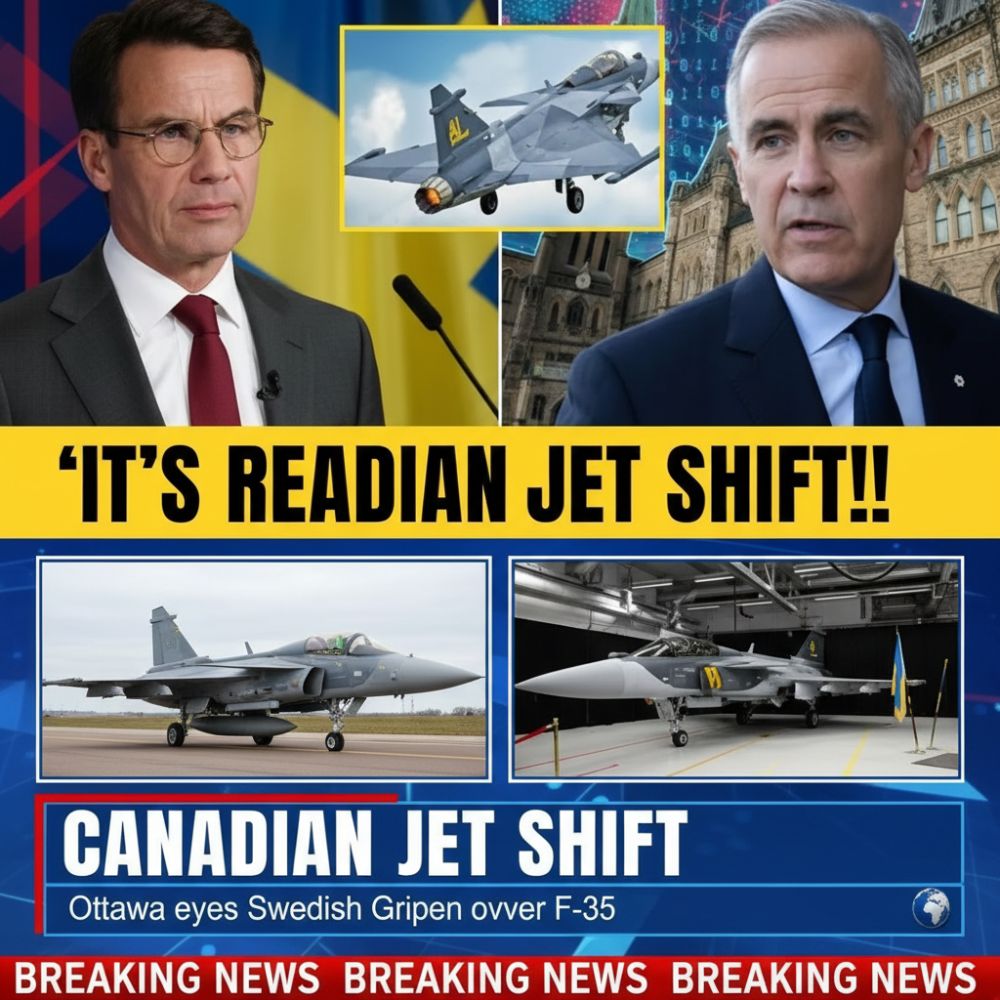
OTTAWA — What began as quiet consultations between Canadian defense officials and Sweden’s Saab has evolved into one of the most consequential procurement debates in recent Canadian military history. Reports of an emerging arrangement for up to 88 Saab JAS 39 Gripen fighters — a figure mirroring the long-standing plan for 88 Lockheed Martin F-35 Lightning IIs — have thrust the issue into the open, transforming a routine replacement program for aging CF-18 Hornets into a broader statement about sovereignty, industrial policy and alliance dynamics.
The Canadian government, under Prime Minister Mark Carney, initiated a review of the F-35 contract shortly after taking office, citing escalating trade frictions with Washington and concerns over long-term supply-chain reliability. Canada has already committed to purchasing an initial 16 F-35s, with payments extended to long-lead components for 14 more, ensuring delivery of the first aircraft later this year for training purposes. Yet the full program of record — valued at roughly 19 billion Canadian dollars — remains under scrutiny, with officials weighing whether to proceed with the balance or pivot toward a mixed fleet that incorporates the Swedish Gripen.
Saab has aggressively positioned the Gripen E/F as a compelling complement or partial substitute. Company executives, including Chief Executive Micael Johansson, have described “intensive” discussions, emphasizing rapid technology transfer, domestic production capabilities and reduced dependency on any single partner. Saab has proposed establishing a Gripen assembly line in Canada — potentially in partnership with Bombardier — capable of producing aircraft not only for the Royal Canadian Air Force but also for export to other nations. Such a facility, officials say, could generate thousands of high-skilled jobs, with estimates ranging from 10,000 to 12,600 when bundled with six GlobalEye airborne early-warning aircraft.
The appeal lies partly in cost and flexibility. The Gripen, a 4.5-generation multirole fighter, offers lower acquisition and operating expenses than the stealthy F-35, along with simpler maintenance requirements suited to dispersed operations in Canada’s vast northern reaches. Saab highlights the jet’s proven export track record and NATO interoperability, bolstered by Sweden’s recent alliance membership. Proponents argue that local manufacturing would enhance Canada’s defense industrial base, providing greater control over upgrades, sustainment and data sovereignty — elements often constrained in the U.S.-led F-35 program.
Politically, the Gripen option carries symbolic weight. Amid strained U.S.-Canada relations, including tariff threats and disputes over Arctic security priorities, diversifying procurement away from exclusive American reliance resonates in Ottawa. Analysts describe the move as a calculated realignment: preserving core F-35 capabilities for high-threat scenarios while building a robust, domestically supported fleet for routine patrols, NORAD commitments and potential Arctic operations. A mixed approach — perhaps 30 to 40 F-35s paired with 50 to 80 Gripens — could balance stealth advantages with industrial and strategic autonomy.
Critics, however, caution against the pitfalls of fleet fragmentation. Operating two distinct fighter types would impose logistical burdens, higher training costs and interoperability challenges within NORAD, where seamless integration with U.S. forces remains paramount. American officials have privately expressed unease, warning that a significant Gripen purchase could complicate bilateral defense cooperation and raise questions about the platform’s ability to meet stringent NORAD requirements for continental air defense.
The timing amplifies the stakes. As geopolitical blocs solidify and procurement choices increasingly serve as signals of alignment, Canada’s decision could influence broader NATO dynamics. Sweden’s offer aligns with European efforts to bolster indigenous defense capabilities, while a pivot might embolden other allies to seek alternatives to U.S. platforms.
Defense Department spokespeople have described the review as ongoing, stressing that no final determination has been made. “Canada remains committed to meeting its NORAD and NATO obligations with the most capable, interoperable systems available,” a senior official said, declining to comment on specific numbers or timelines. Saab representatives echoed that the proposal remains flexible, tailored to Ottawa’s evolving needs.
For now, the Gripen discussions represent more than a fighter competition. They reflect Canada’s attempt to navigate an era of heightened strategic uncertainty, where defense acquisitions intertwine economic, industrial and geopolitical imperatives. The outcome — whether a full embrace of the F-35, a hybrid fleet or a dramatic reorientation toward European partnerships — will shape the Royal Canadian Air Force for decades and send ripples through transatlantic security arrangements.