



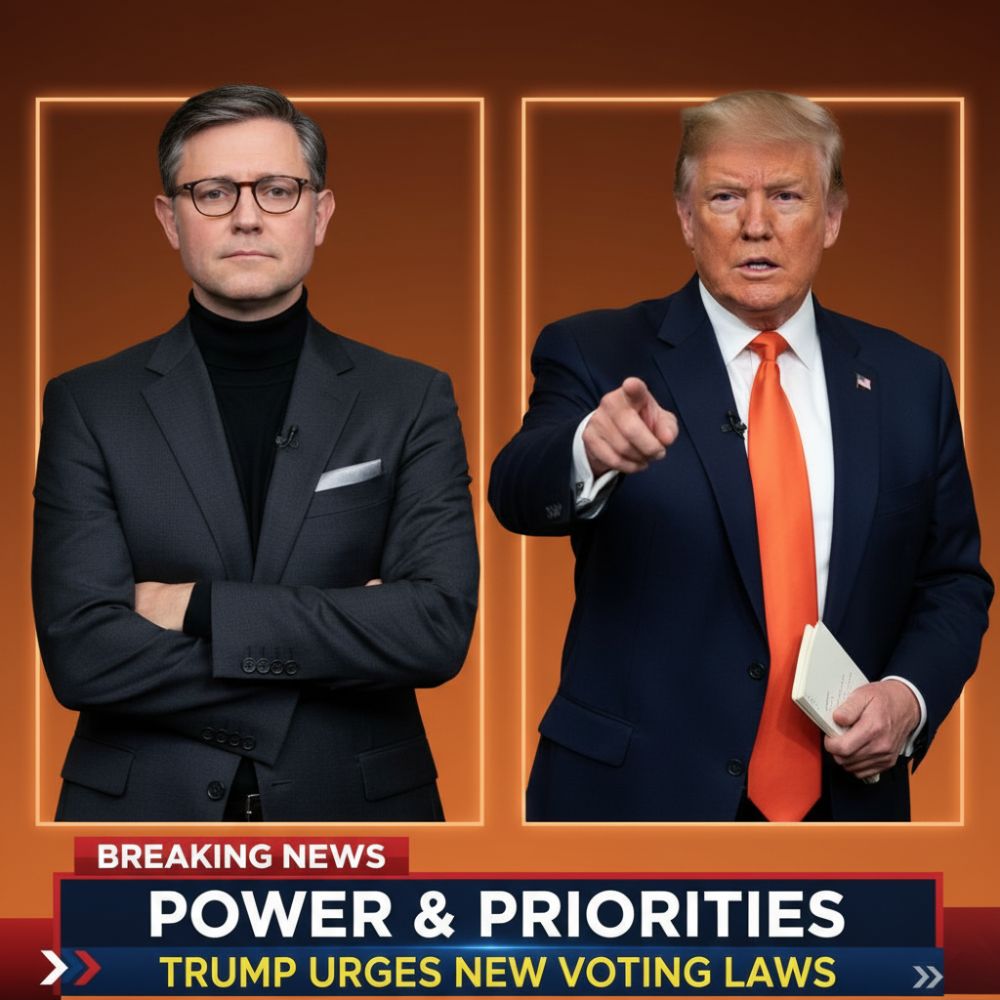
Political tensions in Washington have intensified as Donald Trump urges Congress to focus on election-related legislation, while lawmakers from both parties debate broader priorities such as the economy and housing policy.
Internal Debate Among Republicans
Recent comments from House Speaker Mike Johnson have highlighted concerns within the Republican Party about voter outreach. Johnson acknowledged that the party may be facing challenges with Latino voters, suggesting that some immigration enforcement policies may have been perceived as overly aggressive.
While he described the issue as a temporary “hiccup,” political analysts say the discussion reflects ongoing debates about messaging and strategy as both parties look toward the next national elections.
Shifts in Recent Election Results
At the same time, several recent special elections and local races have drawn attention from political observers. According to analysts, Democratic Party candidates have flipped a number of previously Republican-held seats in certain areas.
One widely discussed race involved candidate Bobby Budman in New Hampshire, where a Democratic victory in a district previously carried by Donald Trump surprised some political strategists. While single races rarely predict national outcomes, they often provide insight into voter sentiment ahead of larger elections.
Push for the SAVE Act
Meanwhile, Donald Trump has called on Congress to prioritize passage of the SAVE Act, a proposed measure that would require stronger proof of citizenship when registering to vote and introduce new rules related to mail-in ballots.
Supporters of the bill argue that stricter identification requirements could strengthen confidence in election systems. Critics, however, say such measures could make voting more difficult for some eligible voters.
The legislation faces significant hurdles in the United States Senate, where most bills require at least 60 votes to advance. Some Republicans, including Lisa Murkowski, have expressed reservations about the proposal.
Other Legislative Priorities at Risk
The debate over election legislation has also intersected with other policy issues currently before Congress.
One example is the bipartisan 21st Century Road to Housing Act, which aims to address housing shortages and reduce costs by encouraging new development and reforming certain federal housing programs. The measure passed the Senate with strong bipartisan support, receiving a vote of 89–9.
However, political disagreements over legislative priorities have raised questions about how quickly such proposals could move forward.
Looking Toward the 2026 Midterms
With the 2026 United States midterm elections approaching, both parties are carefully watching polling trends, legislative debates, and special election outcomes for clues about voter sentiment.
Analysts say the current disputes highlight broader questions about how Congress should balance election security debates with economic concerns such as inflation, jobs, and housing affordability.
As discussions continue in Washington, lawmakers face increasing pressure to find common ground on issues that affect both governance and the upcoming election cycle.