


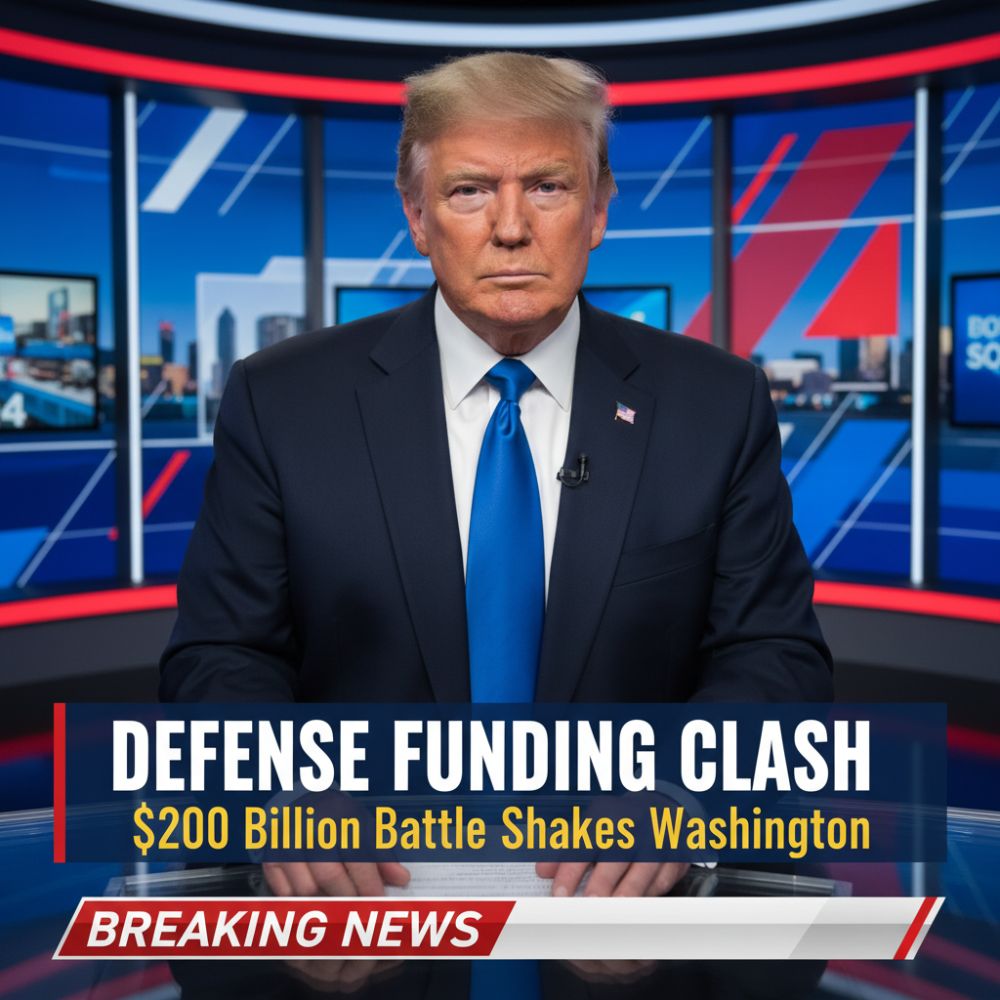
Dispute Over Proposed Defense Funding Exposes Deeper Divisions in Washington
Washington — A debate over a proposed $200 billion military funding package has escalated into a broader political confrontation, highlighting divisions within Congress and raising questions about the direction of U.S. defense policy.
The measure, which had been expected to move through early stages of consideration, encountered resistance from lawmakers who signaled concerns about its scope, timing and underlying priorities. While details of the proposal remain under discussion, the pushback has already reshaped the political conversation around defense spending.
At the center of the reaction is Donald Trump, who has publicly criticized congressional hesitation and framed the proposal as essential to maintaining national security.
Supporters of the funding argue that increased investment is necessary to address evolving global threats, modernize military capabilities and ensure readiness in an uncertain geopolitical environment. They point to rising tensions in several regions as justification for a more assertive defense posture.
Critics, however, have urged caution. Some lawmakers have questioned whether the scale of the proposed spending aligns with immediate needs, while others have called for greater transparency in how funds would be allocated.
Behind closed doors, congressional discussions have reportedly focused not only on the size of the package but also on broader strategic considerations. These include the balance between defense and domestic priorities, as well as concerns about long-term fiscal sustainability.
“This is not simply a question of numbers,” said one congressional aide familiar with the negotiations. “It’s about defining what our priorities are and how we justify them to the public.”
The disagreement has been amplified by a wave of online commentary, where competing narratives have taken hold. Some accounts have portrayed the situation as a dramatic standoff, while others have emphasized the routine nature of legislative scrutiny.
Analysts note that such gaps between perception and confirmed information are increasingly common in high-profile policy debates. As information spreads rapidly across platforms, partial details can shape public understanding before official statements are released.
For Mr. Trump, the episode appears to reflect a broader frustration with institutional resistance. His response, delivered through public statements and commentary, has emphasized urgency and framed the delay as a potential risk to national interests.
At the same time, lawmakers across the political spectrum have underscored the importance of deliberation in matters of defense spending. Several members of Congress have called for hearings and further review before advancing any final proposal.
The current impasse illustrates the complexity of policymaking in a divided government, where consensus on large-scale initiatives can be difficult to achieve. Even proposals framed around national security—traditionally an area of bipartisan agreement—have become subject to intensified scrutiny.
Experts in defense policy say the outcome of the debate could have implications beyond the immediate funding cycle. Decisions made now may influence long-term strategic planning, procurement priorities and the overall posture of the U.S. military.
For now, negotiations continue, with no clear timeline for resolution. Both sides have indicated a willingness to engage, though significant differences remain.
As the debate unfolds, the central question extends beyond whether the funding will be approved. It touches on how the United States defines its role in a changing global landscape—and who ultimately shapes that vision.