



MS NOW host Rachel Maddow accepted the 2025 Cronkite Award on Friday for her show’s deep dive reporting on the nationwide anti-Trump protests, a segment she titled, “Everyone, Everywhere, All at Once.”
Maddow accepted the award and called the protest movement against Trump’s rising authoritarianism the most important “story of our age.”
“I really believe—the story of our democracy right now—is not a Washington story. And it is not easy to cover. But right now, it is the most important story in the world,” she added while thanking her team and the local journalists whose reports added to her team’s coverage.
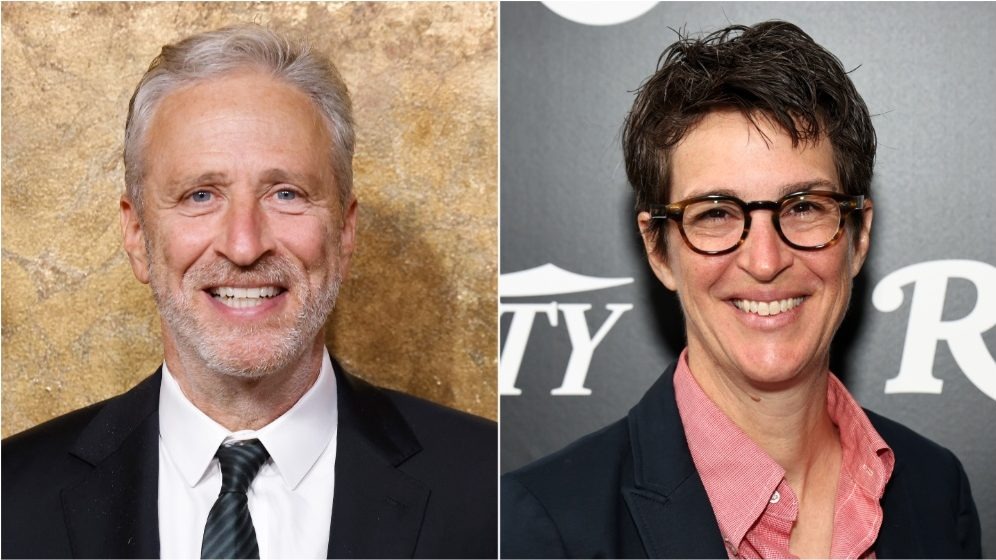
Maddow began her acceptance speech, saying, “I know we’re at the end and everybody has to pee, and if you’re like me, you have a bad back and you’re starting to do your exercises subtly in your seat, so I will go quickly.” She continued, striking a far more serious tone:
Thank you. Thank you very much for this. I want to acknowledge Aisha Williams and Holly Klopchin and Johanna Izzo, who are video producers and producers on this show, and I want to single them out specifically because they developed something new—a very labor-intensive system to try to do footage like this, not just on that day, but throughout this whole year that we’ve been on the air, for every day of the first hundred days and every Monday since.
It involves not just looking at user-generated content and social media content and chasing those things down and verifying them and figuring out whether we can corroborate that information that we can find online relatively easily. It also means systematically scanning local news coverage from both newspapers and local TV stations, and then contacting those news organizations and asking if they’ve got anything good that they didn’t publish. If there was a recorded livestream, if there’s anything on the cutting room floor that we might be able to use that we might be able to amplify, and we promise to credit you.
It’s a really, really, really labor-intensive job, and I feel incredibly guilty about you guys having transformed your jobs to be able to do this, because I fear that you have now learned a very special skill that you will never use again. But there’s no way that we could do national media coverage of the remarkably decentralized protests against the Trump administration without our partners in local news, without some of the geniuses in this room today, but without our partners in local news everywhere. We depend on them.
There are lots of systems in place to cover the powerful. But you know, if we are serious about doing this work in a democracy and for a democracy, that categorization is backwards, because in a democracy, the controlling force, the real power ultimately is with the people. They are telling power what it can do and what it cannot do.
Imagine a faraway country with its democracy at risk. It’s under pressure from a leader having his friends buy up and domesticate previously independent media, doing his best to intimidate or shut down the rest. He has the intent to rule by force, to consolidate all power in himself and rule indefinitely without being constrained by election results. In this faraway hypothetical country, if our foreign correspondents were to assess whether that country would make it, whether they would weather this storm, they would not try to discern that by ever closer and more minute scrutiny of the words or even the actions of the despot. They would file their dispatches and their reporting and their analysis on the reaction of the people to what the despot is trying to do. They would file their dispatches and their reporting and their analysis based on what is evident in the resilience of the people and the quality of their response and the cleverness of their response and the number of inflatable frog costumes they’re in.

The story of our age, I really believe—the story of our democracy right now—is not a Washington story. And it is not easy to cover. But right now, it is the most important story in the world.
So I want to say thank you to my colleagues here who have learned a whole new way to do our jobs in order to cover this story. I want to encourage all of you to look to the response of the people and not just the way they are victimized and affected by those in power, because it is the response of the people that will decide whether or not we’re here next year doing awards like this again.
So as I say to all my colleagues, whenever I brave the big city: stay on the air, stay big, no state TV.
Thank you for being here. Thank you for this award.