


In a stunning and historic rebuke, Canadian Prime Minister Mark Carney stood in silent solidarity as Métis leaders directly confronted the political shadow of Donald Trump during a national ceremony, declaring Canada “not for sale.” The electrifying moment at Winnipeg’s Louis Riel commemoration transformed a solemn historical event into a defining statement of modern sovereignty against escalating American economic pressure.
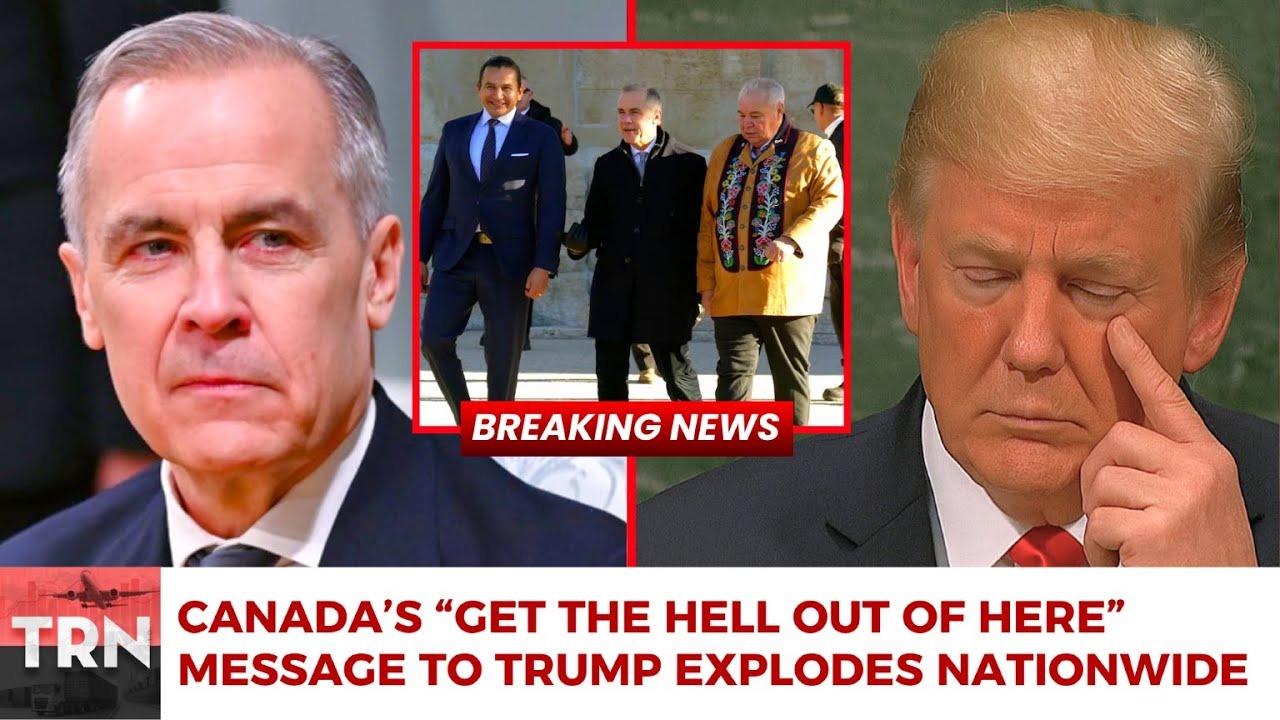
Métis National Council President David Chartrand delivered the searing message during his address. Linking past struggles for recognition to present-day economic attacks, he shifted focus to the southern border. “We say the same thing now to Trump. We’re not for sale, man. You get the hell out of here,” Chartrand stated, his voice resonating across the field. The direct invocation of the former U.S. president sent a shockwave through the politically charged atmosphere.
Prime Minister Carney, the first sitting prime minister to attend the ceremony honoring the Métis founder of Manitoba, did not flinch. He listened intently, hands folded, offering no interruption or correction. His deliberate silence framed the statement not as a partisan outburst but as a profound national sentiment rooted in a history of resistance. This visual of unity between the federal government and Indigenous leadership amplified the message’s weight. The ceremony marked 140 years since Riel’s execution, symbolizing courage and the fight for self-determination within a larger political force. By invoking Trump in Riel’s name, Métis leaders drew a stark historical parallel, asserting that Canada has faced domination before and refused it. The moment captured a nation grappling with its identity amid relentless trade pressure and tariff threats from Washington throughout 2025.
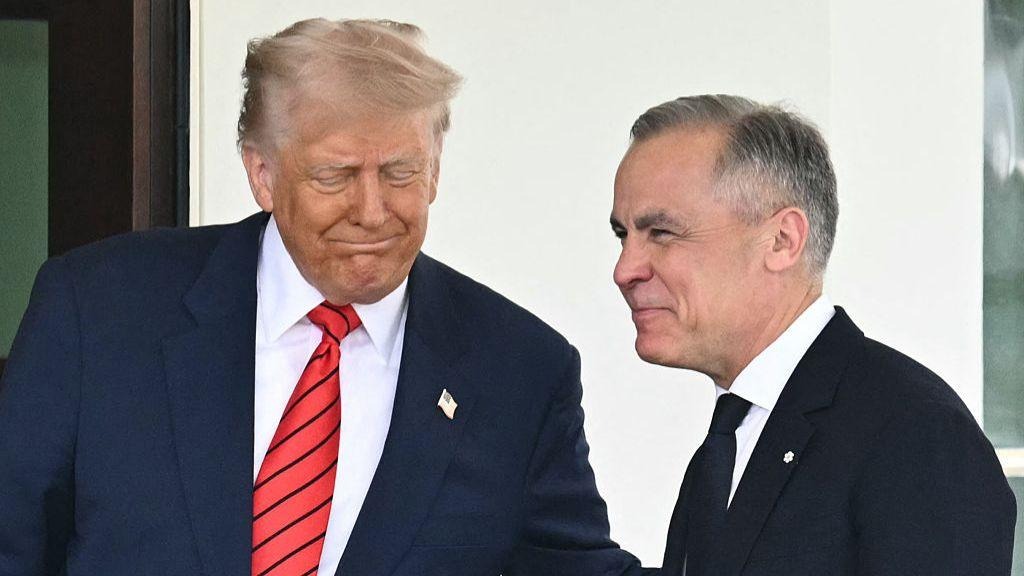
The U.S. has aggressively pushed Canada on multiple fronts, targeting steel, aluminum, autos, and agricultural goods. These moves have created profound uncertainty for Canadian businesses and forced Ottawa to accelerate a strategic pivot. Carney’s government has responded by deepening ties with Asian and European markets while pursuing new industrial partnerships to reduce dependence on a single, volatile buyer. Chartrand’s declaration gave voice to a strategic shift already underway. “We’ll stand up with you. We’ll fight against you and we’ll do everything in our power to hold against you,” he stated, framing the challenge in terms of economic resilience. This sentiment aligns with Carney’s repeated emphasis on building a self-reliant Canadian economy that cannot be undermined by foreign policy shifts. The prime minister’s calm demeanor in Winnipeg contrasted sharply with his composed handling of a subsequent crisis in Kuala Lumpur. There, he responded to Trump’s abrupt suspension of trade talks—triggered by a contentious Ontario television ad—with quiet precision. “We have lots of… yes,” Carney said when asked about contingency plans, revealing a prepared and patient strategy.
He outlined a philosophy of “giving ourselves far more than any foreign government could ever take away,” previewing hundreds of billions in domestic investment detailed in the upcoming federal budget. This approach reframes trade aggression not as a cause for retaliation but as a catalyst for national reconstruction and industrial self-sufficiency.
Carney’s strategy is grounded in hard economic realities. He highlighted Canada’s role as the supplier of 60% of U.S. aluminum, produced with clean hydroelectric power equivalent to ten Hoover Dams. This interdependence means Trump’s tariffs effectively tax the American supply chain, raising costs for U.S. automakers and aerospace firms. The prime minister’s focus on these facts underscores a leadership style defined by strategic patience over political noise. While Washington escalated tensions, Carney embarked on a deliberate diplomatic offensive across Asia. In Malaysia, Singapore, and South Korea, he was welcomed as a stable partner, announcing ambitious goals to increase non-U.S. exports by 50% over the next decade. He also confirmed a pivotal meeting with Chinese President Xi Jinping at the APEC summit, the first such leader-level talk in three years.
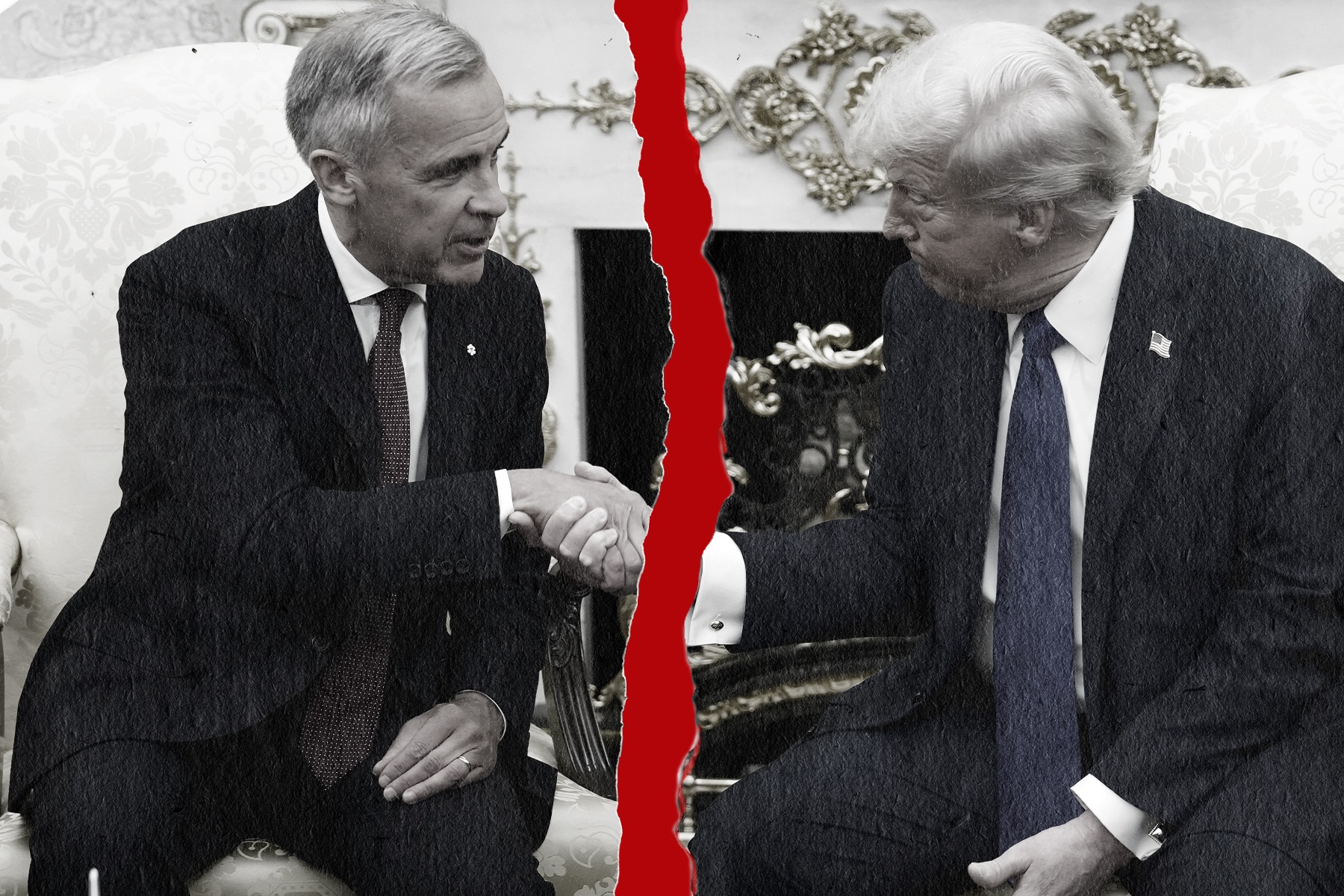
This outreach signals Canada is no longer waiting for Washington’s approval. As the U.S. employs punitive tariffs, Ottawa is building bridges, and global partners are responding. The irony is clear: Trump’s pressure campaign, intended to isolate Canada, has instead encouraged it to forge a wider, more resilient network of alliances, reducing American leverage. The most concrete manifestation of this new independence unfolded in Mexico City. Carney and Mexican President Claudia Sheinbaum signed a sweeping strategic partnership and action plan, covering infrastructure, agriculture, security, and emergency preparedness. This agreement directly creates pathways to bypass traditional U.S.-centric trade routes.
They pledged closer cooperation on shared security challenges like firearms and fentanyl trafficking—issues Trump has cited to justify tariffs. By taking joint initiative, the two nations signal they will address continental problems without waiting for Washington’s directives. This united front is crucial ahead of the 2026 review of the Canada-U.S.-Mexico Agreement.
Trade between Canada and Mexico remains tariff-free, a sanctuary of certainty. Canadian exporters are now eyeing Mexico as an underused market for lumber, agriculture, and processed goods. Together, the partners are looking outward, leveraging the Trans-Pacific Partnership to build products jointly for competitive export into Asian markets. The symbolism of this North American realignment is profound. With the 2026 FIFA World Cup poised to spotlight the continent, Canada and Mexico are demonstrating that the future of North American trade will not be dictated by one capital alone. They are charting a cooperative path that strengthens their sovereignty and economic resilience.
Analysts note a fundamental shift in Canada’s posture. The nation is moving from a reactive trade partner to a proactive global actor. The phrase “we’re not for sale” has crystallized a national mood of resilience, reflected in consumer behavior, business investment strategies, and a growing public support for economic diversification. This is not a fleeting reaction but a steady recalibration. Canadians are rediscovering a sense of national resilience rooted in the same spirit Louis Riel embodied 140 years ago: the courage to assert identity and self-determination against a powerful force. The message from Winnipeg was historic because it gave that spirit a modern voice and a clear target.

The question now is whether this moment marks Canada’s full step into a new era. An era where its economic future is shaped by its own choices, investments, and global partnerships—not by foreign pressure or punitive tariffs. Prime Minister Carney’s silent assent on that field suggests the answer is already clear. Canada is building, with or without the United States, and its sovereignty is unequivocally not for sale.