


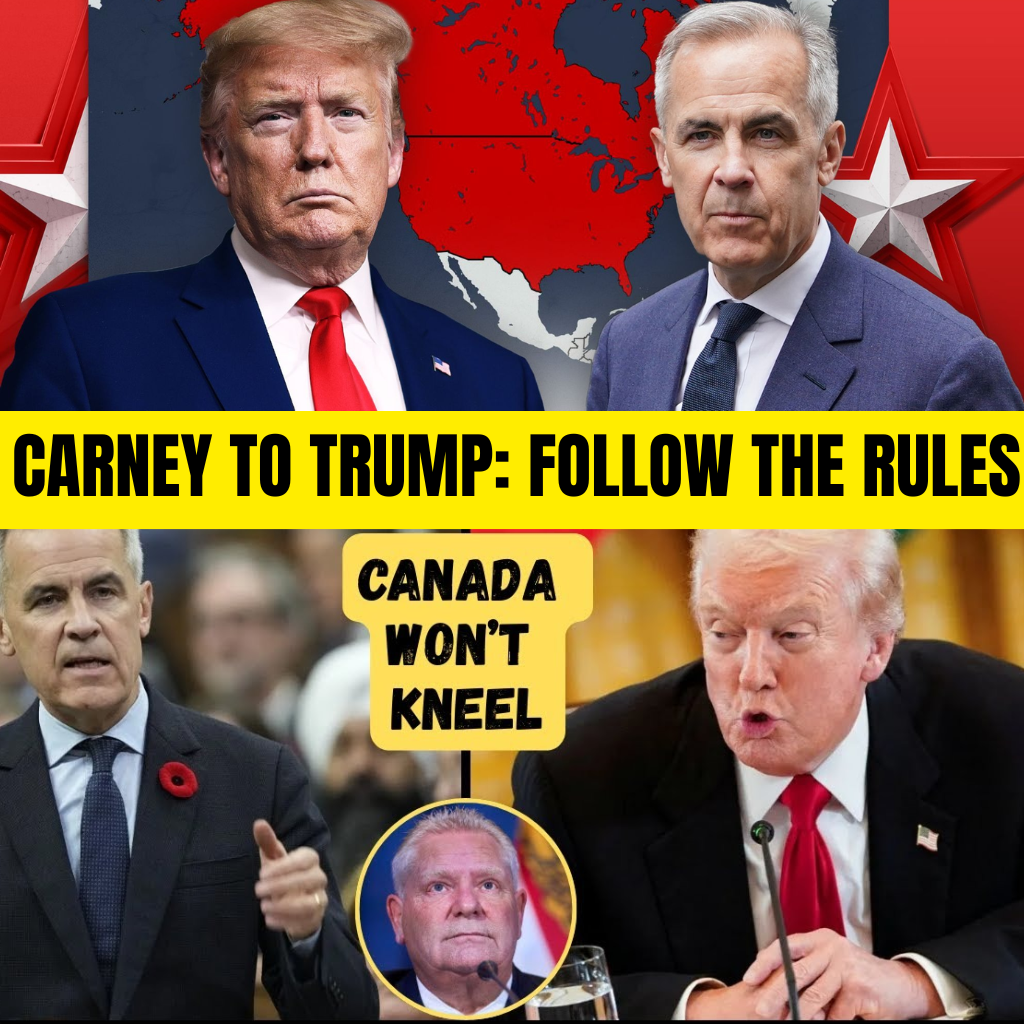
For decades, Canada was seen as Washington’s most reliable — and most restrained — partner, absorbing shocks from U.S. politics while prioritizing stability over confrontation. That era may be ending. In a rare display of unity and resolve, Canadian leaders Mark Carney and Doug Ford are signaling a fundamental shift: cooperation with the United States will no longer be automatic, unconditional, or submissive. By asserting Canada’s economic leverage — from energy and aluminum to critical minerals — Ottawa is redefining the terms of engagement with its largest trading partner. This isn’t a rupture. It’s a recalibration — and it’s already changing the conversation in Washington.
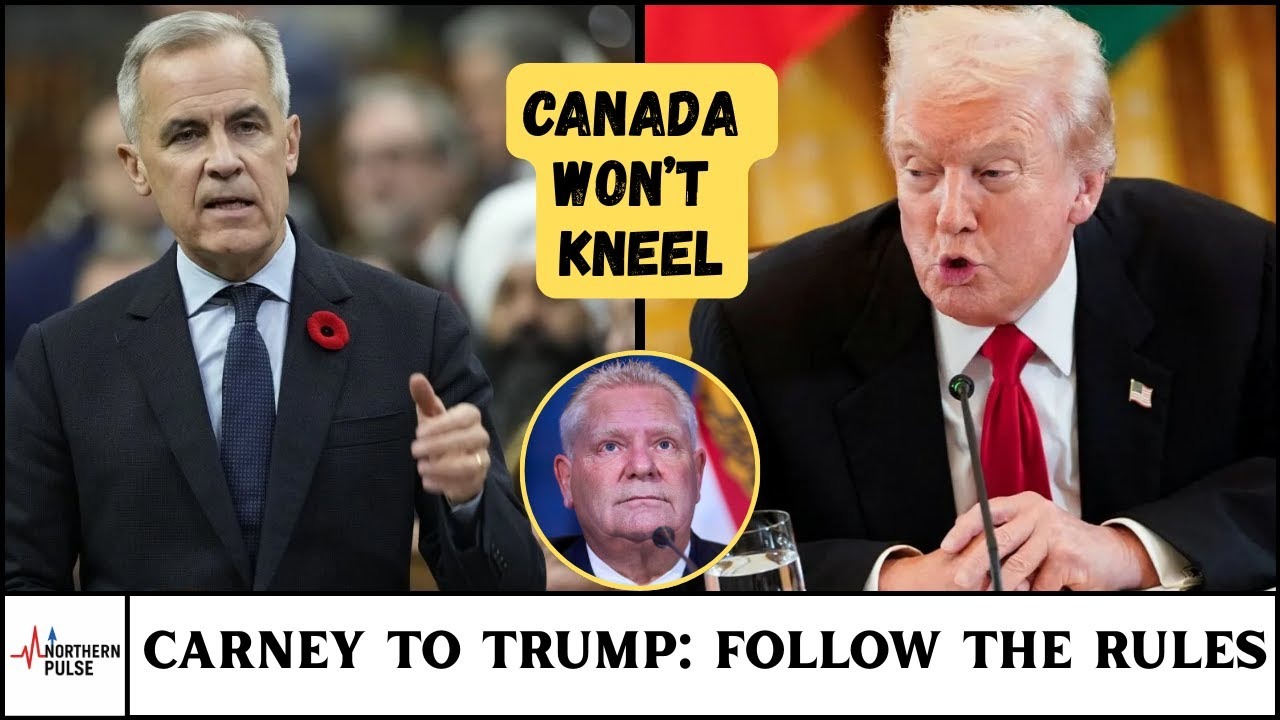
For much of modern history, Canada’s approach to the United States has been defined by caution. When Washington shifted policies, Ottawa adjusted. When U.S. politics grew volatile, Canada absorbed the turbulence quietly, prioritizing continuity over confrontation. But recent statements from Mark Carney and Doug Ford suggest that this long-standing posture is being deliberately abandoned.
What is emerging instead is a more assertive, self-assured Canada — one that understands not only its dependence on the U.S., but also America’s dependence on Canada.
Carney’s remarks marked a turning point in tone. Calm, measured, and unmistakably firm, he reframed the bilateral relationship in economic terms Americans rarely hear. Canadian exports, he emphasized, are not charitable gestures. They are structural pillars of the U.S. economy. From energy to manufacturing inputs, Canada is deeply embedded in America’s industrial bloodstream.
His most striking example landed with surgical precision: Canadian aluminum exports save the U.S. the equivalent of ten Hoover Dams worth of electricity. It wasn’t a threat. It was a fact — delivered as a reminder that economic interdependence cuts both ways.
The message beneath the math was unmistakable: Canada will no longer tolerate economic bullying, sudden tariffs, or policy whiplash disguised as negotiation. Stability, Carney made clear, is not optional — it is the price of access.
Doug Ford reinforced this message from a different angle. While Carney addressed markets and policymakers, Ford spoke directly to the American public, bypassing personal attacks and instead framing protectionist U.S. policies as self-defeating. His rhetoric was blunt but calculated, aimed less at confrontation than at pressure.
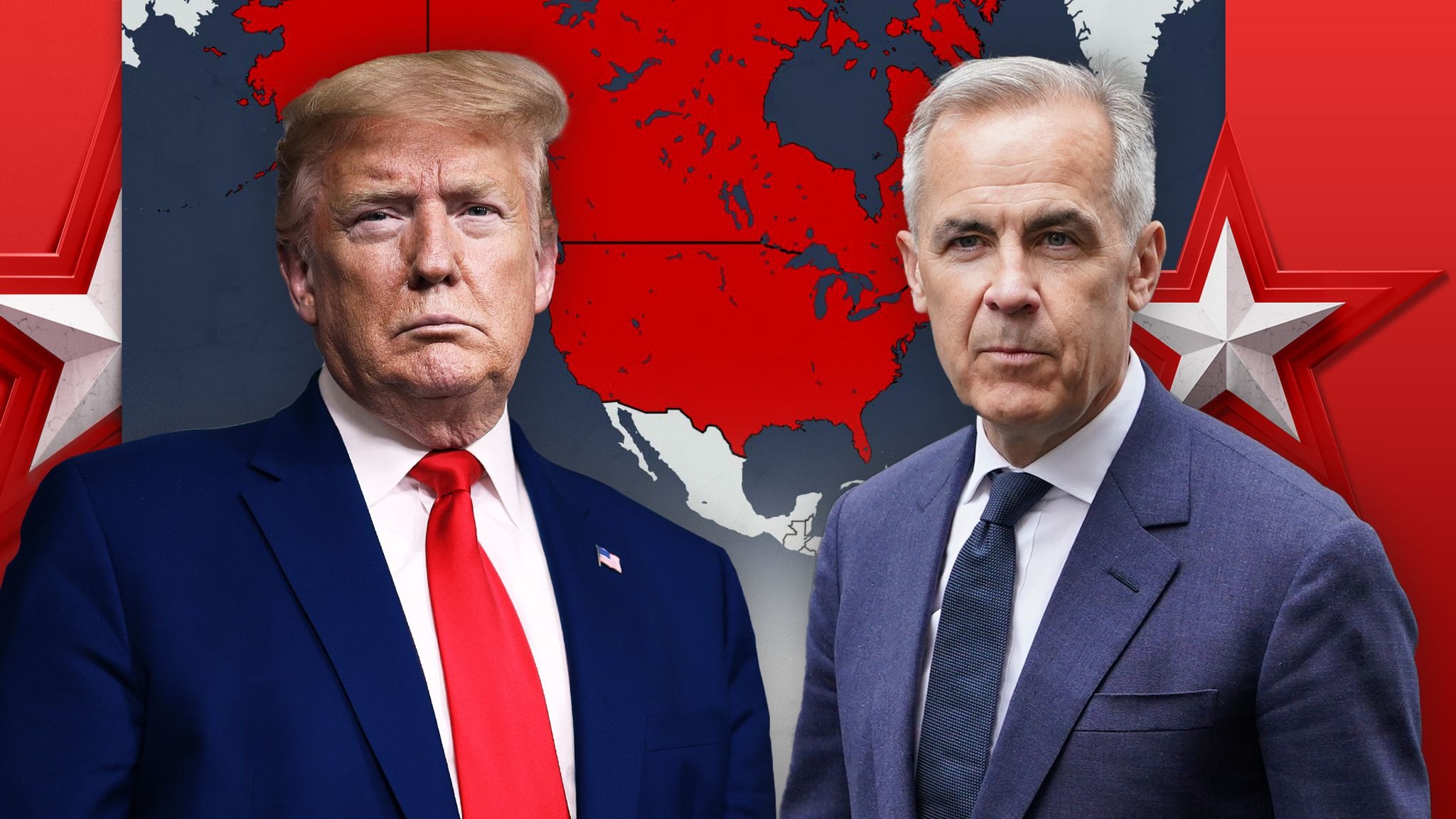
Together, the two leaders formed an unusually coordinated front — one blending strategic restraint with public firmness. This alone marks a departure from the past, when Canadian officials often avoided any move that might provoke Washington’s sensitivities.
What makes this moment more consequential is that it’s backed by action, not just language.
Canada is accelerating internal trade reforms, cutting long-standing bureaucratic red tape, and reducing its own internal barriers — steps designed to strengthen domestic supply chains and lessen reliance on the U.S. market. These reforms don’t just insulate Canada from future tariffs; they fundamentally shift the leverage equation.
Carney was explicit about the implications: access to Canadian resources — particularly critical minerals and energy — will no longer be assumed. It will depend on predictability, respect, and adherence to agreed rules. In effect, Canada is introducing conditionality into a relationship where access was once taken for granted.
Globally, the timing is not accidental. As demand for critical minerals surges — driven by clean energy, advanced manufacturing, and defense technologies — Canada finds itself sitting on assets that are increasingly strategic. This reality has forced a broader reassessment in Ottawa: Canada does not need to default to one partner. It can diversify, negotiate, and choose.
In Washington, the reaction has been subtle but telling. Unease is creeping in. The assumption that Canada will always absorb U.S. political turbulence without pushback is beginning to erode. American policymakers are being reminded — perhaps uncomfortably — that Canada’s cooperation has always been voluntary, not guaranteed.

This doesn’t signal hostility. It signals maturity.
Canada isn’t threatening to walk away from the relationship. It is redefining it — setting boundaries, clarifying expectations, and insisting on reciprocity. The era of quiet acquiescence is being replaced by one of deliberate engagement.
The broader implications for North American trade are significant. If this approach holds, future negotiations may be less emotional, less chaotic, and more transactional — grounded in mutual dependence rather than assumed hierarchy.
For decades, Canada reacted.
Now, it is setting the pace.
And for the United States, adjusting to that reality may be the most difficult negotiation of all.