


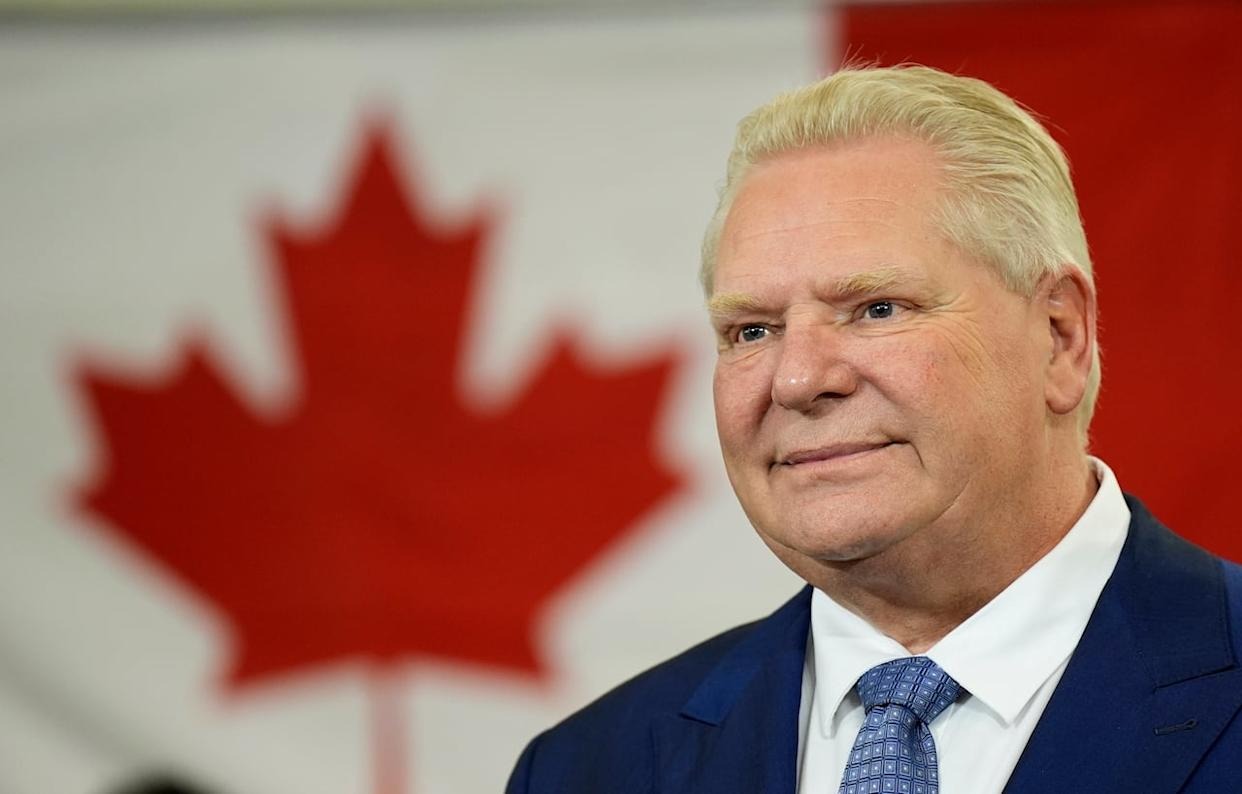
In a rare and calculated move, Ontario Premier Doug Ford crossed the border to deliver a blunt message directly to U.S. governors and business leaders—bypassing Washington entirely. Speaking on American soil, Ford challenged the logic of tariffs, exposed private doubts within Republican ranks, and reframed Canada not as a trade adversary but as an indispensable economic partner. The response from Washington was strikingly quiet. That silence, many observers suggest, may signal something deeper: a growing recognition that North America’s economic reality no longer fits the political narratives driving U.S. trade policy.
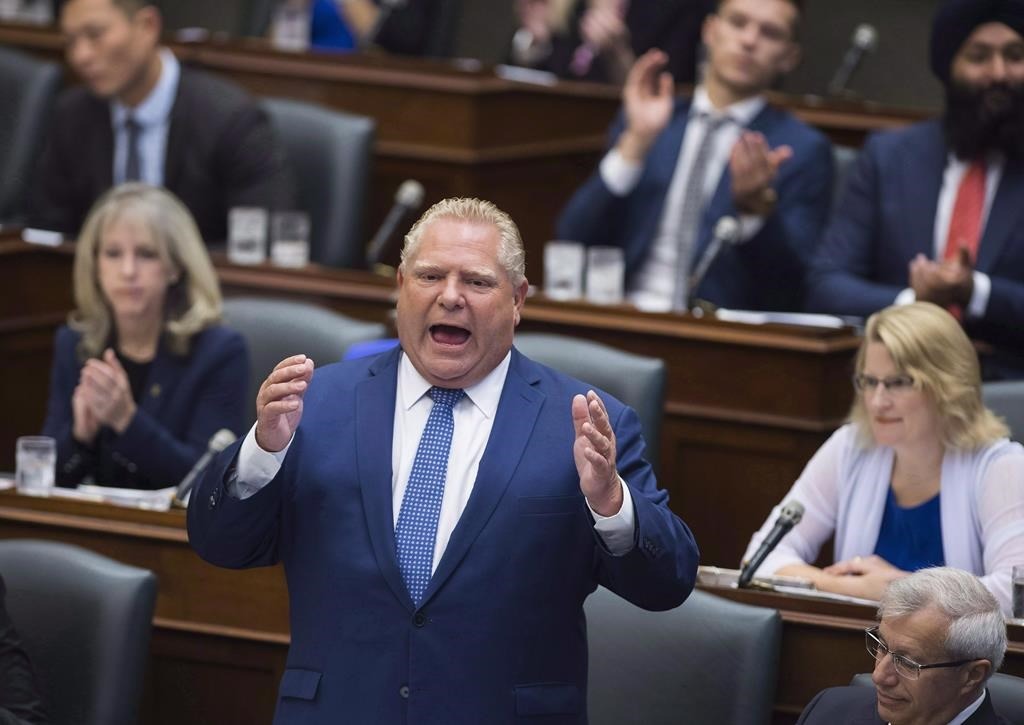
Doug Ford did not come to the United States to trade pleasantries or issue diplomatic niceties. His visit was strategic, deliberate, and unusually direct. Addressing American governors and business leaders, the Ontario premier delivered a message that cut against the grain of prevailing political rhetoric in Washington—and did so without raising his voice.
At the heart of Ford’s argument was a simple but disruptive idea: the real conflict in North American trade is not between Canada and the United States, but between working people and policies that ignore economic reality. By framing the issue this way, Ford positioned himself not as a foreign critic, but as an ally speaking to shared interests on both sides of the border.
Tariffs, Ford argued, are not abstract tools of leverage. They are blunt instruments that land squarely on American factory floors. In deeply integrated industries—autos, manufacturing, energy—goods often cross the U.S.-Canada border multiple times before reaching consumers. A tariff imposed on Canada does not stop at the border; it ripples through American supply chains, raising costs, slowing production, and putting U.S. jobs at risk.
This point resonated precisely because it was not ideological. It was operational.
Ford went further, revealing a reality that rarely surfaces in public debate. According to the premier, many Republican leaders privately express serious concerns about aggressive trade tactics, even as they publicly align with the Trump administration’s posture. The implication was clear: there is a widening gap between political loyalty and economic anxiety. By surfacing that disconnect, Ford shifted the conversation away from partisan allegiance and toward consequences.
Perhaps his most pointed reminder was also the hardest to dismiss: Canada is the United States’ largest customer. When Canadian businesses are squeezed by tariffs, American exporters feel the pain almost immediately. The notion that tariffs can punish Canada without collateral damage to the U.S. economy, Ford suggested, is not strategy—it is wishful thinking.
But Ford did not stop at critique. His message carried an unmistakable undertone of warning.
Unpredictable trade threats, he said, accelerate Canada’s exit strategy. Businesses crave stability, and when it disappears, they adapt. Ford highlighted Ontario’s critical mineral reserves, energy resources, and industrial capacity—not as bargaining chips, but as strategic assets. His question was carefully phrased but unmistakable: should these resources be reserved for reliable partners, or made available to those who show up only when alliances begin to fracture?
That framing subtly inverted the power dynamic Washington has long assumed.
In one of the most striking moments of his address, Ford outlined Ontario’s expanding nuclear energy capacity and openly suggested it could help power American homes and industries. The pitch was not made to federal officials, but directly to state leaders. It was a deliberate bypass of Washington—and a signal that state-to-state partnerships may increasingly shape the future of North American cooperation.
This approach represents a sharp departure from traditional diplomacy. Rather than threatening retaliation or escalating rhetoric, Ford emphasized integration over confrontation. If supply chains are shared, he argued, policy must reflect that reality. Tariffs become less relevant when economies are treated as interdependent systems rather than competing silos.
The aftermath of Ford’s remarks may be the most revealing part of the story. Washington did not respond with outrage. There was no immediate rebuttal, no counteroffensive, no public dismissal. The silence was conspicuous—and, to many observers, telling.
Silence, in this case, may signal recognition rather than rejection. Ford’s message was difficult to refute without confronting uncomfortable truths about the limits of current trade policy. It raised questions about whether Washington’s approach is out of step not only with economic realities, but with the concerns of its own governors and business leaders.
As Canada continues to cultivate direct relationships at the state level, the implications are significant. Every agreement forged outside federal channels reduces Washington’s leverage and strengthens a model of cooperation rooted in pragmatism rather than politics.
Ford’s visit may ultimately be remembered less for what was said than for how it was said—and to whom. In an era dominated by political noise, his calculated appeal to shared economic interests cut through with unusual clarity.
Whether Washington chooses to engage with that message remains to be seen. But one thing is clear: Canada is no longer content to argue its case from the sidelines. It is making it—directly, strategically, and on American ground.