


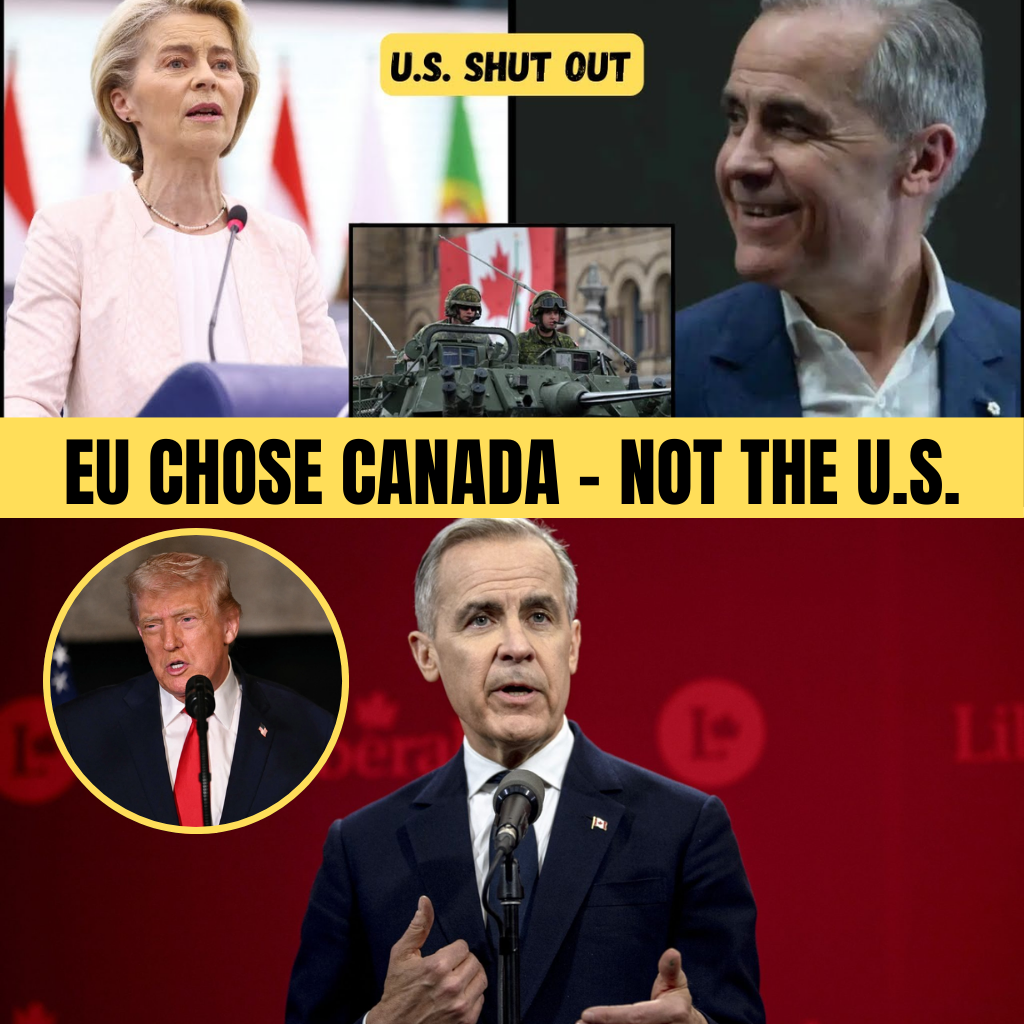
In a move that stunned defense analysts and caught even close allies off guard, Canada has been admitted into the European Union’s Security Action for Europe (SAFE) framework—becoming the only non-European nation ever granted access. The decision places Ottawa inside the financial and industrial engine driving Europe’s rearmament through 2030 and beyond. With access to a projected €1 trillion defense spending wave and unprecedented exemptions favoring Canadian firms, the deal signals far more than military cooperation. It marks a strategic realignment that reshapes Canada’s global influence, reduces reliance on the United States, and positions Ottawa as a central player in Europe’s defense future.
For decades, Canada’s role in global defense was predictable. Ottawa anchored itself firmly within NATO, relied heavily on U.S. defense suppliers, and operated largely within frameworks designed by others. That era may now be over.
Between late 2024 and the end of 2025, Canada executed one of the quietest—and most consequential—strategic pivots in modern defense politics: securing full entry into the European Union’s Security Action for Europe (SAFE) framework. The admission makes Canada the first and only non-European country to gain access to the bloc’s tightly guarded defense financing and procurement system.
SAFE is not symbolic. It is the backbone of Europe’s rearmament strategy, designed to close critical military capability gaps by 2030 as the continent confronts a more volatile security environment. Until now, participation was reserved exclusively for EU member states. Even close partners such as the United Kingdom and Australia were left outside the structure.
That Canada not only gained entry—but did so quietly—has forced a reassessment of its global standing.
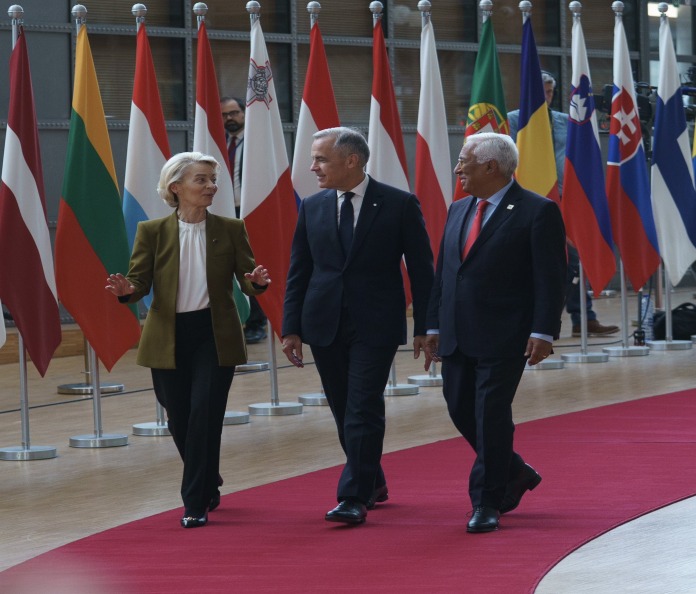
At its core, SAFE functions as a financing engine. It leverages the EU’s collective credit power to underwrite long-term defense procurement, allowing governments to place massive orders without absorbing the full financial risk upfront. For manufacturers, it offers predictability—the single most valuable commodity in defense production, where investments span decades.
Canada’s inclusion grants it access to a defense spending wave projected to approach €1 trillion over the next ten years. More striking still are the terms Ottawa negotiated. While SAFE generally requires at least 65% of funded systems to originate within the EU, Canada secured exemptions allowing its firms to account for up to 80% of the value of certain systems.
That concession is unprecedented.
The result is a dramatic elevation of Canada’s defense-industrial role. Rather than acting as a secondary supplier, Canadian companies are now positioned as core production hubs in high-demand sectors such as drones, advanced sensors, and next-generation military technologies. Capital investment is expected to follow, along with expanded domestic supply chains and long-term manufacturing commitments that lock Canada into Europe’s defense future.
European officials, speaking privately, have pointed to one overriding factor behind the decision: trust.

In an era marked by sudden export bans, trade weaponization, and unpredictable policy swings, Europe is seeking partners it can rely on for decades-long defense projects. Canada’s political stability, regulatory predictability, and consistent export behavior stood in sharp contrast to more volatile alternatives. In effect, Ottawa sold reliability—and Europe bought it.
The move also reflects a broader shift in global defense thinking. Middle powers are no longer content to anchor their security to a single dominant ally. Instead, they are diversifying partnerships, embedding themselves in multiple ecosystems to maximize leverage and resilience.
For Canada, SAFE offers exactly that. While Ottawa remains committed to NATO, embedding itself within Europe’s defense architecture reduces dependence on U.S. supply chains and procurement systems. It provides flexibility in an increasingly fragmented geopolitical landscape—one where assumptions about alliance permanence no longer feel safe.
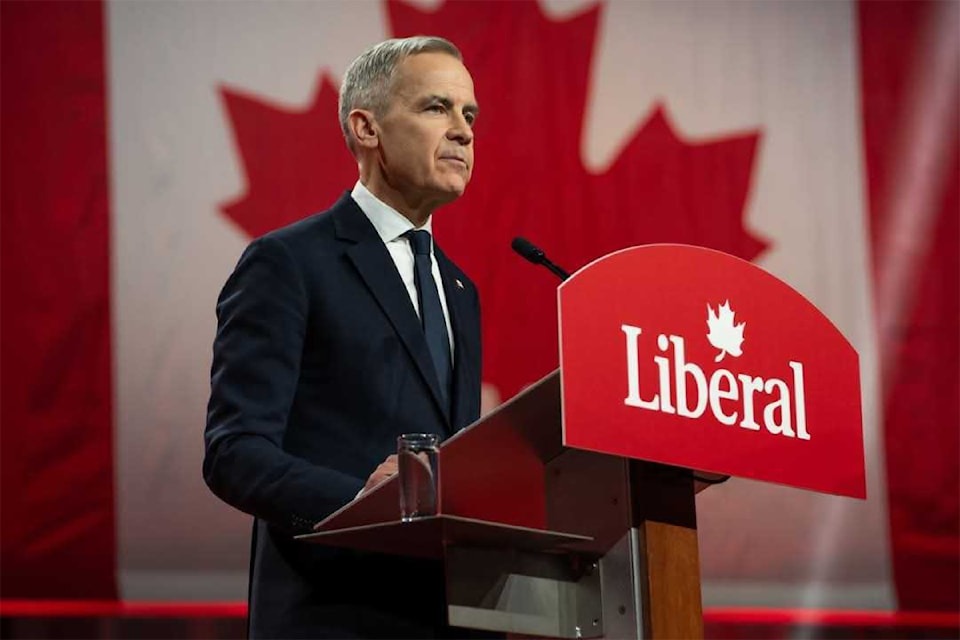
There are risks. SAFE’s implementation will depend on coordination among EU member states, many of which still prioritize national interests over collective efficiency. Internal political friction could slow projects or complicate funding decisions. Yet Canada’s ability to deliver at scale—and its exemption-rich status—gives it an advantage few others possess.
What stands out most is the method. There were no dramatic announcements, no public ultimatums, no threats to existing alliances. Instead, Canada positioned itself as indispensable, allowing Europe to arrive at the conclusion on its own.
That subtlety may prove to be the strategy’s greatest strength.
By the time the news became public, the deal was already done. Contracts were being discussed. Investment models were in motion. Canada was no longer asking for a seat at the table—it already had one.
The implications extend beyond defense. Access to SAFE is likely to spill into adjacent sectors, from advanced manufacturing and artificial intelligence to energy security and critical minerals. Once supply chains intertwine at this level, disentangling them becomes both costly and politically unattractive.
In a world defined less by speeches than by systems, Canada’s entry into SAFE represents a decisive act of strategic positioning. It signals a country no longer content to orbit larger powers, but intent on shaping outcomes from within.
Quietly, deliberately, and with lasting consequences, Canada has moved closer to the center of the global defense map.