



Tensions between the United States and Canada have escalated overnight as Washington threatened to abandon the USMCA trade agreement, a move that could reshape North American economic relations. Canada’s resolute response has shocked U.S. officials, indicating a significant shift in diplomatic dynamics and economic strategies on both sides.

The U.S. Trade Representative’s stark warning that the trade pact with Canada and Mexico is not set in stone sent ripples through diplomatic circles. This isn’t just typical rhetoric; it’s a clear indication that Washington is prepared to leverage its economic power in unprecedented ways.
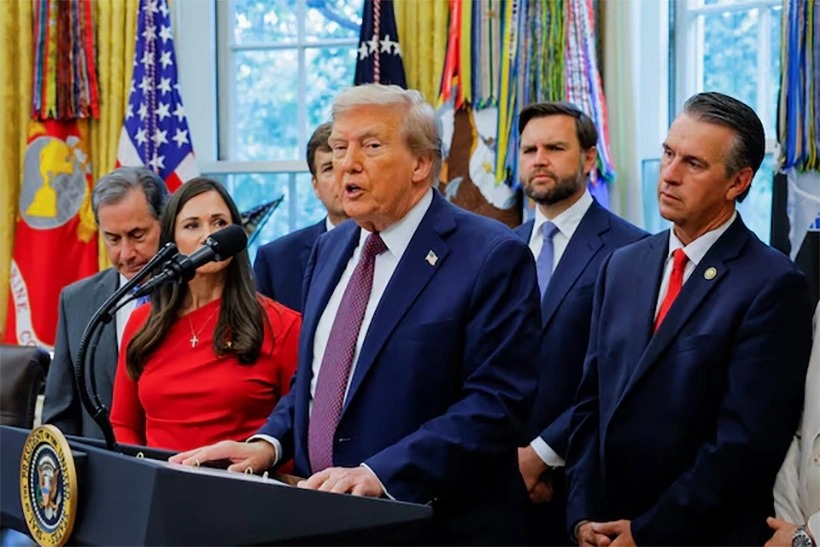
President Trump’s blunt remarks further escalated the situation, signaling that Canada will face increased pressure than ever before. This shift in tone has left Canadian officials wary, interpreting it as a sign that relations are entering a more confrontational phase.
As the U.S. intensifies its stance, Canada has shown remarkable resilience. The Canadian Minister of Industry has publicly stated that the country is ready to confront this pressure head-on, emphasizing coordination with business leaders and labor groups to bolster their position.
Financial analysts are already noting the adverse effects of U.S. trade uncertainty on American manufacturing, with many companies reconsidering their investment strategies. Meanwhile, Canada is rapidly diversifying its economic ties, reducing its dependence on the U.S. market by strengthening relationships with Europe, India, and South America.
The International Monetary Fund has reported that Canada’s foreign direct investment surged to nearly $1.5 trillion, highlighting its robust economic performance amid U.S. tariff threats. This resilience is attributed to Canadian companies reorganizing their supply chains to mitigate risks associated with sudden policy shifts from Washington.
In stark contrast, the U.S. economy is showing signs of strain, with American manufacturing contracting for nine consecutive months. Major layoffs in transportation sectors have raised alarms, and consumer confidence is waning as households tighten their belts amid rising costs.
Corporate pushback in the U.S. is becoming more visible, with companies like Costco seeking legal recourse for tariff-related expenses. Investment managers are now viewing the U.S. as a higher-risk environment, prompting capital to flow toward Canada and other markets with more stable regulatory conditions.
As Canada continues to reposition itself, Ottawa is actively promoting policies that encourage nearshoring and domestic sourcing. This strategic pivot is paying off, with growth accelerating in emerging sectors like electric vehicles and clean energy.
Trade outreach has become a cornerstone of Canada’s economic strategy, with European nations eyeing Canada as a reliable supplier of energy and critical minerals. This shift has profound implications for North American trade, as Canada transforms into a more self-reliant economic competitor.
The U.S. ambassador to Canada has attempted to de-escalate tensions, but the underlying issues remain unresolved. As both nations approach a major review of the USMCA, the stakes have never been higher, with potential consequences that could redefine trade relations for decades.
What began as a strategy to pressure Canada may have inadvertently fostered a stronger, more autonomous economic player just across the border. The unfolding situation poses critical questions about the future of trade in North America and the balance of power between these two nations.