

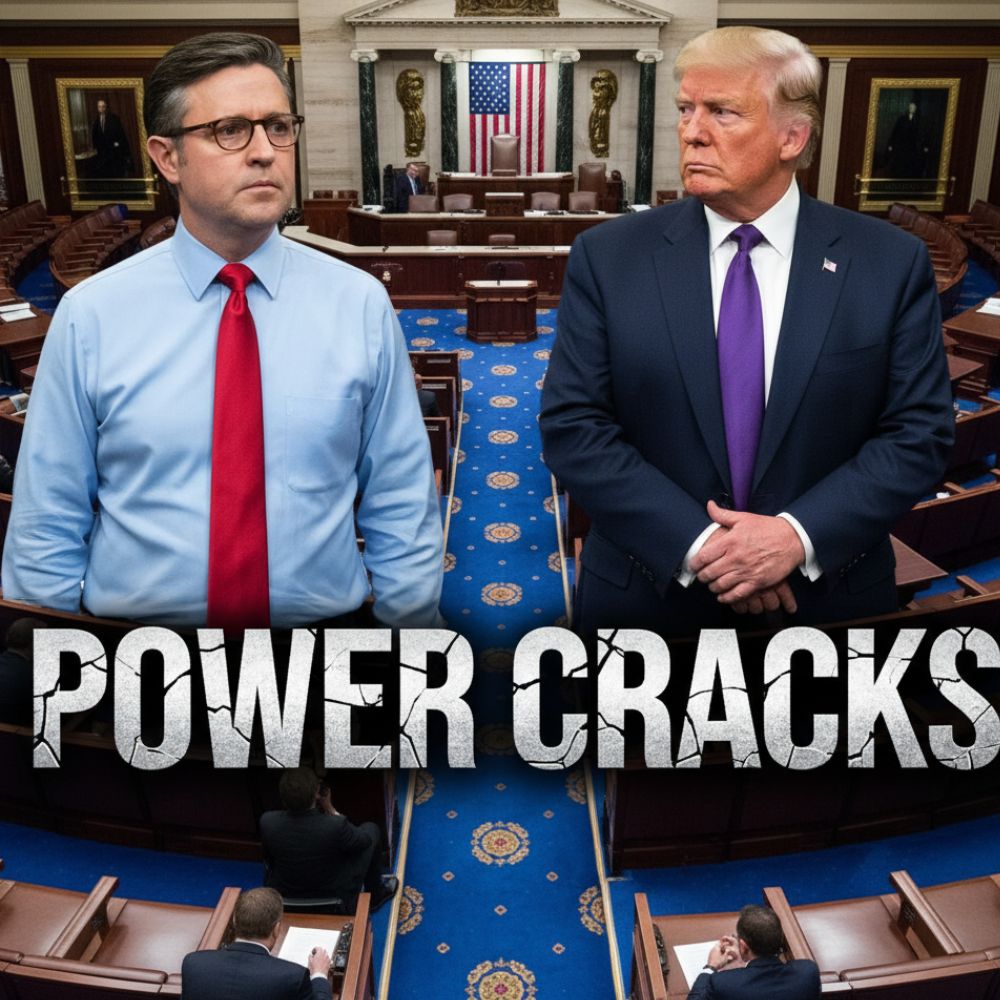
The U.S. House Quietly Pushes Back Against President Trump: Two Vetoes, a Silent Revolt, and Growing Signs of Weakness for Speaker Mike Johnson
WASHINGTON — While much of the American public remains focused on loud and polarizing debates over government funding, immigration, and allegations surrounding the Epstein files, a significant but largely unnoticed development unfolded quietly in the House of Representatives late last week. Through what appeared to be a routine procedural move, the House unanimously agreed to place two recent vetoes issued by President Donald Trump on its legislative calendar — a step that opens the door to a possible override of the president’s vetoes, a rare and consequential act in modern American politics.
The move, approved by unanimous consent with no objections, signals a growing reality inside Congress: Speaker Mike Johnson’s grip on the MAGA wing of the Republican Party is weakening, while internal resistance to President Trump’s leadership is becoming increasingly visible — if still largely subdued.
Two vetoes and allegations of political retaliation
The vetoes in question concern H.R. 131, the Finish the Arkansas Valley Conduit Act, and H.R. 504, the Miccosukee Reserved Area Amendments Act. Both measures passed Congress with bipartisan — and in some cases unanimous — support before being rejected by the White House.
H.R. 131 was designed to provide clean drinking water to more than 50,000 residents in Arkansas Valley, Colorado, a region long plagued by toxic water conditions due to environmental contamination. The bill was co-sponsored by Representative Lauren Boebert, a far-right Republican typically aligned with Trump. However, according to multiple lawmakers and political observers, Boebert’s decision to sign a discharge petition demanding the release of Epstein-related files placed her squarely in Trump’s line of political fire.
The second veto affects the Miccosukee Tribe of Florida, whose ceremonial and tribal lands lie within the Everglades. The tribe has sued both the federal government and the state of Florida over the construction of a rapidly built immigrant detention facility — dubbed “Alligator Alcatraz” by critics — on land the tribe considers sacred. In his veto message, President Trump cited the tribe’s opposition to his immigration policies as justification for denying funding for a clean water project that had previously received broad congressional backing.
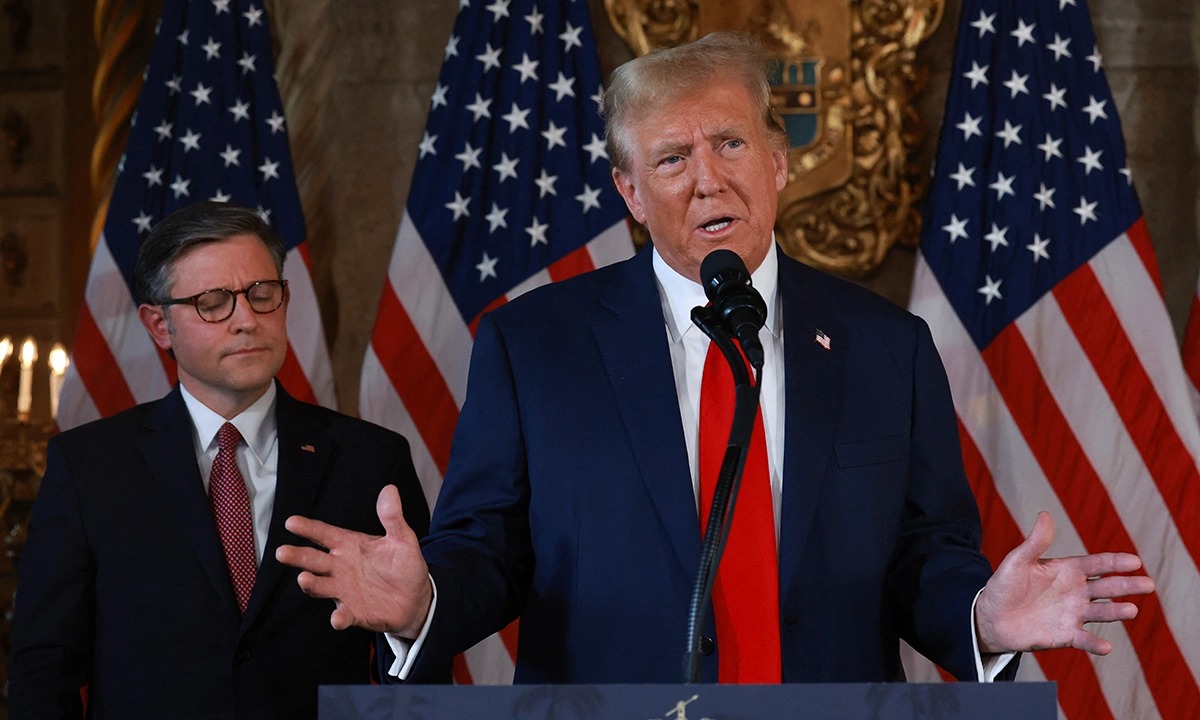
Democrats have denounced both vetoes as acts of political punishment, arguing that they undermine public health, tribal sovereignty, and long-standing bipartisan legislative norms.
A “silent rebellion” inside the House
What has drawn particular attention from Capitol Hill observers is not only the substance of the vetoes, but the manner in which the House responded. A brief notice posted by the House Press Gallery on social media stated that the presiding officer requested unanimous consent to schedule consideration of the veto messages for January 8, 2026 — and that the request was approved without objection.
In a deeply polarized House, such silence is politically significant. It suggests that even Republicans who remain publicly loyal to President Trump were unwilling to actively block reconsideration of vetoes widely viewed as unjustified or personal in nature.
“This isn’t a loud rebellion,” said a former House leadership aide. “It’s the most dangerous kind — quiet, procedurally legitimate, and very difficult to stop.”
Speaker Johnson’s authority under strain
Speaker Mike Johnson — often derided by critics, including some Republicans, as “Speaker in name only” — is confronting multiple crises simultaneously. Beyond the looming veto override votes, he must contend with:
A potential government shutdown on January 30, as Congress has completed only three of the twelve required appropriations bills.
A discharge petition forcing a vote on extending Affordable Care Act (ACA) premium subsidies for three years — a measure Johnson has attempted to keep off the floor.
Escalating bipartisan pressure to release additional materials related to the Epstein investigation.
Several Republicans, including Representatives Don Bacon of Nebraska and Brian Fitzpatrick of Pennsylvania, as well as Senator Tom Tillis of North Carolina, have openly criticized Johnson’s leadership. They warn that allowing ACA subsidies to expire would expose millions of Americans to soaring insurance premiums — a political disaster for Republicans ahead of the next election cycle.
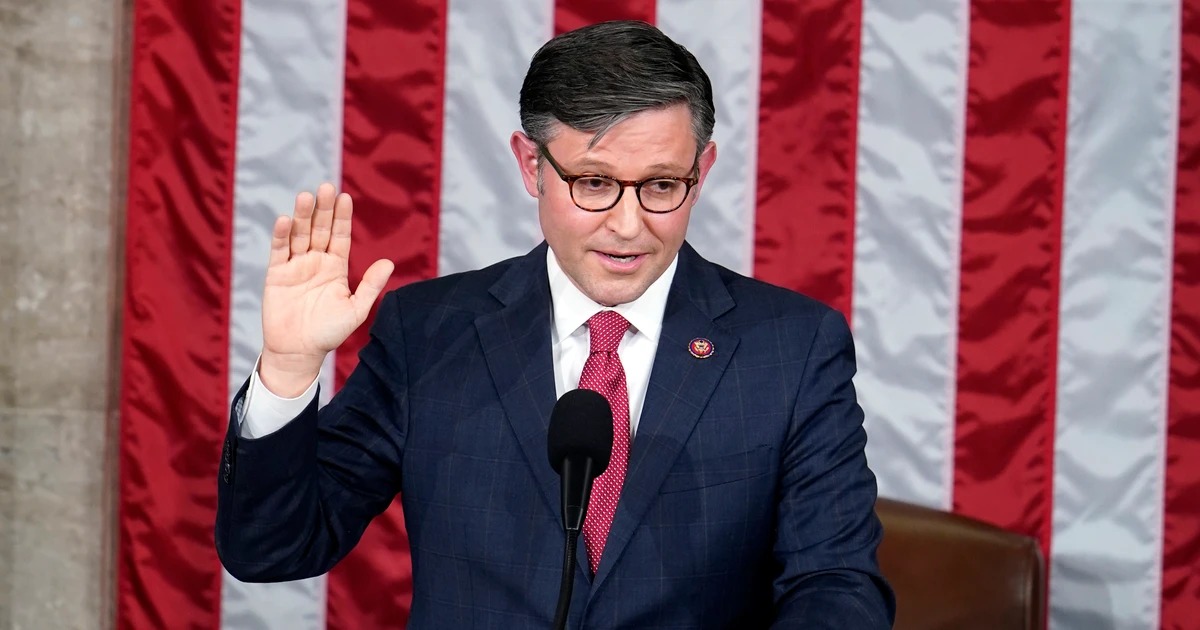
Bacon described the consequences bluntly, saying voters would soon ask why Congress “did nothing” while their monthly premiums surged by thousands of dollars.
What comes next
Overriding a presidential veto requires a two-thirds majority in both the House and the Senate. In theory, both vetoes could meet that threshold, given that the underlying legislation previously passed with overwhelming support.
If the House succeeds, attention will shift to the Senate, where procedural objections or individual holds could still derail the effort. Still, the mere act of advancing veto overrides represents a significant erosion of Trump’s once-ironclad authority within Congress.
At the same time, lawmakers must address nine unfinished funding bills within a sharply limited legislative calendar — just 12 scheduled working days this month — underscoring the dysfunction that now defines Capitol Hill.
A broader fracture within the MAGA coalition
This quiet confrontation is about more than clean water projects or health insurance subsidies. It reflects a deeper fracture within the MAGA governing coalition, strained by what many lawmakers view as Trump’s increasingly personal and retaliatory use of presidential power.
In the coming weeks, as the House reconvenes and votes are cast, Congress will determine whether this moment represents a brief episode of internal dissent — or the beginning of a broader shift in which loyalty to the White House is no longer automatic, even among Republicans.
For now, the revolt remains muted. But its implications may soon become impossible to ignore.