


When Power Stops Working: How Trump’s Greenland Gambit Revealed a Presidency Losing Its Grip
Washington — Political collapse is often imagined as loud and unmistakable: mass resignations, emergency addresses, dramatic votes that redraw history in a single night. But in modern democracies, unraveling more often begins quietly, through hesitation rather than rebellion, through silence rather than spectacle.
That is the context in which President Donald Trump’s fixation on Greenland — once dismissed as political theater — has taken on deeper meaning inside Washington. What initially appeared as another erratic foreign policy idea has instead become a revealing stress test of power: exposing the limits of loyalty, the fragility of fear-based governance, and the slow reassertion of institutional resistance.
This is not, ultimately, a story about Greenland, tariffs, or even immigration enforcement. It is about how authority erodes when it demands absolute loyalty but offers none in return — and what happens when institutions stop flinching.
Loyalty Without Reciprocity
For Mr. Trump, power has long functioned less as a constitutional role than as a personal hierarchy. Loyalty is expected upward, publicly and unconditionally. Dissent, even procedural dissent, is treated as betrayal. What has changed in recent months is not the president’s instinct, but the response it now receives.
When Senate Republicans began raising objections — not theatrically, but institutionally — Mr. Trump did not hear policy disagreement. He heard defiance.
That distinction matters. As political analysts and Senate aides have noted in interviews with major outlets including Axios and CNN, Trump’s authority has historically depended on inevitability. His threats worked because they were believed to be final. His anger carried weight because compliance appeared to offer protection.
That assumption is now cracking.
The Greenland Moment
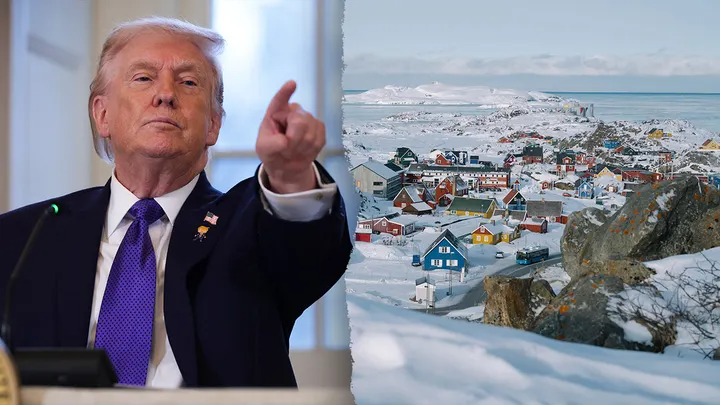
The administration’s escalating rhetoric around Greenland — framed alternately as a strategic necessity, a national security concern, and a negotiating tactic — collided with an inconvenient reality: Senate Republicans were not prepared to follow.
Publicly, House Speaker Mike Johnson attempted to downplay the situation, insisting there was no imminent crisis, no invasion, no extraordinary escalation. But behind the scenes, lawmakers described to reporters a growing unease about the contradiction at the heart of the administration’s argument.
If tariffs and emergency powers are justified by national security, then Greenland must represent a threat. Yet administration allies simultaneously insist no such threat exists. Both claims cannot be true.
That contradiction has become a catalyst — not for dramatic revolt, but for something more destabilizing: collective skepticism.
Senator Rand Paul articulated it plainly, noting the absence of Republican support for such actions. Senator Ted Cruz hedged carefully, avoiding full endorsement. Each hesitation, however measured, sent a signal.
Trump’s power has never been diminished by opposition alone. It weakens when opposition becomes shared.
The Cassidy Lesson
No episode has shaped Republican calculations more than the political fate of Senator Bill Cassidy.
After voting to convict Mr. Trump during impeachment, Cassidy spent years attempting reconciliation — moderating his language, aligning his votes, signaling deference. It did not save him. When Trump endorsed Cassidy’s primary challenger, the message was unmistakable.
Loyalty to Trump is not insurance. It is a postponement.
That lesson is now internalized across the Republican conference. Senators understand that appeasement does not guarantee survival — and that individual submission offers no collective safety.
As one longtime GOP strategist told a major news outlet, “Fear works until it doesn’t. And once people realize compliance buys nothing, the calculus changes.”
Institutions Move Slowly — and That Is the Point
What distinguishes the current phase from past confrontations is its texture. Resistance is not loud. It is procedural.
In the Senate, pushback has taken the form of hearings, statutory arguments, and constitutional language — the very terrain where Trump’s improvisational style struggles. Emergency powers invite scrutiny. National security claims demand evidence. Courts introduce delay.
Trump thrives in ambiguity and spectacle. Institutions thrive in clarity.
This dynamic has shifted the balance. The more the administration relies on emergency justifications, the more opportunities it creates for institutional intervention — from congressional oversight to judicial review.
The Supreme Court, once treated by Trump allies as a safety net, now represents uncertainty. Legal arguments grounded in security lose credibility when policies appear impulsive rather than strategic.
Immigration as a Mirror

The same governing instinct appears domestically, most starkly in immigration enforcement.
Debates over ICE have intensified following a series of widely circulated incidents involving alleged abuse and excessive force. When Senator Ruben Gallego argued that increased funding and training cannot fix an agency structured around intimidation, he was not merely critiquing policy. He was challenging a philosophy.
ICE, under Trump, has become emblematic of power without accountability — aggressive, insulated, and defended by loyalists who equate enforcement with order, regardless of human cost.
That framing has put pressure on Democrats as well, particularly centrists accustomed to incremental reform. The argument that every system can be nudged toward justice begins to falter when evidence suggests the system is functioning as designed.
Here, the Greenland episode and the ICE debate converge. Both reveal a belief that unchecked power is efficiency — and that dissent is disloyalty.
Fear Changes Direction
Trump’s response to resistance has followed a familiar pattern: punishment. He singles out individuals, issues public attacks, amplifies grievances. But the effectiveness of fear depends on a crucial condition — the belief that obedience will be rewarded.
That belief is fading.
Missed calls. Delayed statements. Carefully neutral language. None of this is open rebellion. But it is preparation.
Silence, in this context, is no longer submission. It is distance.
As resistance shifts from private to public — from whispered conversations to the congressional record — it becomes harder to contain. Trump feels the change not as a policy challenge, but as a threat to authority itself.
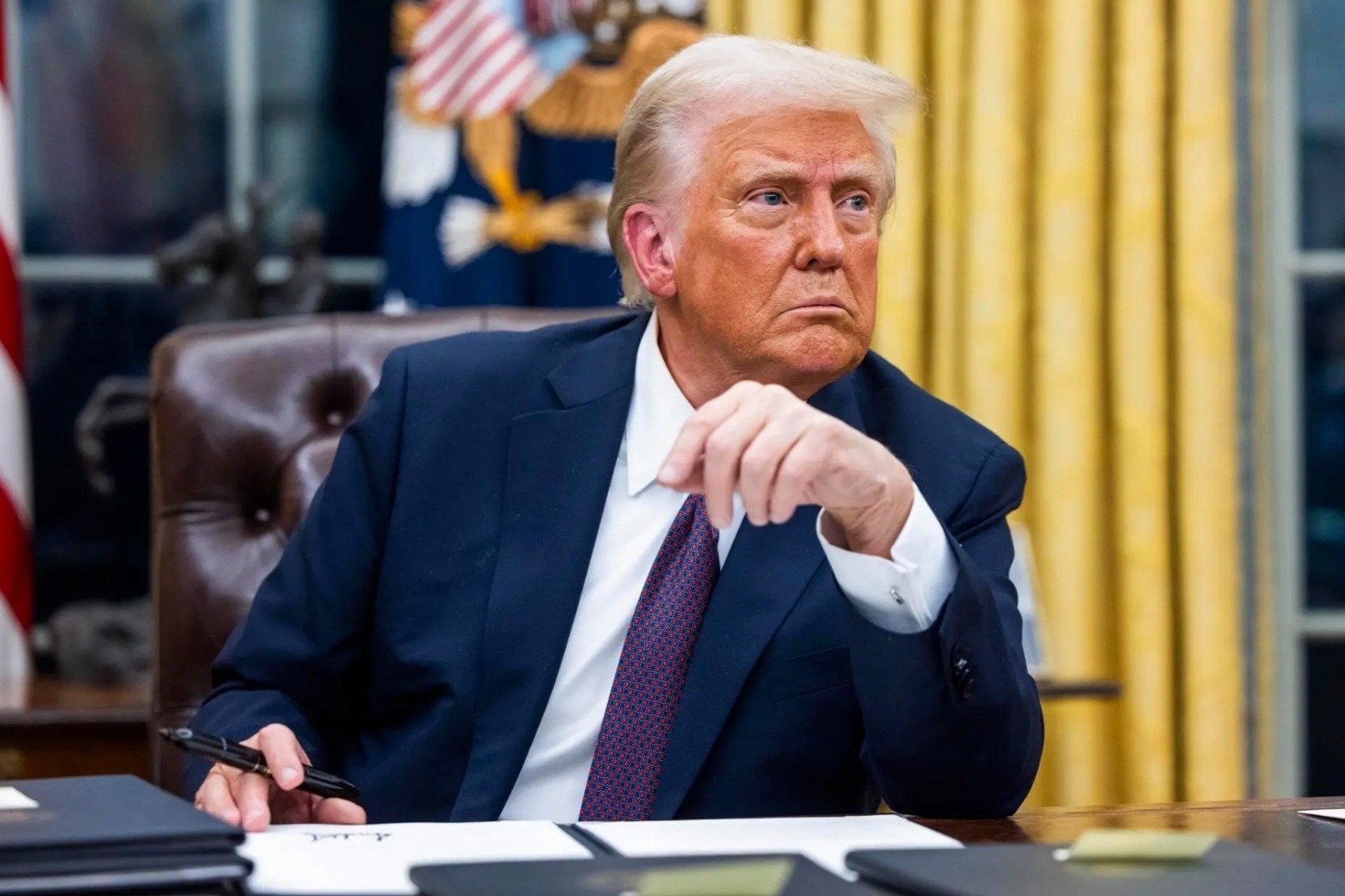
And his reaction — louder rhetoric, broader attacks, scattered focus — signals not strength, but stress.
The Unraveling Is Quiet
There is no single vote, no defining scandal, no cinematic collapse. Instead, there is fatigue.
Fatigue among lawmakers forced to defend contradictions. Fatigue among voters watching instability normalized. Fatigue within a party realizing it has tied itself to a figure who cannot be disciplined, restrained, or managed.
Trump can survive outrage. He can survive scandal. What he struggles to survive is sustained resistance that refuses to react emotionally.
By the time inevitability disappears, leverage follows.
What This Moment Reveals
Donald Trump did not invent these fractures. He exploited them. And exploitation works only as long as fear produces returns.
The Greenland fantasy fades not because it is resolved, but because it loses its power to intimidate. That loss matters more than any policy outcome.
This is what democratic resistance often looks like — slow, procedural, unglamorous. Institutions asserting limits. Lawmakers rediscovering distance. Courts insisting on justification.
The danger is not loud collapse, but quiet erosion. And recovery, when it comes, is equally quiet.
The lesson of this moment is not about one man alone. It is about what happens when power overplays its hand — and whether those watching recognize the warning signs before spectacle distracts from substance.
Unchecked authority always mistakes silence for consent. History suggests it is often something else entirely.