

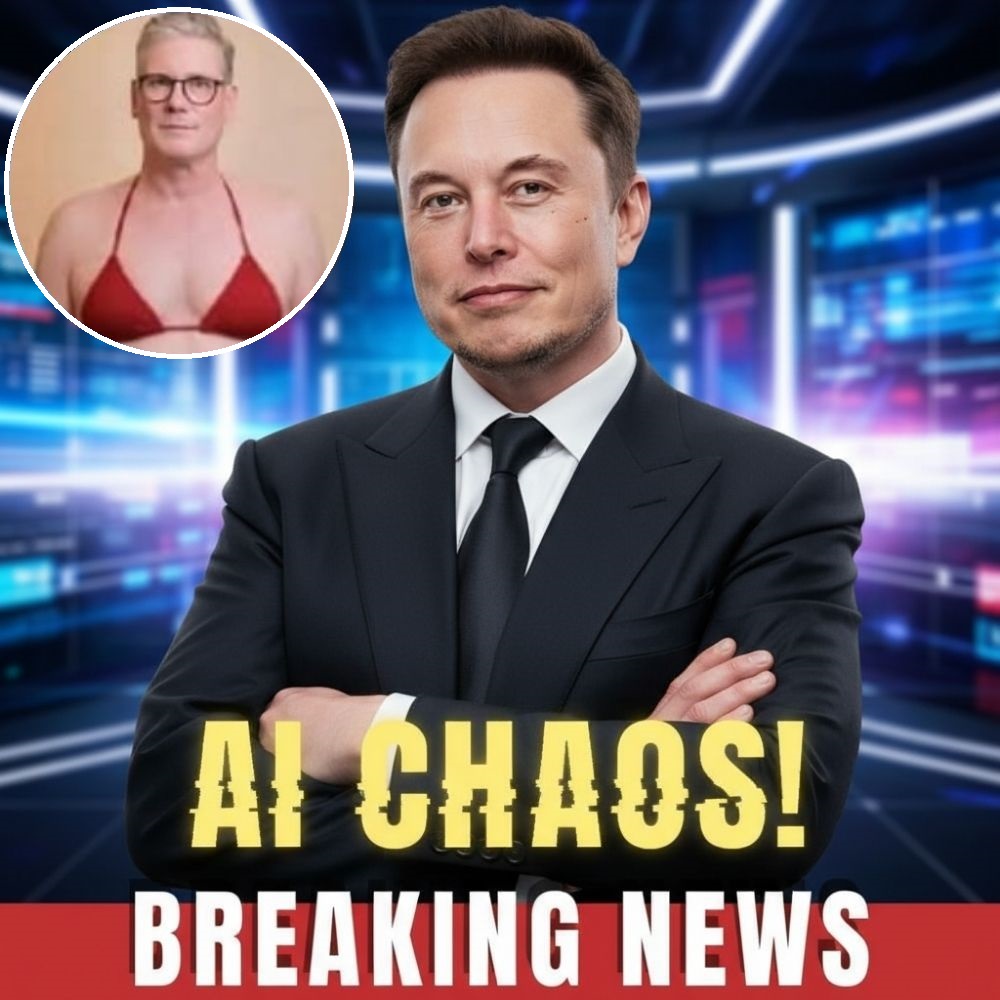
Elon Musk, the billionaire entrepreneur known for shaking up the worlds of space exploration, electric vehicles, and social media, has once again ignited the internet. This time, it’s not a rocket launch or a Twitter acquisition making headlines—it’s a daring AI-generated image depicting UK Labour leader Keir Starmer in a bikini. The post, shared via Musk’s social media channels, has sent shockwaves through political circles, technology enthusiasts, and the general public alike, prompting a torrent of discussion, outrage, and bewilderment.
The controversy unfolds against a backdrop of growing scrutiny over AI-generated content and the limits of online expression. Musk, who has long presented himself as a provocateur unafraid to challenge norms, appears to have tested the boundaries of both political satire and digital ethics. For his supporters, it’s another example of Musk’s fearless approach to technology and freedom of expression. For critics, it’s a reckless move that blurs the line between innovation and irresponsibility.
A Bold Move in the Age of AI
The image, generated through advanced AI tools, immediately drew attention for its audacity. While AI-generated content is increasingly common, creating a political figure in such a provocative context is virtually unprecedented, raising questions about the ethics of AI, consent, and digital manipulation. Musk’s timing only added fuel to the fire. Released during a period of heated political debate in the UK, the image quickly went viral, dominating headlines and social media conversations around the world.
Industry experts have noted that Musk’s stunt is not just about shock value. It highlights the growing power of AI to shape narratives, influence perception, and spark debate at lightning speed. Unlike traditional media, AI-generated imagery can bypass conventional editorial oversight, creating new opportunities—and risks—for public figures, politicians, and citizens alike.
Reactions Across the Tech World
The response from the technology community has been swift and polarized. Some tech enthusiasts praised Musk for pushing the envelope, arguing that his actions highlight the importance of free speech in the digital age. “Elon is showing us what happens when AI meets bold creativity,” one commentator tweeted. “This is exactly why we need open platforms that let people experiment, even when it’s uncomfortable.”
Others, however, criticized Musk for what they see as reckless behavior. Concerns have been raised about the potential for AI to spread misinformation, fuel harassment campaigns, or manipulate public opinion. In the context of politics, the image of a prominent leader in a compromising situation carries the risk of undermining trust, creating confusion, and stoking division. For many, Musk’s actions are emblematic of the challenges society faces in regulating emerging technologies responsibly.
Political Backlash
The image quickly drew condemnation from political figures and commentators in the UK. Some accused Musk of engaging in disrespectful political provocation, while others raised concerns about the broader implications of AI-generated political imagery. Keir Starmer’s office reportedly responded with a brief statement condemning the post, emphasizing the importance of integrity and civility in public discourse.
The controversy also sparked discussions about accountability. Who is responsible for AI-generated content that targets public figures? Should platforms hosting such content be held accountable, or does the responsibility lie solely with the user creating and sharing the image? Musk’s high-profile role in AI development and social media management makes these questions particularly salient.
A Glimpse Into Musk’s Mindset
Observers note that Musk has a history of provocative online behavior. From posting cryptic messages on social media to sharing controversial statements and memes, Musk has repeatedly demonstrated a willingness to challenge norms. The Keir Starmer AI image is consistent with his persona as a disruptor, someone who leverages technology not just to innovate but to provoke, challenge, and sometimes infuriate the public.
Musk’s actions also underscore his ongoing critique of mainstream media and what he perceives as censorship. By using AI to create content that might otherwise be restricted or criticized by traditional channels, Musk positions himself as a figure advocating for unrestricted expression, even at the cost of sparking outrage.
Implications for the Future of AI
Beyond the immediate controversy, Musk’s stunt has broader implications for how AI is used and perceived. Experts warn that as AI-generated imagery becomes more accessible and sophisticated, society will increasingly face ethical dilemmas about consent, authenticity, and the potential for digital manipulation. Political figures, celebrities, and ordinary citizens alike may be vulnerable to being depicted in ways they never intended or approved.
The debate over Musk’s post also raises questions about the role of tech leaders in shaping norms around AI use. Should there be guidelines or regulations governing how AI can be used to depict public figures? What responsibilities do innovators have when releasing technologies capable of creating realistic, provocative content? Musk’s actions highlight the urgent need for these discussions as AI continues to advance at an unprecedented pace.
Public Reactions and Social Media Frenzy
Social media platforms exploded with reactions almost immediately. Supporters praised Musk’s boldness and his willingness to challenge societal norms. Critics called the post irresponsible, inappropriate, and potentially harmful. The controversy quickly became a trending topic, with hashtags related to Musk, Keir Starmer, and AI-generated content dominating feeds.
Memes, reactions, and debates spread across multiple platforms, with users dissecting every aspect of the image. Some argued it was a harmless prank highlighting AI’s creative potential. Others warned of a slippery slope where AI could be weaponized to harass or manipulate individuals, particularly public figures.
The Line Between Humor and Harm
Musk’s post brings to the forefront a central tension in the age of AI: the balance between humor, creativity, and potential harm. While satire has long been a part of political discourse, AI adds a new layer of complexity. Images that look realistic but are entirely fabricated can challenge perceptions of truth, complicate public debate, and provoke strong emotional reactions. Musk’s stunt forces society to confront these issues head-on, raising questions about how far freedom of expression should extend in the digital era.
Conclusion: A Moment That Redefines Online Rebellion
Elon Musk’s AI-generated image of Keir Starmer is more than just a social media controversy—it is a landmark moment in the ongoing debate about AI, digital expression, and the boundaries of online content. By combining technological innovation with provocation, Musk has demonstrated the power of AI to shock, amuse, and disturb simultaneously.
Whether viewed as a playful challenge to conventional norms or a reckless provocation, the incident is emblematic of the broader tensions surrounding AI and free expression. It forces the public, politicians, and technology leaders to grapple with the ethical, social, and political implications of AI-generated content.
For now, the image continues to dominate discussions, provoke reactions, and polarize opinion. It may well be remembered as one of the boldest examples of what happens when a tech visionary, armed with AI, chooses to challenge the world in a way that is unapologetically audacious, unapologetically provocative, and undeniably unforgettable.
Elon Musk has always been a disruptor, but this latest episode suggests that the age of AI rebellion is only just beginning—and that in the digital age, the boundaries of humor, ethics, and provocation are constantly being tested.