

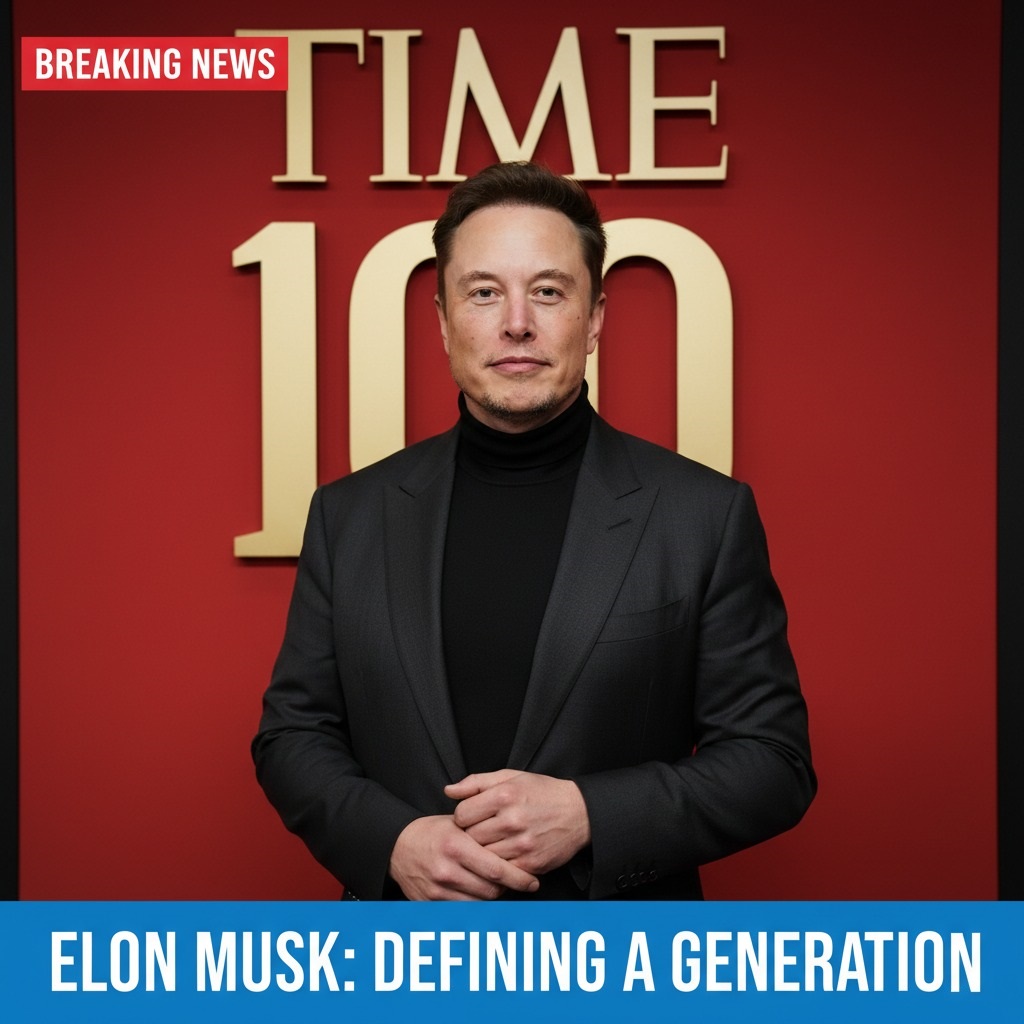
By the time TIME magazine unveiled its latest list of the 100 Most Influential People in the world, few names felt as inevitable — or as polarizing — as Elon Musk. Yet even for a figure who seems permanently welded to the headlines, this recognition marks something deeper than another accolade. It confirms a transformation years in the making: Musk is no longer just a tech entrepreneur. He is a cultural phenomenon, a political lightning rod, and a defining character of the 21st century.
From Silicon Valley Outsider to Global Power Broker
Elon Musk’s rise has never followed a conventional path. Born in South Africa, educated across continents, and shaped by early struggles as much as early success, Musk entered Silicon Valley not as a polished insider but as a relentless outsider with improbable ambitions. While many entrepreneurs focused on incremental gains, Musk talked openly — and often uncomfortably — about electric revolutions, interplanetary life, and rewriting the rules of communication itself.
TIME’s decision to include him among the world’s most influential figures is not simply a reflection of wealth or corporate dominance. It is recognition of something rarer: Musk’s ideas, decisions, and even his personal behavior ripple outward, affecting governments, markets, cultures, and public debate on a global scale.
Influence, in Musk’s case, is not subtle. It is loud, disruptive, and impossible to ignore.
Reshaping Industries, One Shockwave at a Time
Few individuals in modern history can credibly claim to have reshaped multiple major industries within a single lifetime. Musk can.
With Tesla, he forced the global automotive industry to confront an uncomfortable truth: electric vehicles were not a distant future — they were a competitive present. Legacy automakers that once dismissed EVs as niche experiments now pour billions into electrification, largely in response to Tesla’s success and the cultural momentum Musk generated.
SpaceX delivered a similar jolt to aerospace. By proving that reusable rockets were not only possible but economically viable, Musk shattered decades-old assumptions about space travel. Governments and private companies alike were forced to rethink what space exploration could look like in an era of rapid innovation and lower costs.
Then came communication. Through his acquisition and transformation of Twitter into X, Musk inserted himself directly into the bloodstream of global discourse. Whether praised as a champion of free speech or criticized as a reckless disruptor, his platform decisions now influence how information spreads, how narratives form, and how power is contested online.
TIME’s recognition reflects this cumulative impact: Musk does not merely participate in industries — he destabilizes them, forcing reinvention.
A Cultural Figure, Not Just a CEO
What truly separates Musk from other powerful executives is the way he transcends business and enters culture. His statements spark debates far beyond boardrooms. His opinions on artificial intelligence, geopolitics, free speech, and even population decline are dissected by politicians, academics, activists, and everyday users alike.
In an age when influence is often carefully managed by teams of publicists, Musk’s raw, sometimes chaotic presence feels radically different. He communicates directly, impulsively, and often controversially. This unpredictability has become part of his power. Supporters see authenticity and courage; critics see irresponsibility and ego. Both sides agree on one thing: when Musk speaks, the world listens.
TIME’s list is, at its core, about cultural gravity. Musk has it in abundance.
Controversy as a Catalyst, Not a Detour
Musk’s inclusion among the world’s most influential figures does not ignore controversy — it acknowledges it as part of the story. Few modern leaders inspire such intense polarization. His labor practices, management style, political commentary, and platform decisions have drawn fierce criticism.
Yet controversy has not diminished his influence. In many ways, it has amplified it.
Each backlash fuels wider conversations about the future of work, the ethics of AI, the boundaries of speech, and the responsibilities of powerful individuals in a hyperconnected world. Musk sits at the center of these debates not because he seeks consensus, but because he forces confrontation.
TIME’s recognition suggests a crucial point: influence is not measured by universal approval. It is measured by impact.
Defining the Questions of the Future
Perhaps Musk’s greatest contribution — and the reason TIME’s honor feels historically significant — lies in the questions he forces society to ask.
Can humanity transition away from fossil fuels fast enough to avoid irreversible damage?
Should private companies play a leading role in space exploration?
How do we balance free expression with accountability in digital public squares?
What safeguards are necessary as artificial intelligence accelerates beyond human comprehension?
Musk does not merely comment on these questions. Through his companies and choices, he actively shapes the answers.
In this sense, his influence extends beyond the present moment. It reaches forward, into futures still being written.
A Defining Figure of Our Era
TIME’s 100 Most Influential People list has historically captured individuals who reflect the spirit — and the tensions — of their time. Musk’s presence on that list is a mirror of our age: ambitious, fractured, technologically driven, and deeply uncertain about what comes next.
He embodies the promise and peril of unchecked innovation. He represents both the hope of progress and the fear of disruption. Love him or loathe him, Musk has become inseparable from the global conversation about where humanity is headed.
That is what ultimately cements his place among the most influential people alive.
More Than an Innovator
To call Elon Musk merely an innovator now feels insufficient. Innovators create products. Musk creates movements, reactions, and worldwide debates. His decisions can shift markets overnight, influence political narratives, and redefine what leadership looks like in the digital age.
TIME’s recognition is not an endpoint — it is a marker along an ongoing, volatile journey. As long as Musk continues to push boundaries and provoke discussion, his influence will remain a defining force of our era.
History will ultimately decide how he is remembered. But in this moment, one thing is undeniable: Elon Musk is not just shaping industries — he is shaping the world’s imagination itself.