

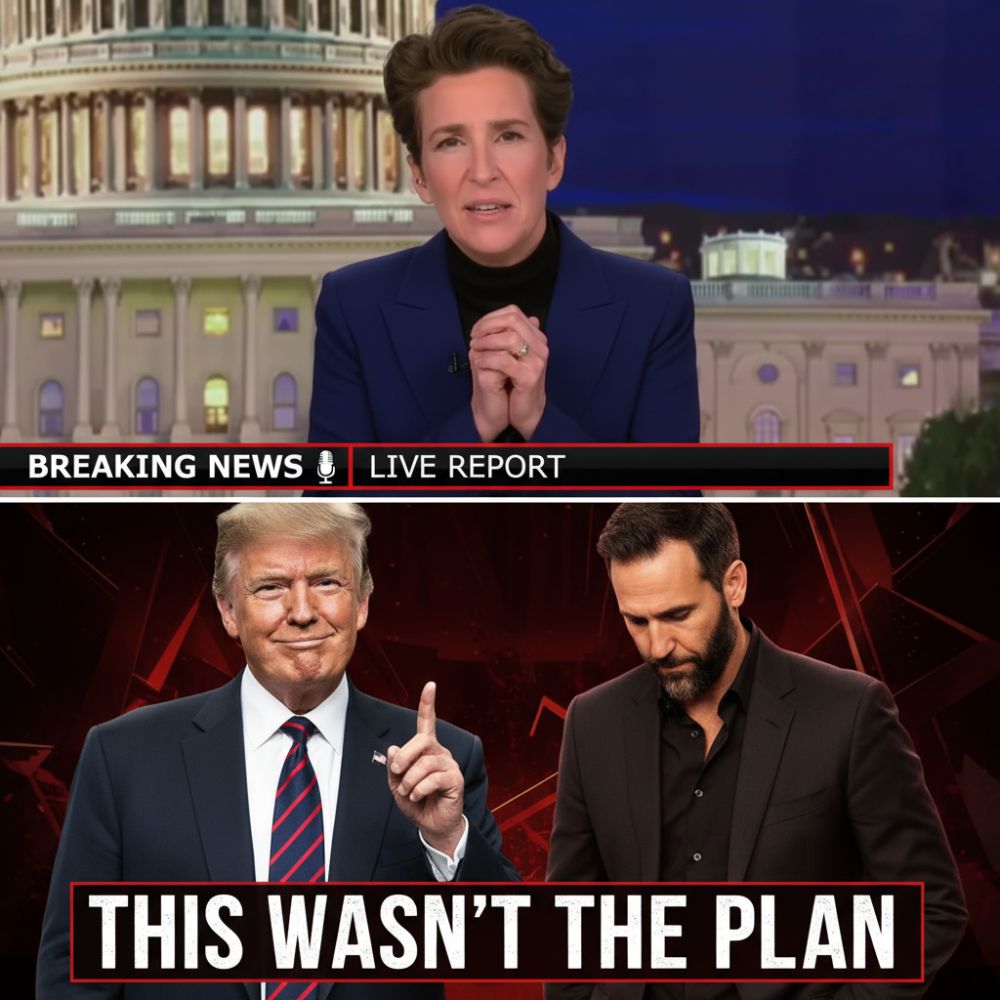
What was supposed to be a combative oversight hearing quickly evolved into something more complicated — and perhaps more uncomfortable — than either side publicly anticipated.
On Thursday, the Republican-led House Judiciary Committee convened a high-profile hearing titled “Oversight of the Office of Special Counsel Jack Smith.” The framing suggested confrontation. The reality, however, unfolded differently once questioning began and the record started to speak for itself.
Republicans aggressively challenged Smith, pressing him on the scope and legitimacy of his investigation into former President Donald Trump. Democrats, by contrast, took a quieter but more methodical approach, guiding Smith through a series of tightly framed questions that focused less on opinion and more on factual findings.
What followed was not theatrical testimony, but something arguably more striking: calm, direct confirmations.
When asked whether the investigation found efforts to organize fraudulent slates of electors in states Trump lost, Smith answered simply, “Yes.”
When questioned about pressure on state officials, Department of Justice leaders, and even the vice president to interfere with certification, Smith again responded in the affirmative — without elaboration, without visible emotion.
The lack of drama became the drama.
Rather than pushing back or hedging, Smith consistently referred to what the investigation concluded and what prosecutors intended to prove at trial. In doing so, he avoided speculation and stuck to the record, allowing the implications to linger without commentary.
At one point, the hearing took an unexpectedly surreal turn when a Democratic lawmaker referenced a comment attributed to Senator Lindsey Graham, suggesting Trump might have believed even wildly implausible theories about election interference. The room reacted briefly — a ripple of disbelief — before Smith responded.
His explanation wasn’t mocking or dismissive. Instead, he framed the issue as a pattern: an unwillingness to seek verification from credible sources, paired with a readiness to accept any narrative that supported remaining in power. According to Smith, that pattern formed a critical part of how investigators assessed intent.
Throughout the hearing, Democrats entered exhibits into the record and walked Smith through evidence already familiar to legal observers but less so to the broader public. The repetition, paired with Smith’s steady delivery, created an unusual atmosphere — not one of explosive confrontation, but of accumulation.
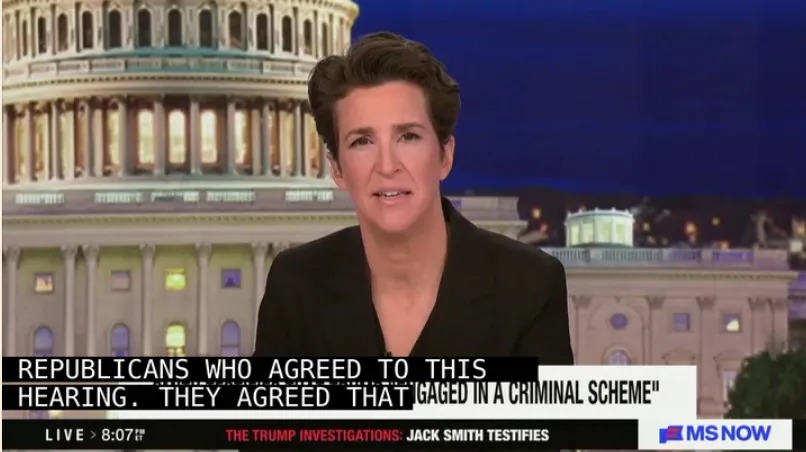
By nightfall, MSNBC host Rachel Maddow highlighted this dynamic during a two-hour special, suggesting that Republicans may not have anticipated how the hearing would unfold once Smith was allowed to speak at length, in public, and on camera.

It was, notably, Republicans who agreed to make the hearing public.
What viewers saw wasn’t a dramatic collapse or a legal verdict — none was offered. Instead, it was a sequence of confirmations delivered without flourish, leaving space for interpretation rather than insisting on conclusions.
And perhaps that’s what made the hearing linger in public consciousness.
No shouting match. No viral outburst. Just a methodical recounting of findings — and a sense that something intended to expose may have instead illuminated.
What that illumination means, and who it ultimately benefits, remains an open question — one the public seems increasingly eager to debate.