

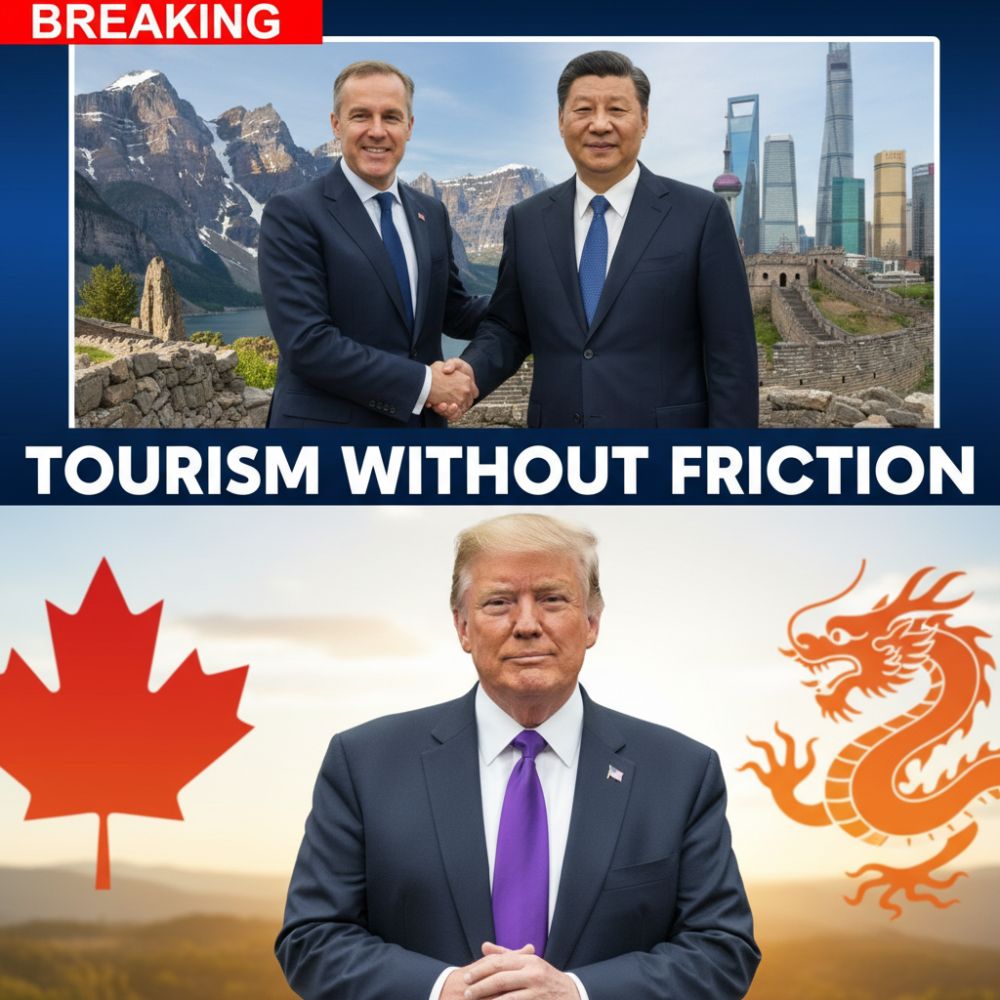
Canada’s announcement of visa-free travel to China marks far more than a diplomatic thaw—it signals a structural shift in tourism, trade, and geopolitical leverage that is already rippling south of the border.
Standing in Beijing, Prime Minister Mark Carney confirmed that Chinese authorities will now grant 30-day visa-free entry to Canadian citizens, eliminating applications, fees, interviews, and waiting periods. For a country with nearly 2 million Chinese Canadians, the implications are immediate—and massive.
This wasn’t about convenience. It was about scale.
A Reset Years in the Making
Nearly eight years had passed since a Canadian prime minister last met China’s top leadership. In that time, relations collapsed under the weight of the Meng Wanzhou arrest, the detention of the “two Michaels,” retaliatory bans on Canadian canola, and escalating trade tensions that froze dialogue entirely.
When Carney entered the Great Hall of the People in January 2026, expectations were cautious. What emerged was not symbolism, but a structural reset—one focused on mobility, predictability, and long-term alignment rather than ideology.
Visa-free travel became the centerpiece.
Why the U.S. Is Locked Out
Canada now joins 45 countries granted visa-free access to China. The United States does not.
American travelers must still navigate a $140 visa fee, in-person consulate interviews, weeks of processing, and no guarantee of approval. That asymmetry alone is reshaping travel behavior across North America.
For Canadian travelers, spontaneous trips—family emergencies, business opportunities, cultural events—are suddenly frictionless. For Americans, they remain bureaucratic and uncertain.
Markets respond to certainty.
Border Cities Take the Hit
Before this shift, many Chinese Canadians and Chinese tourists traveled to China via U.S. hubs—Seattle, San Francisco, Los Angeles, Detroit, New York. Those routes generated billions in airport fees, hotel stays, dining, retail, and transportation spending.
That traffic is now disappearing.
Direct flights from Vancouver and Toronto to Beijing, Shanghai, Guangzhou, and Shenzhen eliminate the need for U.S. layovers entirely. No U.S. immigration. No overnight hotel stays. No incidental spending.
Two million potential travelers no longer passing through American cities represents a permanent loss, not a temporary dip.
Tourism Flows Flip
China is already Canada’s second-largest source of international visitors, with roughly 300,000 arrivals in 2024, up 43% year-over-year. Historically, many combined U.S. and Canadian destinations—Seattle with Vancouver, New York with Toronto and Niagara Falls.
Visa-free access ends that model.
Analysts now project Chinese tourism to Canada could double to 600,000 annually within three years. Each additional arrival means spending captured entirely by Canada—and revenue lost by U.S. border economies.
The timing couldn’t be worse for American cities.
World Cup Effect
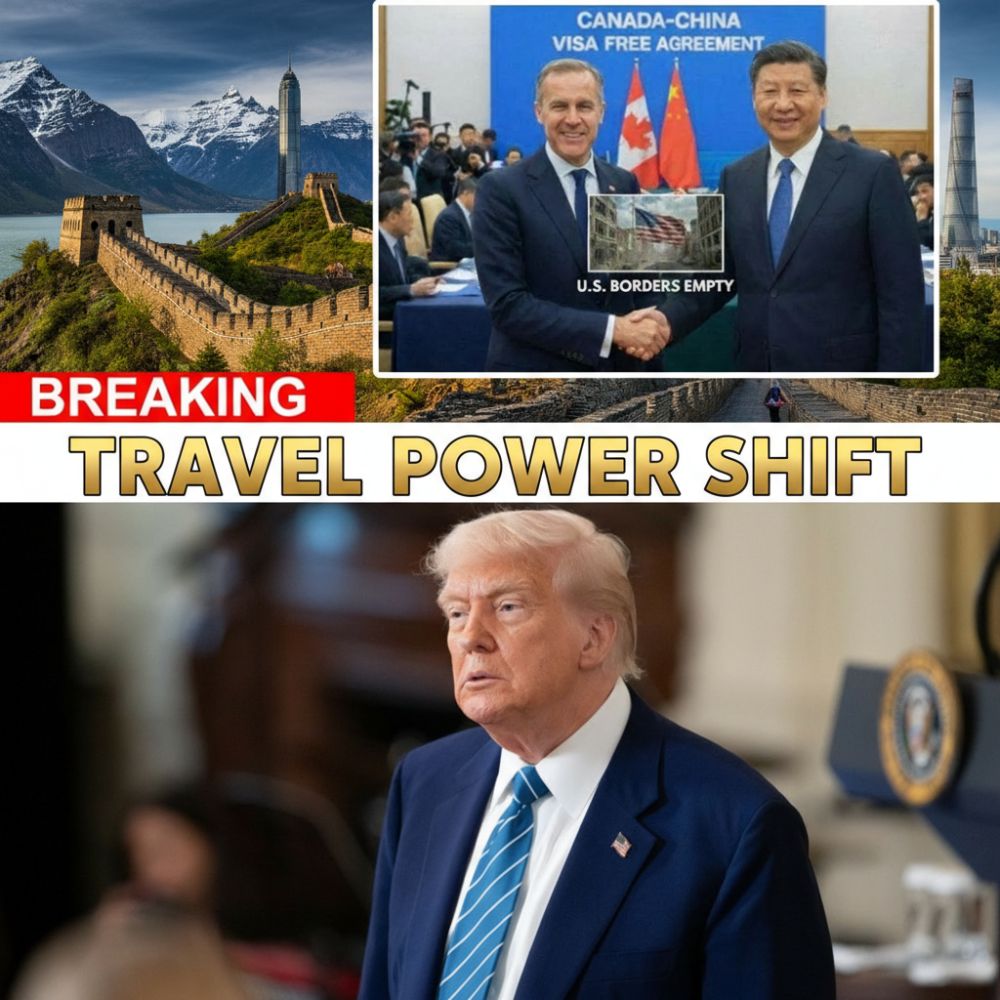
Canada will co-host the 2026 FIFA World Cup, with Toronto and Vancouver as host cities. Chinese fan interest is surging, and visa-free access removes the final barrier.
Chinese spectators can now fly directly to Canada, attend matches, and return home—never touching U.S. soil.
Seattle-Tacoma International Airport, Buffalo, Niagara Falls, and Detroit are already revising passenger forecasts downward. Hotels report softening bookings. Local officials are sounding alarms.
Entire Industries Disappear
Beyond tourism, visa-free travel wipes out a whole ecosystem of services once centered in U.S. border cities:
Visa processing agencies
Document preparation services
Translation firms
Immigration consultants
With no applications required, those jobs vanish overnight.
Part of a Bigger Strategy
Visa-free travel sits inside a broader Canada–China realignment:
Canola tariffs cut from 84% to 15%, unlocking ~$3B in exports
Expanded access for lobster, crab, peas, and agriculture
LNG exports scaling toward 50 million tons annually by 2030, with Chinese investment embedded
EV trade quotas negotiated at 6.1% tariffs, while the U.S. imposed 100%
One strategy closed doors. The other opened them.
Predictability Wins
Travel and tourism depend on stability. Plans are made months in advance. Families commit money and time based on rules that won’t change overnight.
Canada offered predictability. The U.S. offered volatility.
As direct routes expand and habits form, infrastructure locks in. Vancouver and Toronto solidify their roles as Pacific gateways. U.S. border cities lose relevance in Asia-bound travel—and once that shift hardens, it rarely reverses.
The Bottom Line
Carney framed the move as sovereignty in action—and the economics back it up. Jobs, tourism growth, cultural exchange, and global positioning now flow through Canada.
American pressure meant to enforce compliance instead accelerated diversification.
The result:
Canada consolidates gains U.S. border cities absorb losses
Washington is left with fewer levers than before
This wasn’t ideological. It was strategic—and the effects are already locked in.