


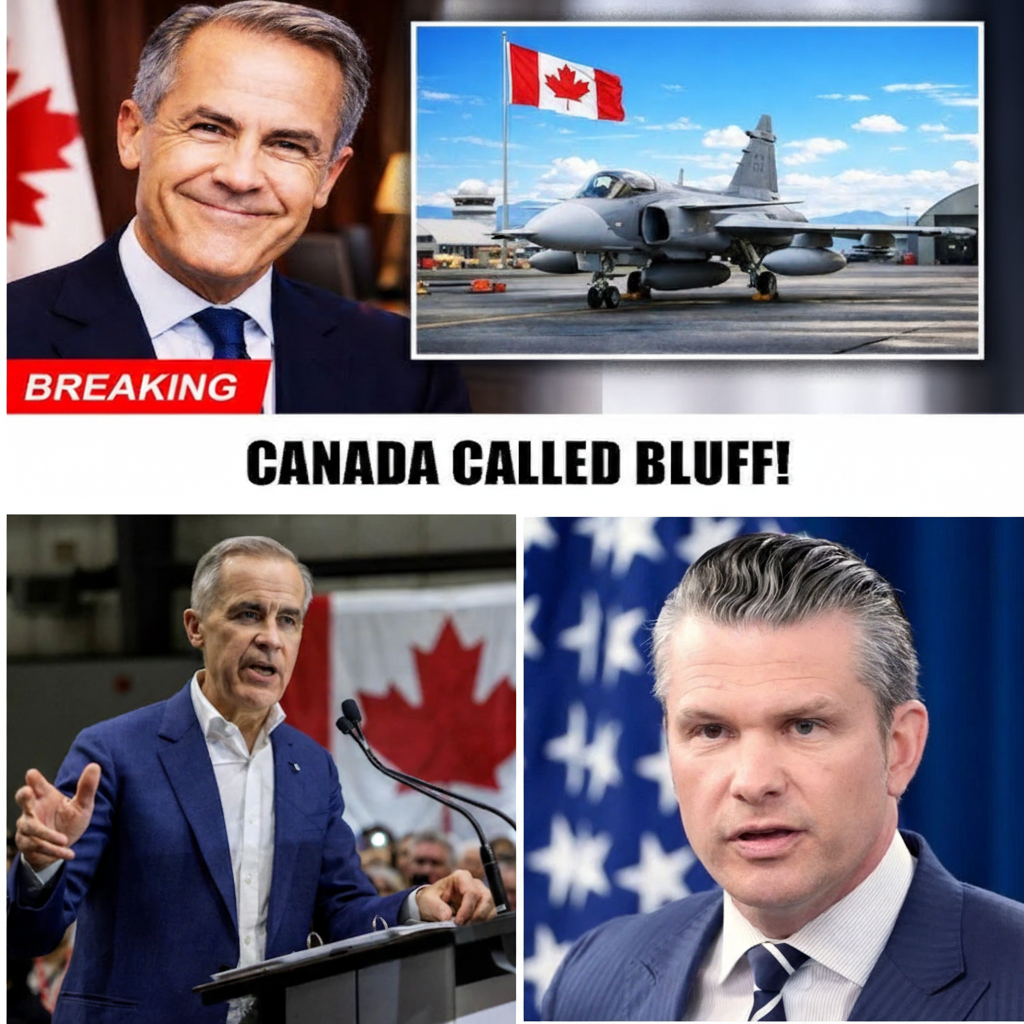
The Pentagon has issued a stark, urgent warning following Canada’s stunning reconsideration of its fighter jet procurement, reopening the highly contentious F-35 contract debate as the Swedish Gripen E enters the fray. This seismic shift threatens to upend longstanding defense alignments, raising alarms in Washington and shaking North American security dynamics to the core.
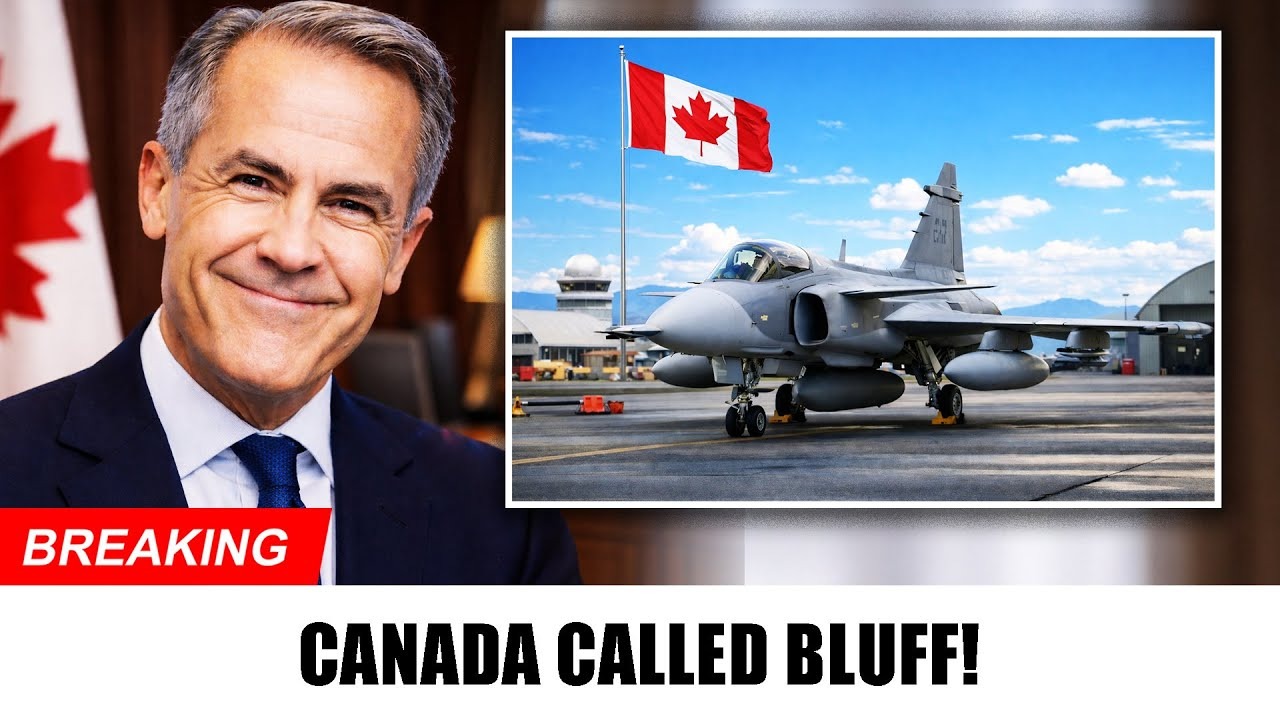
In a move that has sent shockwaves through military and political corridors, Canada’s renewed interest in the Saab Gripen E fighter jet has unsettled U.S. defense leadership and industry giants alike. The Swedish firm promises up to 10,000 new manufacturing and research jobs, assembling aircraft domestically with extensive technology transfer—propositions that directly challenge the U.S.-backed F-35 Lightning II program.
For decades, Canada’s defense policy appeared stable, with the F-35 seen as an inevitable cornerstone of its air force modernization. Yet, persistent cost overruns, ballooning from an initial $19 billion estimate to nearly $33 billion, have strained Canada’s defense budget, driving government officials to reconsider their options amidst escalating financial and political pressures.
Complicating matters further, deteriorating Canada-U.S. political relations under President Trump’s administration introduced tariff threats and provocative rhetoric that underscored Canada’s vulnerability in its reliance on American technology. This geopolitical tension intensified doubts about sovereignty and control over critical defense assets operated through foreign oversight and restrictive software access.
The F-35 program’s Achilles’ heel lies not only in soaring costs but in its complex software infrastructure, tightly controlled by the United States. Canada’s potential loss of autonomous control over fighter capabilities, encompassing mission-critical updates and combat readiness, has eroded confidence among Canadian policymakers wary of becoming overdependent on U.S. oversight.
Equally urgent are operational concerns tied to Canada’s unique Arctic environment, where the Gripen E offers distinct advantages. Designed for operation on short, dispersed runways in extreme conditions, the Gripen’s flexibility directly answers Canada’s strategic defense needs, especially with the promise of full local assembly and control over upgrades and maintenance.

The political significance of Saab’s proposal cannot be overstated, embedding Bombardier as a key partner and igniting hopes for revitalizing Canada’s domestic aerospace industry. The debate now transcends mere procurement: it challenges national sovereignty, industrial autonomy, and the future framework of Canadian defense capabilities within an increasingly complex global security landscape.
However, military leadership remains divided. High-ranking officials emphasize the F-35’s unrivaled combat capabilities and long-term technological superiority, essential for interoperable alliance commitments and future upgrades—views steeped in traditional defense doctrines prioritizing maximum operational overmatch and standardized fleets.
Yet critics question the need for such advanced stealth technology when Canada’s primary role focuses on territorial defense, Arctic surveillance, and NATO support rather than peer-level contestation. The cost-benefit ratio, especially against the Gripen’s lower operating expenses and localized control, demands rigorous reconsideration, casting doubt on the wisdom of allocating billions to the F-35 fleet.
Economic ripple effects further complicate the debate. Bombardier’s CEO warned of potential losses in U.S. contracts should Canada abandon the F-35, reflecting the intertwined nature of the North American aerospace sector. Still, the Gripen’s reliance on the U.S.-made F414 engine means complete independence remains elusive regardless of the final choice.
A hybrid approach has surfaced as a potential compromise, maintaining initial F-35 deliveries while transitioning to domestic Gripen assembly—an ambitious but complicated plan that risks higher costs, logistical challenges, and operational fragmentation within the Royal Canadian Air Force’s fleet.

As diplomatic negotiations proceed cautiously across multiple fronts with Lockheed Martin and Saab, Canadian officials communicate a clear stance: sovereignty and strategic autonomy will drive decisions, but rash moves are off the table. The stakes are monumental, with billions at risk and the future posture of Canada’s air defense hanging in the balance.
This unfolding crisis reflects broader themes of alliance dependencies and technological governance in modern military procurement. The choice between the F-35 and Gripen encapsulates a complex trade-off between unmatched defense integration with key allies versus bolstering national industrial capacity and operational independence.
Prime Minister Mark Carney’s commitment to accepting 16 F-35 jets underscores a pragmatic middle ground, yet the impending d
ecision on the remaining 72 aircraft will deeply influence Canada’s defense identity for decades. The outcome will resonate far beyond aircraft procurement, shaping perceptions of Canadian sovereignty amid shifting global power realities.
Washington’s alarm is evident as the prospect of a pivot away from the F-35 represents not just a lost contract but a challenge to U.S. military influence and defense industry dominance in the region. Pentagon officials view Canada’s reconsideration as a critical test of alliance cohesion in an era of rising geopolitical uncertainty.
The debate continues to intensify, with 𝓵𝓮𝓪𝓴𝓮𝓭 reports and public statements fueling divergent narratives. Proponents urge technological supremacy and alliance fidelity, while opponents champion economic prudence and strategic autonomy, framing Canada’s choice as a defining moment in its national security doctrine.
In this precarious moment, Canada stands at a crossroads with profound implications for its military future. The grip of great power politics, defense economics, and industrial policy collide as the nation confronts the delicate balance between reliance and independence in the 21st-century strategic environment.
The next chapters of this story will unfold rapidly. As negotiations deepen and public scrutiny sharpens, both Ottawa and Washington brace for a decision that could reset North American defense collaboration and recalibrate the very definition of Canadian sovereignty in a turbulent global era.