

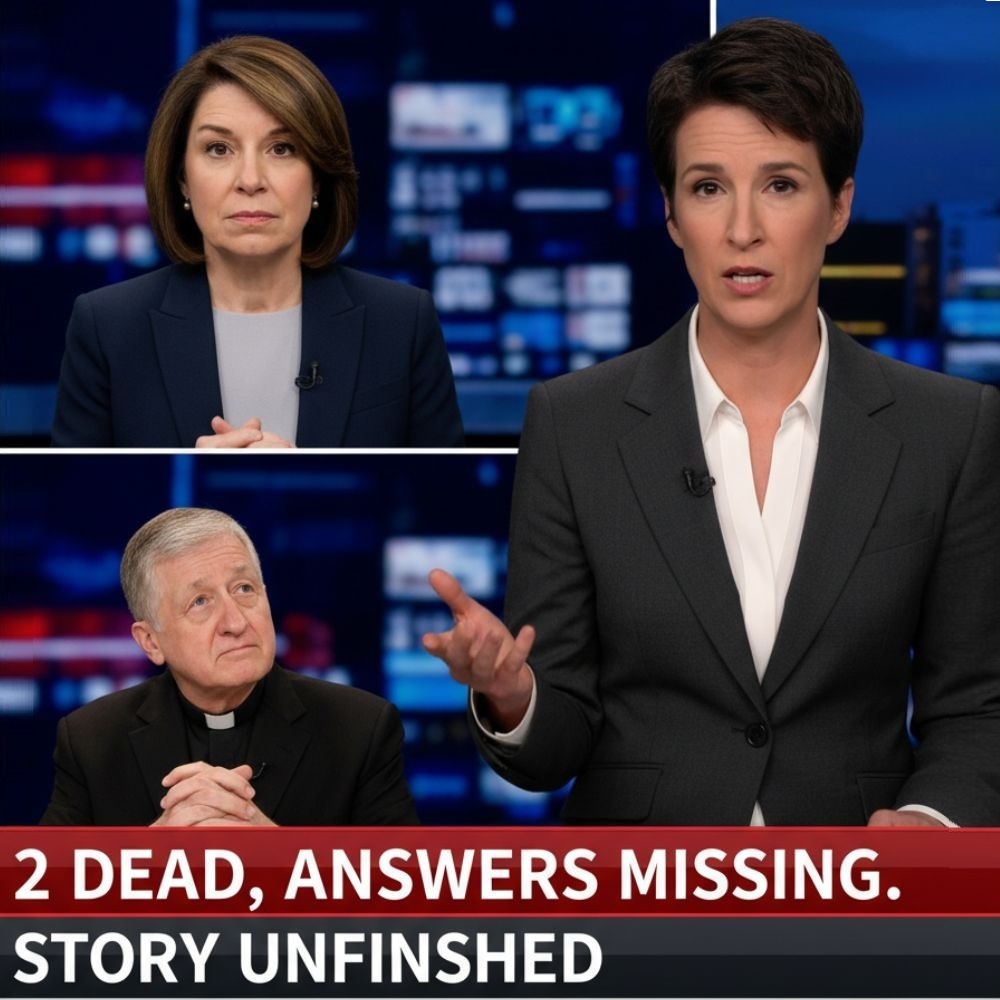
When Rachel Maddow opened her January, 2026 broadcast, she didn’t start with outrage.
She started with timing.
A sequence of events.
A narrowing window.
And a federal operation that unraveled faster than the administration anticipated.
President Donald Trump’s renewed push for mass deportations was meant to project control—Border Patrol and ICE agents dispatched into major cities, immigration raids framed as “law enforcement normalization.” Instead, what followed was chaos, civilian deaths, and a quiet retreat that raised more questions than answers.
Maddow centered her reporting on Minnesota, where resistance wasn’t loud at first. It was procedural. Legal. Local. Cities refusing cooperation. Faith groups opening doors. Businesses quietly changing policies. Then came the shootings.
On January 24, 2026, Alex Pretti, a 37-year-old ICU nurse and U.S. citizen, was killed during a Border Patrol operation in Minneapolis. Pretti had been filming agents during a raid—footage shows him stepping forward after an officer shoved a woman to the ground. A scuffle followed. Then gunfire.
Maddow lingered on what happened next.
No immediate press conference.
No body-cam footage released.
And a noticeable delay before federal officials explained why lethal force was used.
Pretti was not unknown to agents. Videos from January 13 show him confronting Border Patrol during protests—unarmed, vocal, visibly frustrated. Maddow did not frame him as a hero or a villain. Instead, she asked why an immigration operation escalated to the point where a civilian filming in public ended up dead.
Just weeks earlier, another Minneapolis resident, Renee Macklin Good, had also been killed during federal enforcement activity. Again, a U.S. citizen. Again, no clear explanation connecting the use of force to an imminent threat.
The stated goal of the operations was immigration enforcement.
The outcome, Maddow noted, was American bloodshed.
The public reaction was immediate but uneven. In Minnesota, protests grew. Lawsuits followed. Local officials refused to provide logistical support. Senator Amy Klobuchar called the deaths “a violation of democratic norms,” stopping short of alleging criminal wrongdoing—but demanding answers.
Then came the moment Washington didn’t advertise.
Border Patrol commander Greg Bovino was quietly pulled from Minneapolis. Several agents were reassigned. The administration framed it as a “tactical adjustment.” Maddow framed it differently: a retreat under pressure.
Nationwide, the pattern repeated. Towns rejected ICE detention facilities. Airlines declined deportation contracts. Major retailers discouraged arrests on their properties. Clergy spoke out—most notably Cardinal Blase Cupich, who warned that the United States was “losing moral credibility in real time.”
One of the most striking interviews featured a woman dragged from her car by ICE agents. Maddow let her speak uninterrupted. No music. No commentary. Just pauses—and the sound of someone reliving something they still didn’t understand.
Even inside the Republican Party, fractures appeared. Several GOP lawmakers called for internal reviews of the shootings, careful with language but unmistakably uneasy.
Maddow ended the episode without a verdict.
Instead, she returned to the silence.
The delayed statements.
The reassigned commanders.
The questions no one seemed eager to answer.
If this policy was working, she implied, why did it collapse so quickly?
And if it wasn’t… why did it take civilian deaths for anyone to notice?