

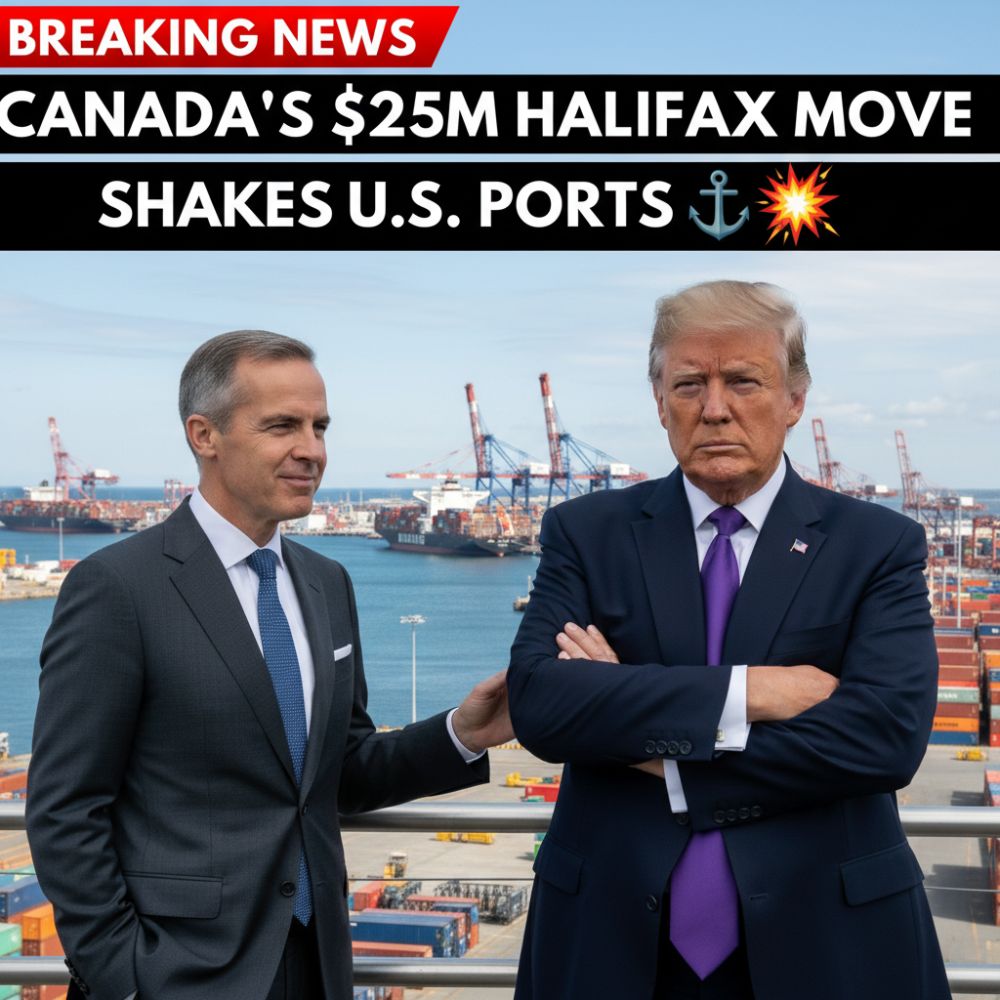
Halifax Just Ended U.S. Port Dominance — With $25 Million

It took Canada three weeks and $25 million to do what the United States has spent years talking about.
Halifax is now building North America’s first hydrogen-refueling port.
While U.S. ports argue over feasibility studies, Canada is already pouring concrete.
Transport Minister Anita Anand announced the investment three weeks ago.
Construction started immediately.
Hydrogen production.
Alternative-fuel vessel bunkering.
Electric rail connections.
All of it will be operational before New York, Boston, or Virginia even finish environmental reviews.
This isn’t a race anymore.
It’s already over.
Why This Matters — Timing Is Everything
In 2026, the European Union makes mandatory carbon reporting for shipping.
That means European shipping companies must use ports that support hydrogen, ammonia, or zero-emission fuels—or pay penalties.
Halifax is building that infrastructure now.
American ports?
They’re still scheduling committee meetings to discuss maybe studying potential options eventually.
By the time U.S. ports break ground, Halifax will already control the Hamburg–Halifax Green Shipping Corridor—a direct zero-emission trade route between Germany and North America.
Once shipping routes shift, they don’t come back.
The Strategic Knockout Blow
European companies now face a simple choice:
Route cargo through U.S. ports using diesel ships → carbon penalties
Route through Halifax using hydrogen-powered ships → carbon-neutral compliance
That cost gap grows every single year.
And Halifax didn’t stop at ships.
Canada is deploying electric rail locomotives connecting the port directly into the North American rail network—meaning cargo can move from Hamburg to Chicago with zero emissions.
U.S. ports still rely on diesel rail.
Same destination.
Very different carbon math.
Why the U.S. Can’t Catch Up Quickly
American ports face three structural problems:
Regulatory paralysis
Hydrogen infrastructure requires years of federal, state, and local approvals.
Political fragmentation
New York and New Jersey alone involve multiple states, agencies, and authorities fighting over control.
Labor and automation resistance
U.S. ports delayed modernization for decades—now they’re stuck.
Halifax had none of those barriers.
One port authority.
Provincial backing.
Federal funding.
Immediate execution.
Result: operational hydrogen refueling by 2026–27.
U.S. ports won’t be ready before 2030—if they even start now.
Permanent Market Share Loss
Three years is more than enough time for:
Shipping routes to lock in
Rail logistics to re-optimize
Warehouses and distribution hubs to relocate
Customs and supply chains to standardize around Halifax
Once that happens, traffic doesn’t return.
This means permanent job losses at U.S. East Coast ports—and permanent growth for Canada.
Trump’s Tariff Chaos Sealed the Deal
European shipping companies don’t care about U.S. politics.
They care about cost, reliability, and emissions compliance.
Trump’s tariff threats and trade volatility gave them one more reason to bypass American ports entirely.
Canada offered stability.
Predictable regulation.
No tariff chaos.
And now—green infrastructure that aligns perfectly with EU law.
The Bottom Line
This wasn’t about climate ideology.
It was about timing, execution, and strategy.
Canada invested $25 million.
America debated.
Halifax is becoming North America’s green shipping gateway, exactly when green shipping becomes mandatory.
That’s not a subsidy.
That’s how you capture market share while your competitors are still arguing.