


End of an Era: Canada Quietly Scraps Century-Old Border Privilege for Americans Amid Rising Tensions with U.S.
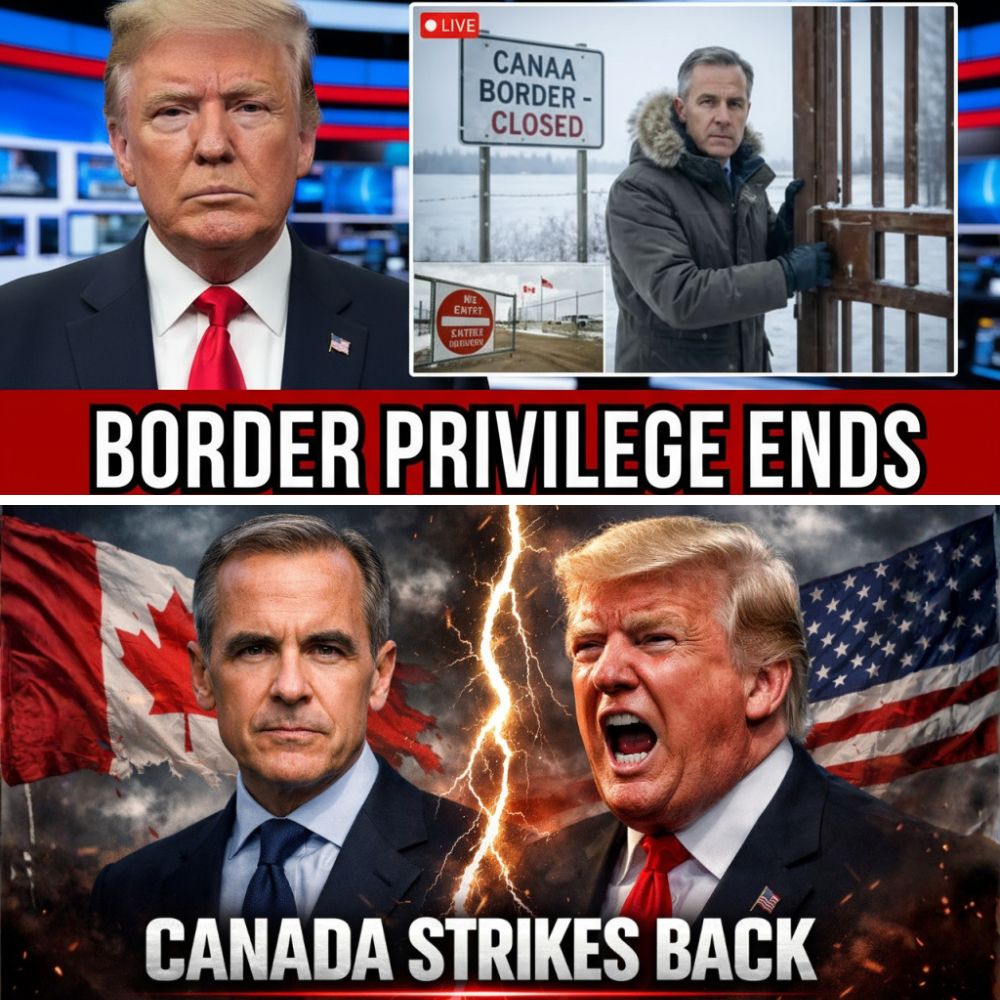
The decision, buried deep in a routine regulatory update from the Canada Border Services Agency (CBSA), marks one of the most significant operational changes to the northern border in generations. For the first time since the program’s informal origins in the early 20th century, every person entering Canada—even in the most remote and inaccessible regions—must present themselves at an official border crossing.
Officially, Ottawa frames the change as a routine modernization of border management. Politically, however, the timing is impossible to ignore. Coming amid escalating trade wars, annexation threats, and increasingly sharp rhetoric from Washington, the decision signals that Canada’s legendary patience with its southern neighbor may finally be wearing thin.
The Program That Ran on Trust
For decades, the RABC program functioned on a simple premise: Americans exploring Canada’s remote wilderness could cross at designated “reporting locations” by telephone or in person at unstaffed crossing points, provided they remained in specific wilderness areas and did not proceed to populated regions.
The system enabled tens of thousands of annual crossings—hunters bound for Manitoba’s boreal forests, canoeists navigating boundary waters, anglers seeking Quebec’s remote fishing lakes, and adventurers traversing the Yukon’s backcountry. No border officers. No checkpoints. No delays. Just open space and mutual trust between neighbors.
“It was one of the last truly trusting arrangements between any two countries on Earth,” said border historian Peter Andreas of Brown University. “The assumption was that Americans crossing into the Canadian wilderness posed minimal risk, and that the wilderness itself would deter anyone with bad intentions. For a hundred years, that assumption largely held.”
The Security Rationale
The CBSA’s official explanation cites standard security and administrative concerns. “The RABC program no longer aligns with modern border management requirements,” an agency spokesperson told The Globe and Mail. “Ensuring all travelers present at staffed ports of entry allows for consistent application of screening procedures and strengthens overall border integrity.”
Agency documents suggest that technological limitations—aging telephone reporting systems, difficulty verifying compliance, and the inability to conduct meaningful risk assessments remotely—contributed to the decision. So did the increasing complexity of cross-border travel, with more Americans holding dual citizenship, criminal records requiring waivers, or other circumstances demanding direct officer interaction.
But critics note that these challenges have existed for decades. The sudden urgency to address them, they suggest, reflects broader political currents.
The Political Context
The RABC termination arrives as Canada-U.S. relations have deteriorated to their lowest point in modern memory. President Donald Trump’s repeated suggestions that Canada should become the “51st state,” his imposition of crippling tariffs on Canadian steel and aluminum, and his administration’s aggressive renegotiation of energy and trade agreements have fundamentally altered the bilateral dynamic.
Prime Minister Mark Carney’s government has responded with what officials describe as “calibrated reciprocity”—matching American pressure without escalating to outright confrontation. Ending the RABC program fits that pattern: a low-profile change with real practical impact that signals Canadian displeasure without triggering a diplomatic crisis.
“This is Canada speaking softly but carrying a meaningful stick,” said foreign policy analyst Roland Paris of the University of Ottawa. “It tells Americans: trust is a two-way street, and when you undermine that trust through threats and tariffs, you shouldn’t be surprised when small privileges disappear.”
The Practical Impact
For American outdoor enthusiasts, the change represents a genuine loss. The RABC program enabled spontaneous adventures—decisions to explore a remote lake on the Canadian side of the boundary waters, or to extend a hunting trip into previously unvisited territory. Under the new rules, such spontaneity becomes impossible.
Travelers must now identify a staffed port of entry, often hours away from their intended wilderness destination, present themselves for inspection, and then backtrack to their original route. For multi-day trips involving multiple crossing points, the logistical burden multiplies.
“The practical effect is that some trips simply won’t happen anymore,” said John Ebersole, executive director of the Boundary Waters Voyageur Partnership, which represents businesses on both sides of the Minnesota-Ontario border. “If you have to drive six hours round-trip just to check in with a border officer, that extra day of travel may be the difference between going and staying home.”
Communities that depend on American tourism—from Manitoba’s fly-in fishing lodges to British Columbia’s backcountry guiding operations—are bracing for economic impact. The U.S. accounts for approximately 70% of Canada’s international tourists, and even a small reduction in wilderness travelers could affect local economies.
The Canadian Perspective
Within Canada, reaction has been mixed. Border communities in remote areas worry about economic consequences. But among the broader public, the change has generated limited attention—and where it has registered, some support exists.
“Why should Americans get special privileges when their president threatens our sovereignty every other week?” asked a commenter on a national news site, reflecting a sentiment increasingly common in Canadian discourse. Polling shows a majority of Canadians now view the United States more as a threat than an ally—a dramatic shift from just five years ago.
The government appears mindful of this public mood. By framing the change as administrative rather than political, Ottawa avoids inflaming tensions while still delivering a message that resonates with Canadian voters.
The American Response
Official U.S. reaction has been muted, perhaps reflecting the administration’s focus on higher-profile disputes. The State Department has not issued formal comment, and border-state members of Congress have only begun to assess the implications.
Senator Lisa Murkowski (R-Alaska), whose state shares a long border with Canada’s Yukon, has quietly raised concerns with administration officials. “The RABC program served both our countries well for generations,” she said in a brief statement. “I hope Canada will reconsider this decision in light of the strong cross-border ties that benefit communities on both sides.”
But with the Trump administration preoccupied by trade wars and election-year politics, sustained pressure to reverse the Canadian decision appears unlikely. The September 2026 implementation date gives affected parties time to lobby, but the trajectory seems clear.
The Broader Pattern
The RABC termination fits a larger pattern of Canadian adjustment to the new reality of U.S. relations. Ottawa’s recent defense spending increases, designed to reduce dependence on American military protection, follow the same logic. So do efforts to diversify trade away from exclusive U.S. focus, including negotiations with European and Asian partners.
“Canada is rebalancing,” said trade lawyer Lawrence Herman, a veteran of Canada-U.S. relations. “For decades, we assumed the relationship was too important to disrupt, so we absorbed American provocations. That assumption is gone. We now understand that we need leverage—and eliminating privileges is one form of leverage.”
What the Change Means
When the RABC program ends in September 2026, a unique chapter in cross-border relations will close. For a century, the Canada-U.S. border in remote areas operated on trust—an acknowledgment that neighbors who share the world’s longest undefended border could manage their differences without constant surveillance.
That trust, like the program itself, has now become a casualty of deteriorating relations. Whether it can be restored—and what other privileges might disappear in the meantime—remains an open question.
For now, American travelers planning Canadian wilderness adventures should prepare for new procedures, longer drives, and a fundamentally different crossing experience. The invisible border is becoming visible again. And the trust that once made it invisible may take years to rebuild.