

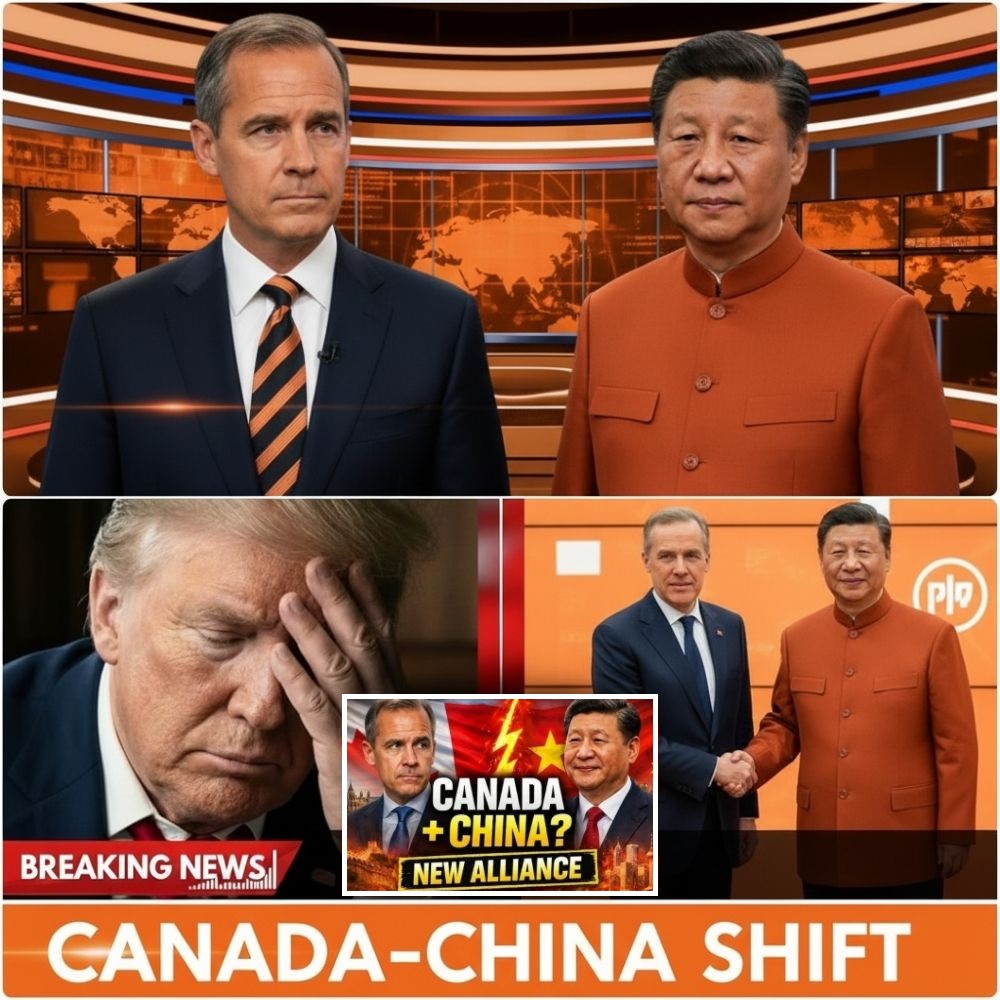
New Visa-Free Travel Move Between Canada and China Draws Attention in the U.S.
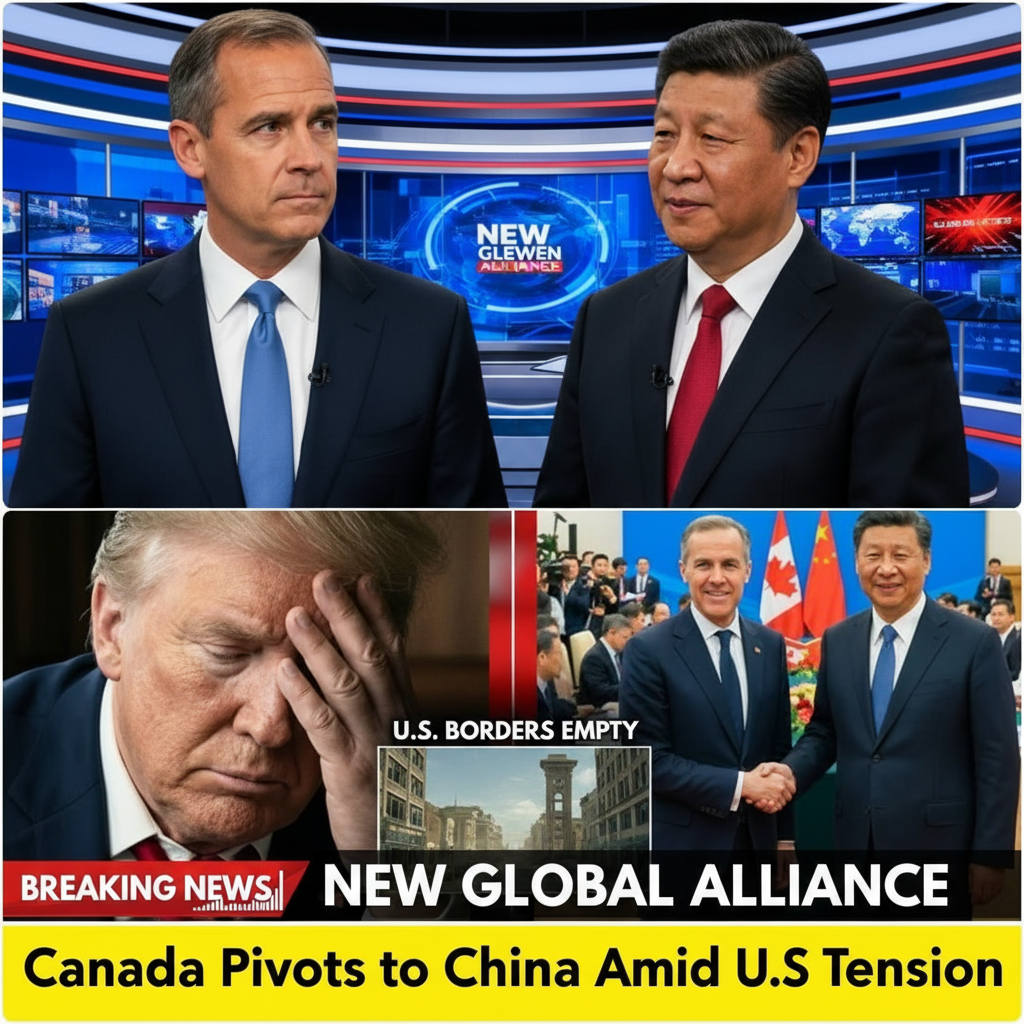
A Continental Divide: Canada Ignites Visa-Free Partnership with China as U.S. Trade Strategy Collapses Under Record Tariffs and Court Defeats
In the high-stakes arena of global diplomacy, silence can often be more deafening than a roar. While the United States has been locked in a tumultuous and increasingly chaotic trade war defined by escalating rhetoric and record-breaking tariffs, a quiet but monumental shift has occurred just north of the border. Canada, America’s closest ally and the nation that shares the longest undefended border in the world with the U.S., has just dropped a diplomatic bombshell that has sent shockwaves through Washington. As of February 2026, Canada has officially launched visa-free travel with China, a move that is much more than a simple convenience for tourists—it is the cornerstone of a new “Strategic Partnership” that signals a profound pivot away from American economic dependence.
The timing of this development could not be more humiliating for the current U.S. administration. While American farmers are watching their soybean exports to China plummet to their lowest levels since 2018, and while the U.S. Supreme Court has recently stripped the presidency of its primary tariff-imposing powers, Canadian Prime Minister Mark Carney has been busy shaking hands with President Xi Jinping in the Great Hall of the People. This is the story of two neighbors moving in diametrically opposite directions: one building walls and imposing 145% duties, the other building bridges and unlocking billions in new trade. It is a moment that demands every American pay attention, as it reveals the stark consequences of an “America First” policy that may increasingly find itself “America Alone.”
The Beijing Breakthrough: Canada’s Strategic Pivot
The origins of this shift date back to January 2026, when Prime Minister Mark Carney made a historic visit to Beijing—the first time a Canadian leader had set foot in China since 2017. Nearly a decade of frozen relations, sparked by high-profile diplomatic disputes, melted away in a matter of days. Carney didn’t just go for the optics; he engaged in a full-court diplomatic press, meeting with President Xi, Premier Li Qiang, and the top leadership of the National People’s Congress.
The results were nothing short of extraordinary. The two nations announced a new strategic partnership designed to settle long-festering trade disputes. For years, Canadian canola producers—a $4 billion market—had been essentially locked out of China by prohibitive tariffs and regulatory hurdles. Following the summit, China agreed to lower tariffs on Canadian canola seed to approximately 15%, a massive drop from previous levels that hovered around 85%. Agreements were also reached on canola meal, lobsters, crabs, and peas, effectively unlocking nearly $3 billion in export orders for Canadian workers and businesses.
As a gesture of goodwill and a signal of deep cooperation, President Xi personally committed to the visa-free entry policy for Canadian passport holders. Since February 17, 2026, Canadians can now travel to China for up to 30 days without the bureaucratic red tape of a visa. While the U.S. remains mired in “Section 301” investigations and legal battles over manufacturing capacity, Canada has secured a “fast lane” into the world’s second-largest economy.
America’s Tariff Chaos: A Strategy in Shambles
To understand why Canada’s move is so significant, one must look at the wreckage of current U.S. trade policy. The United States is currently embroiled in the most intense trade war of the modern era. The timeline is staggering: starting in early 2025 with 10% tariffs on Chinese imports, the administration rapidly escalated duties to 20%, then 34%, and eventually to a mind-boggling 145%. China, predictably, responded in kind, matching or nearing those levels with 125% tariffs on American goods.
The economic fallout has been devastating. Analysis from the Peterson Institute for International Economics shows that U.S. goods shipments to China have fallen to levels not seen since the 2008 global financial crisis. In 2025 alone, U.S. exports to China were 26% lower than the previous year. The agricultural heartland has borne the brunt of this impact; farmers who once sold one in every three rows of soybeans to China are now watching helplessly as Brazil and Argentina move in to claim that market share permanently.
Adding to the administration’s woes, the U.S. Supreme Court recently delivered a crippling blow to the President’s trade agenda. In a 6-to-3 ruling in February 2026, the Court declared that the President cannot use the International Emergency Economic Powers Act (IEEPA) to unilaterally impose tariffs. This ruling struck down the legal foundation for a significant portion of the administration’s trade strategy, forcing a pivot to temporary 150-day “blanket tariffs” under Section 122 of the Trade Act—a tool that offers far less stability for businesses and markets.
The “51st State” Rhetoric and Canadian Independence
Why would Canada, a country that sends nearly 80% of its exports to the United States, risk the ire of Washington by cozying up to Beijing? The answer lies in the perceived instability and aggression of current U.S. policy. Prime Minister Carney has been vocal about the fact that Canada’s extreme dependence on the U.S. market has become a strategic vulnerability.
The relationship between the two neighbors has soured significantly under the weight of 35% across-the-board U.S. tariffs on Canadian goods, including separate punitive duties on steel, aluminum, and lumber. Furthermore, repeated rhetoric from some corners of the U.S. administration suggesting that Canada should essentially become the “51st state” has deeply offended Canadian national pride and alarmed its leadership.
In response, Carney has pledged to double Canada’s non-U.S. trade within the next decade. The China partnership is the first major step in this diversification strategy. By 2030, Canada aims to boost its exports to China by 50%, focusing on clean energy technology, agri-food, and wood products. The visa-free agreement serves as a powerful symbol: it tells the world that Canada is open for business and is willing to forge its own path, regardless of the playbook being written in Washington.
The Business Response: A Tale of Two Economies
The markets and the business community are already reacting to this shift. In Canada, the atmosphere is one of renewed optimism. Major carriers like Air Canada and WestJet are already reviewing their summer capacity to accommodate a surge in business and leisure travel to China. Canadian companies with manufacturing operations in the Pearl River and Yangtze River deltas are preparing for simplified logistics, allowing their engineering and quality assurance teams to move back and forth with ease.
In contrast, the U.S. business community is mired in uncertainty. With a blanket 10% tariff set to expire in July and new “Section 301” investigations into a dozen major economies—including Mexico and the EU—launching just this week, American companies have no clear roadmap for the future. Even the upcoming high-stakes summit between the U.S. President and Xi Jinping in Beijing has seen its expectations drastically lowered. Reports indicate that there may not even be a formal CEO delegation joining the President, as the potential for a “grand bargain” has withered into small-scale commercial purchases like soybeans.
Conclusion: Playing Chess While We Play Checkers
As we stand in March 2026, the contrast is impossible to ignore. The United States is fighting a multi-front trade war, battling its own Supreme Court, and alienating its closest allies through unpredictable protectionism. Meanwhile, Canada has looked at the map of the 21st century and decided that its future cannot be tied solely to an unstable neighbor.
By securing visa-free travel and a strategic trade partnership with China, Canada has strategically positioned itself to benefit from the very markets that the U.S. is currently abandoning. It is a masterclass in pragmatic diplomacy. While Washington plays “checkers”—reacting with immediate, blunt-force tariffs—Ottawa is playing “chess,” thinking several moves ahead to ensure long-term economic survival.
The question for every American is simple: How much longer can we afford a trade policy that alienates our friends and provides an open door for our competitors? If our closest ally feels the need to hedge its bets against us, it is time for a serious national conversation about our place in the world. The rest of the globe is moving on, and right now, Canada is leading the way.