


The Epstein Vault Cracks: Attorney General Pam Bondi Faces Historic Impeachment Over Alleged Criminal Cover-Up and Perjury
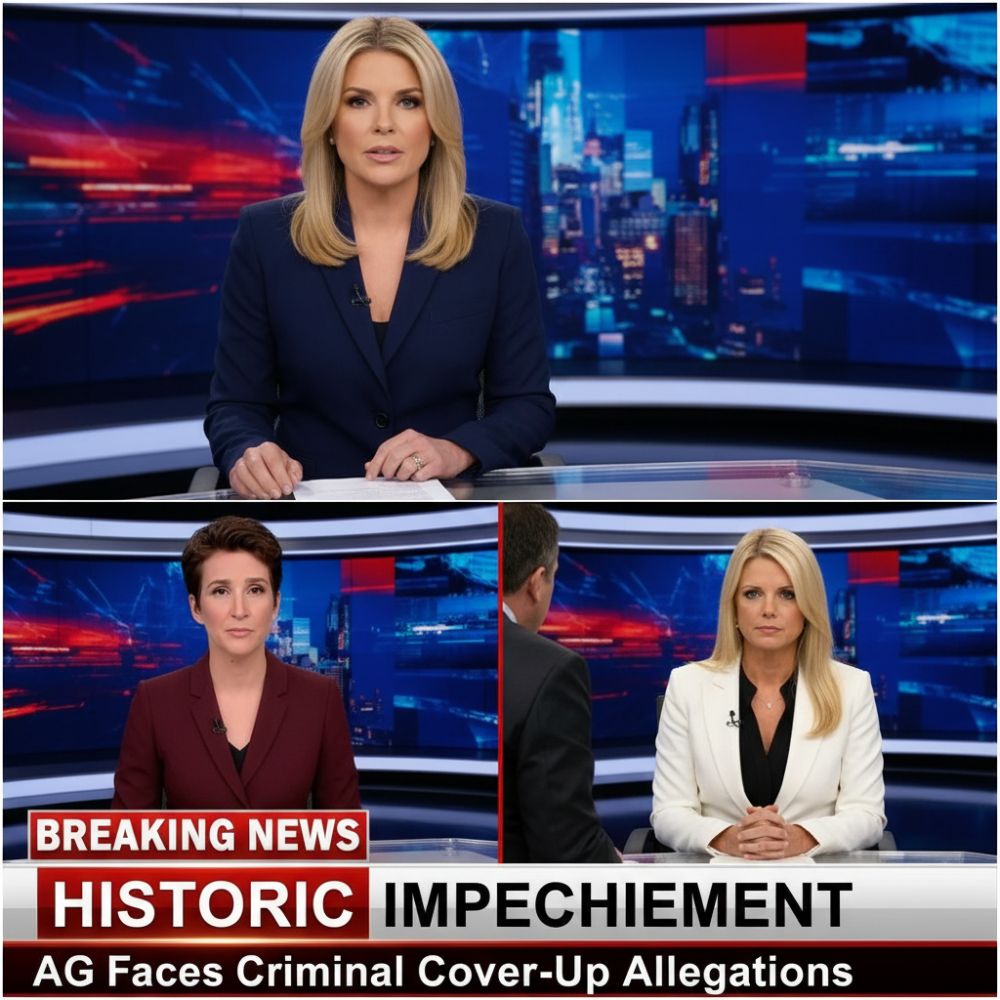
In the storied history of the United States Department of Justice, an institution that prides itself on the impartial administration of the law, a threshold has been crossed that was once considered unthinkable. For the first time in the nation’s history, a sitting Attorney General is facing formal articles of impeachment that do not merely allege policy failures or administrative overreach, but explicit criminal conduct. The filing of these articles against Pam Bondi by Congresswoman Summer Lee has paralyzed Washington, D.C., creating a “dead silence” that reflects the gravity of a constitutional crisis with no clear exit strategy. The charges are as precise as they are devastating: defying congressional subpoenas, ignoring federal court orders, and committing perjury—all in a sustained, multi-layered effort to suppress the full, unredacted Jeffrey Epstein investigative files.
The Jeffrey Epstein case has long been the gravitational center of public distrust in the American legal system. While Epstein himself died in a federal jail cell, the network of elite power, billionaire associations, and predatory behavior documented in millions of pages of federal records did not disappear with him. For months, the Public Record and congressional investigators have tracked a pattern of non-compliance from Bondi’s Justice Department that defies any standard explanation. Subpoenas were issued and ignored; court orders were entered and dismissed; deadlines passed without action. To the investigators who have reviewed the partial, heavily redacted disclosures, the conclusion became inescapable: the Attorney General of the United States was prioritizing the protection of specific high-profile individuals over her constitutional obligations.
The Anatomy of a Constitutional Charge
The articles of impeachment introduced by Congresswoman Lee are not a partisan performance; they are a legal document built on a documented record of defiance. The charge of defying congressional subpoenas is a matter of public record, constituting contempt of the legislative branch. The charge of ignoring federal court orders represents a direct challenge to the judicial branch, signaling that a cabinet officer believes herself to be beyond the reach of the bench. However, it is the third charge—perjury—that carries the most acute legal weight. Perjury is a federal crime, punishable by imprisonment, and the articles allege that Bondi committed this crime while testifying about the nature and extent of the Epstein files.
The language used in the impeachment document is intentionally brutal. It accuses Bondi of acting to “protect pedophiles”—a characterization that goes beyond political rhetoric and enters the realm of a formal legal conclusion. By writing this into the permanent congressional record, Lee is asserting that the only logical explanation for the Department of Justice’s sustained resistance to transparency is that the files contain information so catastrophic for certain individuals that protecting them was worth risking the Attorney General’s career, her reputation, and her very freedom.
The Silence of the Justice Department
Inside the halls of the Department of Justice, the atmosphere is described by career officials as one of total paralysis. These are professionals who have weathered decades of political scandals, but they recognize that impeachment is a different animal. It is not a lawsuit that can be buried in motions; it is not an investigation that can be stalled with privilege claims. It is a publicly conducted, constitutionally mandated proceeding where the evidence must be presented to the world. The standard tools of institutional defense—the redaction pens and the scheduling delays—have lost their efficacy.
The panic has reportedly spread beyond the DOJ to the sprawling networks of attorneys, financial advisors, and political intermediaries who represent the names buried in those files. For these individuals, Bondi’s strategy of “containment” was their only shield. Containment sought to manage the timeline of disclosure, hoping the public’s will would eventually fade. Impeachment, by contrast, is “exposure.” It subjects every document Bondi has withheld and every subpoena she has defied to the constitutional authority of the House of Representatives. The vault that powerful people spent a fortune to keep sealed is now being pried open by the most powerful instrument in the legislative arsenal.
The Strategy of Impeachment
The decision by Congresswoman Lee to skip intermediate oversight steps and move directly to impeachment is a strategic masterstroke. It reflects an evidentiary record that is already so complete that further investigation into the act of defiance is unnecessary. The court orders exist; the non-compliance is established; the testimony is on the record. Lee isn’t using the articles to start a search for the truth—she is using them as the constitutional conclusion of a search that has already yielded enough evidence to charge the nation’s top lawyer with criminal conduct.
This proceeding is unique in American history. While previous impeachments have focused on the abstract exercise of executive power or the boundaries of constitutional conduct, the Bondi impeachment is focused on the contents of a specific document cache. It is a battle over names. It is an inquiry into whose associations with Jeffrey Epstein were deemed so sensitive that the Attorney General of the United States would risk an impeachment trial rather than release them. When Bondi eventually sits in that hearing room, she will face a question she can no longer dodge: “Whose names are you protecting, and why?”
Legal Exposure and the 72-Hour Window
The legal danger for Pam Bondi extends far beyond her potential removal from office. The perjury charge documented in the articles of impeachment creates a personal criminal exposure that will survive the political resolution of the case. If the House proceed and the Senate conducts a trial, every statement Bondi makes will be added to a record that could form the foundation of a criminal prosecution once she returns to private life. She is trapped in an impossible arithmetic: comply with the disclosure demands and “detonate” the lives of the global elite, or continue to resist and build the very case that could send her to prison.
Washington now waits as a 72-hour window looms over the Attorney General. The timeline is no longer hers to control; it belongs to the House Judiciary Committee. Witnesses are being subpoenaed, and 15 transcripts are already waiting to be used against her. What happens in that hearing room will be the most consequential moment in the entire history of the Epstein investigation—more so than his arrest or his death—because it represents the first time the full weight of the U.S. Constitution has been directed at the systematic cover-up of his crimes.
The Epstein files represent a “gravitational center” of corruption that has finally pulled a sitting Attorney General into its orbit. Whether the contents of that vault emerge through a controlled release or a chaotic impeachment trial, the outcome remains the same: the truth is coming out. For Pam Bondi, the choice is no longer between silence and disclosure, but between a managed exit and a total constitutional collapse. As the weight of the law she was supposed to uphold comes down upon her, the rest of the country watches to see if the system of accountability still has the strength to function when the stakes are this high.