

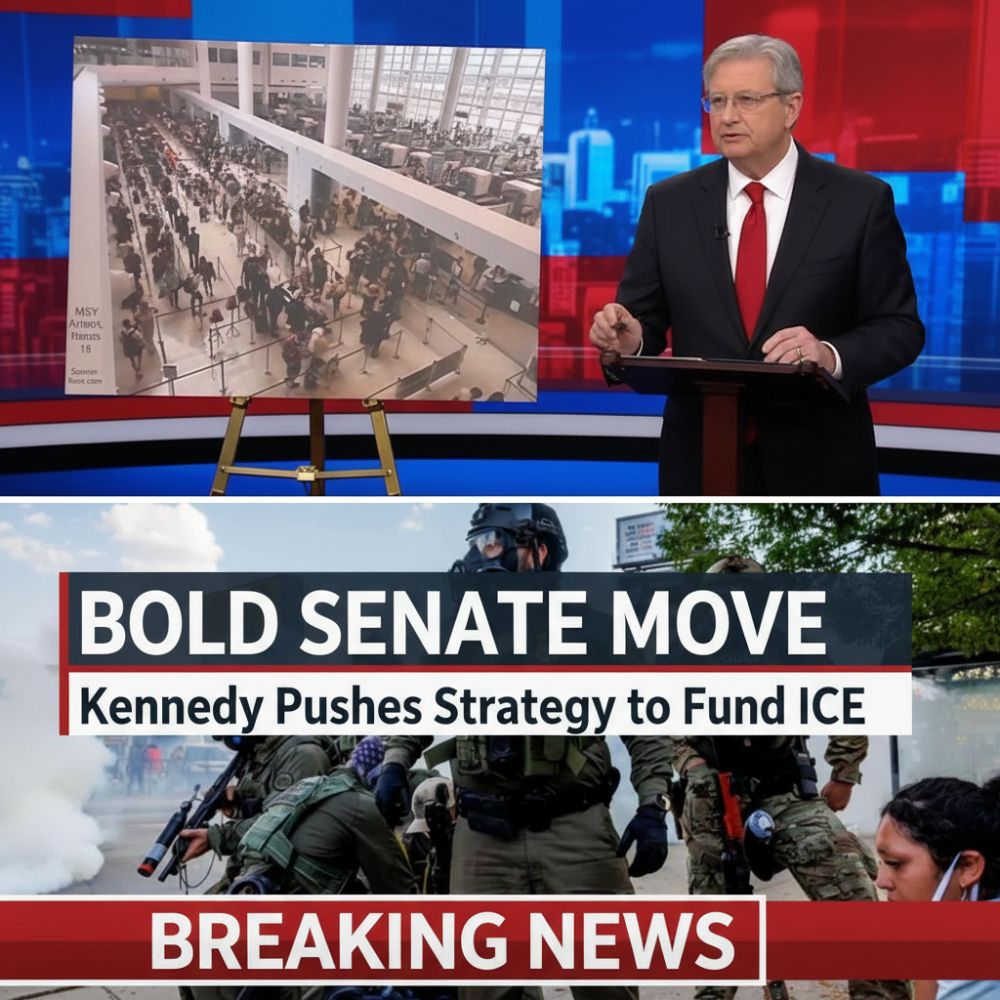
Kennedy Urges Senate to Fund ICE Without Democrats Using Budget Maneuver
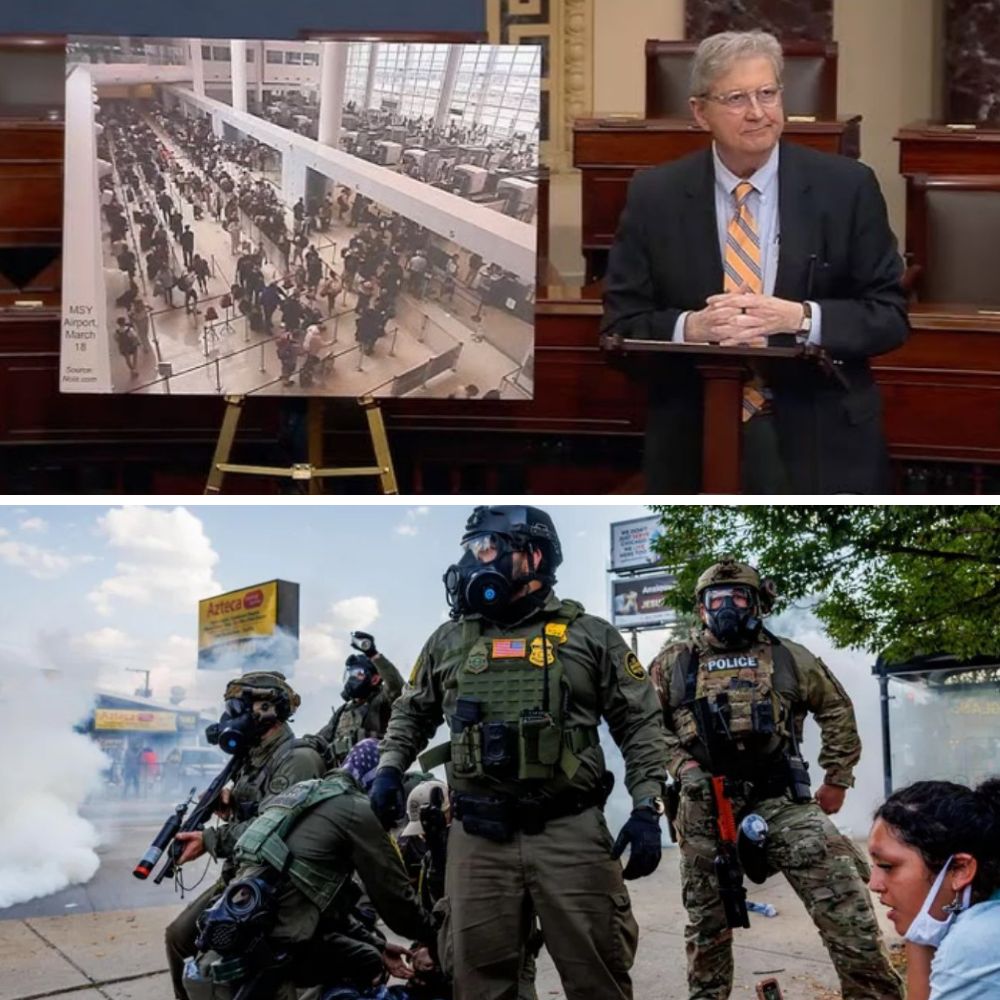
Senator Kennedy’s Reconciliation Gambit: The Bold Plan to End the DHS Shutdown and Force ICE Funding Through a Republican Power Play
The hallowed halls of the United States Senate have seen their fair share of grandstanding and gridlock, but rarely has the air been as thick with frustration as it was during Senator John Kennedy’s (R-LA) recent address regarding the ongoing Department of Homeland Security (DHS) shutdown. Standing alongside his colleague, Mr. John Lowry, Kennedy didn’t just deliver a speech; he issued a strategic manifesto aimed at breaking a stalemate that has paralyzed some of the most critical functions of the American government. With his trademark blend of Southern charm and razor-sharp political assessment, Kennedy laid bare the “silly” nature of a dispute that has left the TSA, Coast Guard, FEMA, and CISA in a state of suspended animation—all because of a fundamental disagreement over the funding of Immigration and Customs Enforcement (ICE).
The Anatomy of a Shutdown
The Senator began by reminding the chamber and the public of the stakes. While the mainstream media often focuses on the border, Kennedy pointed out that the DHS umbrella covers a vast array of agencies that every American relies on. “FEMA… it’s part of Homeland Security. It’s shut down,” Kennedy noted, emphasizing the danger of leaving disaster response in limbo . He moved on to the Coast Guard and the Cybersecurity and Infrastructure Security Agency (CISA), both of which are currently shuttered or severely hampered . Perhaps most visible to the average citizen are the TSA workers, many of whom are currently working without pay as the political machine in Washington grinds to a halt .
Kennedy was quick to dismiss the “party line” that progress is being made. Despite reports of meetings between Democratic leadership and the White House, or even recent sit-downs with Republican senators and experts like Mr. Tom Homan, Kennedy characterized the progress on a scale of 1 to 10 as a “minus 17”. The reason for this total lack of movement, according to Kennedy, is a fundamental political reality that many in Washington refuse to voice: the Democratic party, as it currently exists, is ideologically incapable of funding ICE.
The Rise of the “Karen Wing”
In a move that is sure to spark intense debate on social media, Senator Kennedy identified a specific faction within the Democratic Party that he believes is blocking any hope of compromise. While some refer to it as the “progressive wing” or the “moon wing,” Kennedy opted for a more colloquial—and controversial—label: the “Karen wing”. According to the Senator, this faction is in absolute control of the Democratic caucus.
“The Karen wing wants to defund ICE,” Kennedy asserted, “and they will accept nothing less”. He drew a direct line between this stance and the previous “defund the police” movement, arguing that the underlying philosophy is one that avoids prosecution as a way to artificially lower crime rates . The political danger for any moderate Democrat who might consider a compromise on ICE is, in Kennedy’s view, career-ending. He believes they would be “punished for the rest of their natural lives” by their own party’s base if they were to agree to fund the agency . Because of this internal political pressure, Kennedy argued that the weeks of meetings and emails are not just futile but are “lowering [his] IQ” by repeating the same unproductive arguments over and over .
The Reconciliation Solution: Two Bullets Left
So, how does a divided Senate move forward when one side is politically barred from negotiation? Kennedy’s proposal is a surgical political strike. He suggests that Republicans should immediately accept the Democratic offer to open and fund the TSA, FEMA, the Coast Guard, and CISA—effectively getting the “non-controversial” parts of the government back to work.
However, the second half of his plan is where the true power play begins. “The very next day,” Kennedy proposed, “Republicans need to file a reconciliation bill”. Under the Budget Control Act, a reconciliation bill only requires a simple majority of 51 votes to pass, bypassing the 60-vote threshold that usually allows the minority party to filibuster legislation. Kennedy reminded his colleagues that this was the mechanism used to pass what he called “one big beautiful bill” in the past.
The Senator noted that the Senate currently has “two bullets left”—two more opportunities to use reconciliation before the budget cycle expires. While some on his side of the aisle are reluctant to use such a hardball tactic, Kennedy dismissed the hesitation. “Med school is hard, but we still have a lot of great doctors,” he quipped, arguing that senators were sent to Washington specifically to “do hard things” and break stalemates that affect national security.
The SAVE Act and the Crisis of Trust
Kennedy’s vision for this reconciliation bill extends beyond just funding ICE. He wants to include the “SAVE Act,” a piece of legislation designed to ensure that only American citizens can vote in national elections by requiring proof of citizenship. This is where Kennedy touched on one of the most sensitive topics in modern American politics: the “Replacement Theory.”
He acknowledged the Democratic counter-arguments—that it is already illegal for non-citizens to vote and that there is little evidence of widespread fraud—but argued that these points miss the larger issue. Kennedy pointed to the millions of people who have entered the country illegally during the Biden administration, stating that while many are economic migrants, others are criminals, traffickers, and “Cinderellas” who do not belong here.
The Senator argued that millions of Americans have concluded that this influx was “by design” to bolster the Democratic Party. Whether this perception is objectively true or not, Kennedy argued, is almost secondary to the fact that the American people believe it is true. This belief has led to a total collapse of trust in the electoral system. “Our elections are not worth a damn if people don’t accept the result,” Kennedy warned. By including the SAVE Act in a reconciliation bill—which he believes can survive the “bird bath” of parliamentary review—he aims to restore that lost trust.
A Call for Smart Lawyering and Decisive Action
Senator Kennedy concluded his remarks by calling for the best legal minds in the Republican conference—naming Senator Ted Cruz and Senator John Cornyn specifically—to help craft a reconciliation package that can pass the 51-vote threshold. He admitted that he is currently in the minority even among some of his own colleagues on this strategy, but he remained undeterred. “Sometimes the majority just means all the fools are on the same side,” he noted dryly, insisting that the 51-vote strategy is the only realistic way to fund ICE and secure the border without Democratic support that is never coming.
As the DHS shutdown continues to impact thousands of federal workers and millions of citizens, Senator Kennedy’s proposal stands as a stark challenge to the traditional way of doing business in Washington. It is a plan born of frustration, but also of a calculated understanding of the modern political landscape. Whether the Republican leadership will take up Kennedy’s “two bullets” remains to be seen, but one thing is clear: the Senator from Louisiana has no intention of sitting quietly while the “Karen wing” of the opposition dictates the terms of national security.