

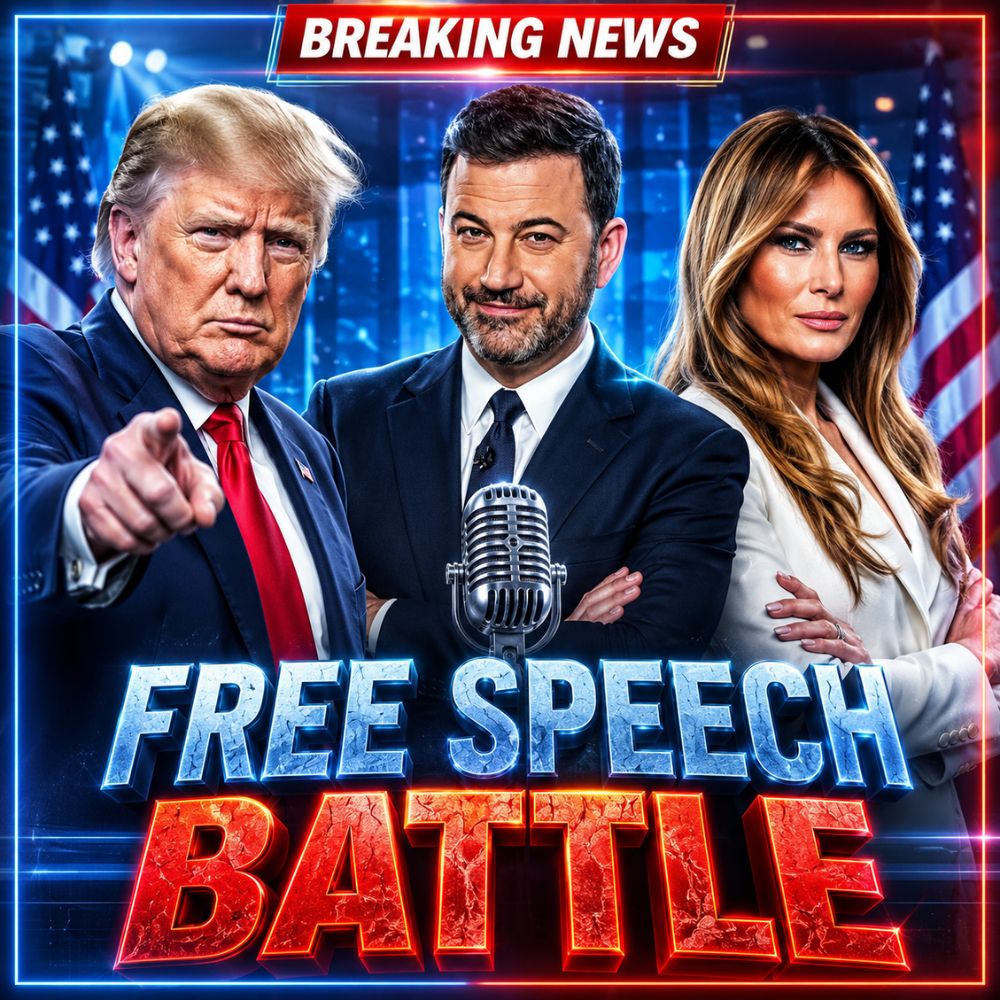
The Late-Night War: Inside the Surreal Collision of the Oval Office and Hollywood
Imagine this: You are the most powerful man on Earth. You hold the nuclear codes, command the world’s most formidable military, and sit at the center of the global stage. Yet, at 3:00 a.m., your mind isn’t occupied by geopolitical tensions in the Middle East or the fluctuating charts of the global economy. Instead, you are fixated on a man in a suit sitting behind a desk in Hollywood.
This isn’t just a feud; it is a high-stakes, multi-front collision. We are witnessing a war between the leader of the free world and the “King of Late Night,” Jimmy Kimmel. It is a spectacle that has never happened in the history of American media—a “Twitter vomit storm,” as Kimmel calls it, that has escalated from simple monologue jokes to full-blown presidential demands for censorship and job termination.
But as the lines between news, entertainment, and reality continue to evaporate, we have to ask: Is this actually about comedy, or are we watching the final, chaotic act of a political era where performance is the only currency that matters?
The Bedroom and the Bully Pulpit
To understand the absurdity of the current moment, you have to look at the setting. Picture Jimmy Kimmel’s bedroom. He wakes up, surrounded by pillows, while his wife films him on a smartphone. Why? Because the President of the United States has just issued another digital “shout-out.”
This wasn’t a commendation for a war hero or a statement on a new trade deal. It was a post calling Kimmel a “low-life,” “unfunny,” and “incompetent.” More than that, the President was publicly demanding that ABC fire him, calling for his show to be banned from the airwaves entirely.
Kimmel’s response hit on a question that is both hilarious and terrifying: “How exactly do you get fired from a job you were never fired from in the first place?” It’s a classic move of repetition. If you call someone “low-rated” enough times, does it eventually become the truth in the minds of millions? This is the new battlefield of American discourse—an attempt to reshape the reality of the television landscape through pure force of will.
The Trigger: A “Mentalist” and a Mockery
The catalyst for this latest explosion was the White House Correspondents’ Dinner. Historically, this is the night where the President sits on a dais and is roasted by a professional comedian. However, this year, organizers opted for a “mentalist” instead of a stand-up comic.
Kimmel, sensing a void, decided to host his own version. He threw on a tuxedo, created a mock audience, and used a montage of footage featuring the President, JD Vance, and even Kid Rock. But the joke that truly “went nuclear” involved the First Lady.
Kimmel remarked, “Mrs. Trump, you have a glow like an expectant widow.”
It was a sharp piece of satire, but the response from the executive branch was surreal. The President’s camp didn’t just call it “mean”; they treated it like a declaration of war, even suggesting the joke was a violent threat. Kimmel’s rebuttal was pointed: Imagine if FDR, during the height of the Battle of the Bulge, took to the airwaves to complain about a “Little Orphan Annie” comic strip. When a world leader treats a late-night comedian as a global adversary, it reveals less about the comedian’s humor and more about the leader’s priorities.
The Unlikely Defenders of the First Amendment
In an era of hyper-partisanship, this feud produced a plot twist that no one saw coming. When the White House began demanding that a private citizen be silenced and fired for a joke, an unlikely group of people stepped into the spotlight.
Figures like Ted Cruz, Rand Paul, and James Comer—men who have been the primary targets of Kimmel’s most brutal monologues for years—did not jump at the chance to see him cancelled. Instead, they defended his right to speak. They recognized a fundamental, uncomfortable truth: if the government starts silencing late-night hosts for jokes, the precedent becomes a danger to everyone.
The divide in America today isn’t just Red versus Blue; it’s between those who believe in the right to mock and critique, and those who believe power should be immune to offense. When your “enemies” defend your right to mock them, you know you are touching a fundamental pillar of a free society.
The “Kimmel Effect”: Turning Politics into Pop Culture
A significant portion of this war is fought over footage. Kimmel has become obsessive about the visual dynamic between the President and the First Lady—the hand-swatting, the robotic smiles, the scheduled glances. He portrays it not as a political partnership, but as a co-worker relationship struggling to stay afloat.
Kimmel’s brilliance lies in his ability to “show, don’t tell.” He plays the tape of them walking into a room with foreign royalty and lets the audience analyze the body language. It feels less like a news headline and more like “leaked footage” from a reality show that kept filming after the producers left the set.
By treating the personal life of a President as a narrative thread, Kimmel has successfully turned politics into pop culture. And the American audience is eating it up. Every time they appear together, the internet pauses the frame to ask: Are they happy? What is happening behind those golden doors?
A Symbiotic Chaos: Who Actually Wins?
We are living in an era where “Fake News” isn’t just a label—it’s a marketing strategy. Every time the President attacks Kimmel, Kimmel’s ratings go up. Every time Kimmel mocks the President, his social media engagement skyrockets. It is a symbiotic, chaotic digital ecosystem where, in terms of attention and revenue, everyone wins.
But what is the cost of this entertainment?
The cost is the displacement of substance. While we are locked in a perpetual state of “Kimmel vs. Trump,” we stop talking about the policies that actually change lives. Kimmel himself pointed this out, noting that the threats he receives from the administration use the same scale and language as threats directed at sovereign nations like Iran. It is an escalating war of words designed to keep us glued to our screens.
The Final Act
So, where does this end? Will Jimmy Kimmel get fired? Unlikely. Will the 3:00 a.m. posts stop? Almost certainly not.
This battle is the “new normal” of American political life. It is the spectacle that sustains the machine. But perhaps we should be looking at what is happening in the background. While the spotlight is fixed on the comedian and the leader, systemic shifts in the power structure of the nation are occurring in the silence.
The real question isn’t whether a joke went “too far.” The real question is whether we, as an audience, can still distinguish between a joke, a policy, and a performance. This is the story of the modern American empire told through the lens of late-night television. It is wild, it is chaotic, and it is far from over.
The history of this era won’t just be written in policy papers; it will be written in the scripts of monologues and the archives of social media posts. The world is watching, and for now, the show must go on.