

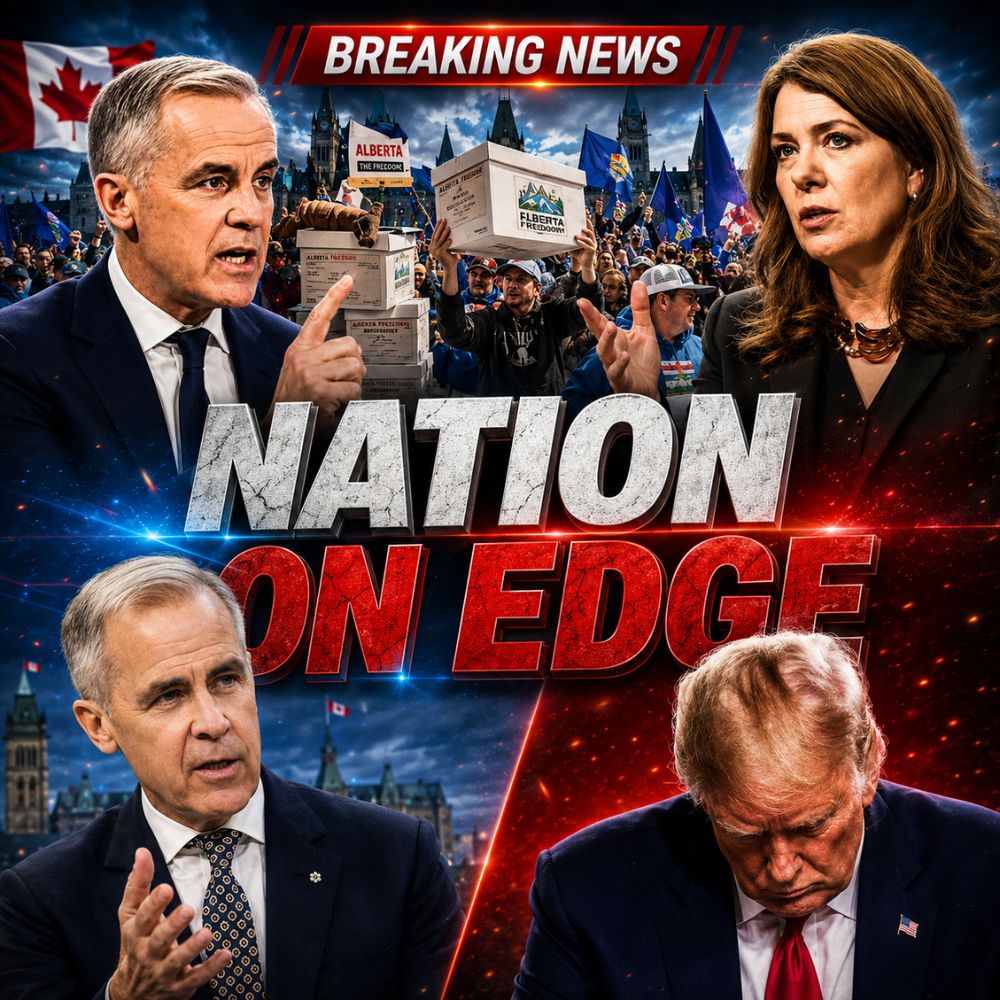
Carney Calls Alberta Separation Referendum a ‘Dangerous Bluff,’ Drawing Brexit Parallel
CALGARY, Alberta — Prime Minister Mark Carney issued a sharp warning on Tuesday about a looming provincial referendum in Alberta, describing Premier Danielle Smith’s plan to place a separation question on the ballot as a “very dangerous bluff.”
The comments came as Western Canadian premiers gathered near Calgary amid ongoing tensions over energy policy and rising separatist sentiment in Alberta, Canada’s oil-rich province.
Mr. Carney, drawing on his experience as former governor of the Bank of England during the Brexit vote, cautioned that such referendums often carry unintended long-term consequences.
Referendum Set for October
The planned October 19 referendum does not ask voters directly about independence. Instead, it seeks approval to launch a formal process that could lead to a future vote on separation from Canada.
The question remains under federal review to determine whether it meets the standards of the Clarity Act, the 2000 federal law that sets conditions for any province to negotiate secession.
The two-stage design has raised legal questions about whether a “yes” vote would trigger constitutional obligations.
Echoes of Brexit
Mr. Carney compared the situation explicitly to Britain’s 2016 decision to leave the European Union.
“Vote for this and it’s a free option. Vote for this and we will strengthen our hand in future negotiation. That is a very dangerous bluff,” he said.
He noted that even a decade later, Britain continues to grapple with the fallout from a vote many did not fully anticipate in its consequences.
During the Brexit period, Mr. Carney managed the Bank of England’s response to sharp market volatility, including a rapid plunge in the British pound.
Public Opinion Favors Unity
Recent polling suggests limited appetite for separation. A survey released this week found that three in five Albertans would vote to remain in Canada if the referendum were held today.
Premier Smith has stated she will campaign for the “remain” side and has committed not to pursue a later independence referendum if the October vote rejects the process.
Mixed Reactions Across the Spectrum
Premier Smith acknowledged legitimate grievances in Alberta but emphasized her desire for the province to remain part of Canada.
Saskatchewan Premier Scott Moe described himself as “100 percent federalist” while acknowledging past frustrations with federal policies. He noted improving relations under the current prime minister, citing a recent pipeline agreement.
Conservative Leader Pierre Poilievre, who represents an Alberta riding, declared that he and his party would campaign strongly for Canadian unity.
Calls for Addressing Grievances
Some conservative voices pushed back against Mr. Carney’s tone. Alberta Conservative MP Michelle Rempel Garner criticized the Brexit comparison as overly alarmist and urged the government to address Albertans’ concerns constructively rather than through fear.
Bloc Québécois MP Christine Normandin argued that the matter should be left to Albertans without federal interference.
Legal Framework at Stake
The Clarity Act, born from the 1998 Supreme Court reference on Quebec secession, gives Parliament the authority to judge the clarity of both the referendum question and any resulting majority.
Legal experts note that ambiguous, multi-stage questions are precisely what the legislation was designed to scrutinize.
Former Chief Justice Antonio Lamer’s ruling emphasized that only a clear question and clear majority would obligate negotiations.
Economic Dimensions Loom Large
Mr. Carney has repeatedly highlighted the economic risks of uncertainty around separation debates. Alberta’s energy sector remains central to national debates over pipelines, resource development and interprovincial relations.
The premiers’ meeting near Calgary focused on aligning strategies for energy projects amid these political tensions.
Broader National Unity Concerns
The episode revives memories of past Canadian unity crises, particularly Quebec referendums in 1980 and 1995.
While Alberta’s current movement appears less advanced, the federal government is treating the situation with seriousness, conducting due diligence under the Clarity Act.
Mr. Carney has committed to actively campaigning for Canadian unity in the lead-up to the vote.
Path Forward
If the “remain” side prevails in October, Premier Smith has pledged to respect the result and forgo further independence efforts.
The outcome could either defuse tensions or deepen divisions, depending on how grievances over fiscal fairness, energy policy and regional autonomy are addressed in the coming months.
Analysts say the referendum, even if not binding on independence, serves as a pressure valve for long-simmering discontent in Western Canada.
As the October 19 vote approaches, the country watches closely to see whether economic pragmatism and shared national identity will outweigh separatist impulses.