

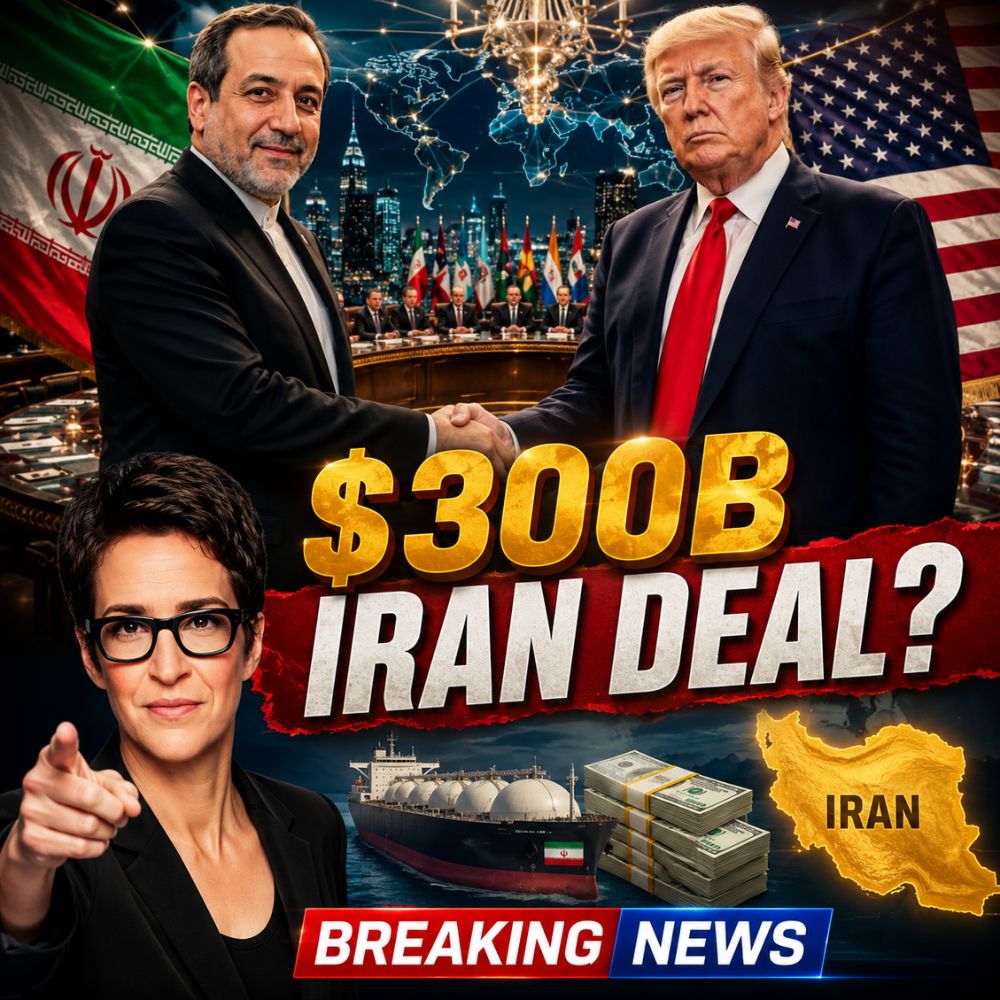
As debate over Iran ‘deal’ takes shape, Trump has a $300 billion problem on his hands
The White House has stopped denying the figure and started emphasizing that none of the money will come from taxpayers. That misses the point.
The day after officials announced that they had agreed on a framework to end the United States’ war in Iran, JD Vance started defending it in a series of interviews, and one element stood out in particular. CBS News, for example, asked the vice president whether Iran would ultimately have access to $300 billion in reconstruction funds.
“That’s the sort of thing they could have access to, funded by the Gulf coast coalition, so long as they honor their end of the obligation,” he replied.
Hours later, Donald Trump said by way of his social media platform that the $300 billion figure is “Fake News, put out by the Dumocrats!!!”
So, which is it? The answer is starting to come into sharper focus after some major media outlets, including Bloomberg News and CNN, reportedly obtained purported drafts of the memorandum of understanding. The document, which hasn’t been independently verified by MS NOW (and, in the case of Bloomberg, has had its authenticity disputed by the White House), reportedly includes a provision that says the U.S. and its partners intend to “create a comprehensive plan agreed upon by both parties for the rehabilitation and economic development of the Islamic Republic of Iran … ensuring financing of at least $300 billion.”
The White House has stopped denying the figure and started emphasizing that none of the money will come from American taxpayers. As MS NOW noted as part of its live blog coverage:
Bloomberg reported yesterday that the tentative agreement would provide Iran with at least $300 billion to rebuild after the intense U.S.- and Israeli-led bombing campaign.
But Trump insists the U.S. won’t aid the effort. “We’re not putting up 10 cents,” Trump said while meeting with Egypt’s president this morning.
That’s fine, as far as it goes, but it also misses the point.
When the Obama-era Joint Comprehensive Plan of Action, or JCPOA, took shape a decade ago, the Democratic administration also made clear that the economic relief Iran was poised to enjoy would come from unfrozen Iranian funds but included no money from American taxpayers. A guy by the name of Donald Trump said that wasn’t good enough.
At a Republican presidential primary debate in late 2015, Trump called the JCPOA a “horrible, disgusting, absolutely incompetent deal with Iran where they get $150 billion,” adding, “They’re a terrorist nation.” A month later, the future president went on to say, “I just don’t understand how we could have made a deal where we’re giving somebody that’s a terror nation $150 billion.”
That figure was a wild exaggeration, and “we” didn’t give Iran so much as a penny. But now, a decade later, it’s the Trump administration that might be moving forward with an apparent agreement to give Iran access to $300 billion — double the amount he deplored as a candidate.
As the framework draws criticism from the left, right and center, Politico reported, “The administration’s response is that we should all wait and see — that Iran is making much bigger promises on nukes behind the scenes.”
But that’s not much of a response, either. As recently as two days ago, senior U.S. officials told reporters on a background call, “There’ll be no side deals” with Iran.
In other words, the text of the MOU is what matters, not “promises” being made “behind the scenes,” and if the latest reporting is correct, the text is poised to become a dramatic political problem for the White House.