

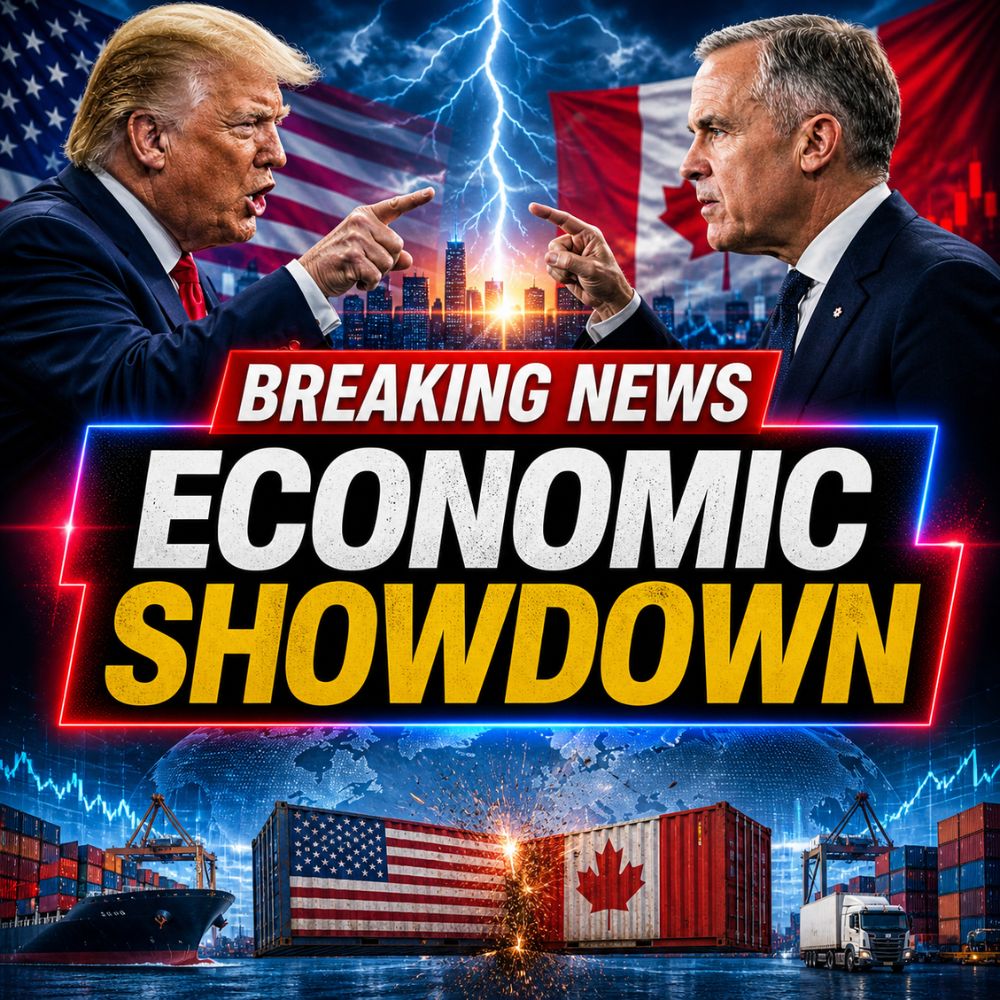
OTTAWA — Tensions are rising as Prime Minister Mark Carney signals he will not offer further concessions in ongoing trade talks, pushing back against a wave of new demands from Donald Trump’s negotiating team. What began as routine discussions over cross-border commerce is quickly turning into a high-stakes standoff.
The flashpoint emerged during a closed-door session in Washington, where U.S. negotiators presented a list of new requirements that Ottawa views as unacceptable. While the specific terms remain confidential, sources describe them as “sweeping” and “structurally intrusive.”
Mr. Carney’s response was brief but unequivocal. “Canada has offered fair terms,” he said in a statement following the meeting. “We will not offer more. This is not about stubbornness. This is about principle.”
The Prime Minister’s refusal to bow has sent shockwaves through both capitals. Markets are watching closely. Business leaders are growing anxious. And the clock is ticking toward key deadlines that could determine the future of North American trade.
For Mr. Trump, who has made trade confrontations a hallmark of his political identity, the Canadian resistance presents an unexpected challenge. His team had reportedly expected a more pliant counterpart, given Canada’s economic dependence on access to the U.S. market.
“They miscalculated,” one Canadian official said, speaking anonymously. “They thought Carney would fold. They thought he was a banker, not a fighter. They were wrong.”
The substance of the dispute is complex, touching on dairy quotas, auto sector rules of origin, energy pricing mechanisms, and — most controversially — a new U.S. demand for direct oversight of Canadian procurement policies.
But the deeper dynamic is about leverage. Mr. Carney, a former central banker who navigated the 2008 financial crisis and Brexit, understands the architecture of economic power better than most. He also understands that once concessions are made, they are rarely returned.
“This isn’t just about trade,” one trade economist said. “It is about who sets the rules. The United States wants to write the playbook. Carney is saying Canada has a pen too.”
The political stakes are equally high. Mr. Carney, already facing a difficult re-election campaign, cannot afford to be seen as weak. Standing up to American pressure plays well with Canadian voters — even if it carries economic risks.
Mr. Trump, meanwhile, needs a win. His base expects victory in trade confrontations. A failure to extract concessions from Canada would be seen as a defeat, potentially damaging his political momentum.
Neither side shows signs of backing down. The Trump team has reportedly prepared retaliatory measures, including targeted tariffs on Canadian steel, aluminum, and agriculture. Ottawa has drafted countermeasures of its own.
“We are not looking for a fight,” one Canadian trade official said. “But we are not afraid of one either. If the United States wants to escalate, we will respond. Proportionally. Precisely. And effectively.”
European and Asian allies are watching closely. A successful Canadian stand against U.S. trade pressure would embolden other nations to resist similar demands. A Canadian collapse, however, would signal that Washington’s leverage remains unchecked.
The next move is uncertain. Both sides have acknowledged differences, but the clash in strategy is becoming increasingly visible as deadlines approach. Diplomats expect a series of intense negotiating sessions in the coming weeks.
For now, the standoff continues. Mr. Carney has refused to bow. Mr. Trump has refused to retreat. And the question hanging over both nations is simple: who will blink first?
The answer may determine not just the terms of a trade deal, but the shape of North American economic relations for a generation. And with neither side showing signs of backing down, the next move could reshape the entire negotiation landscape.