

The Gilded Trap: Oil, War, and the Participation Trophy Presidency
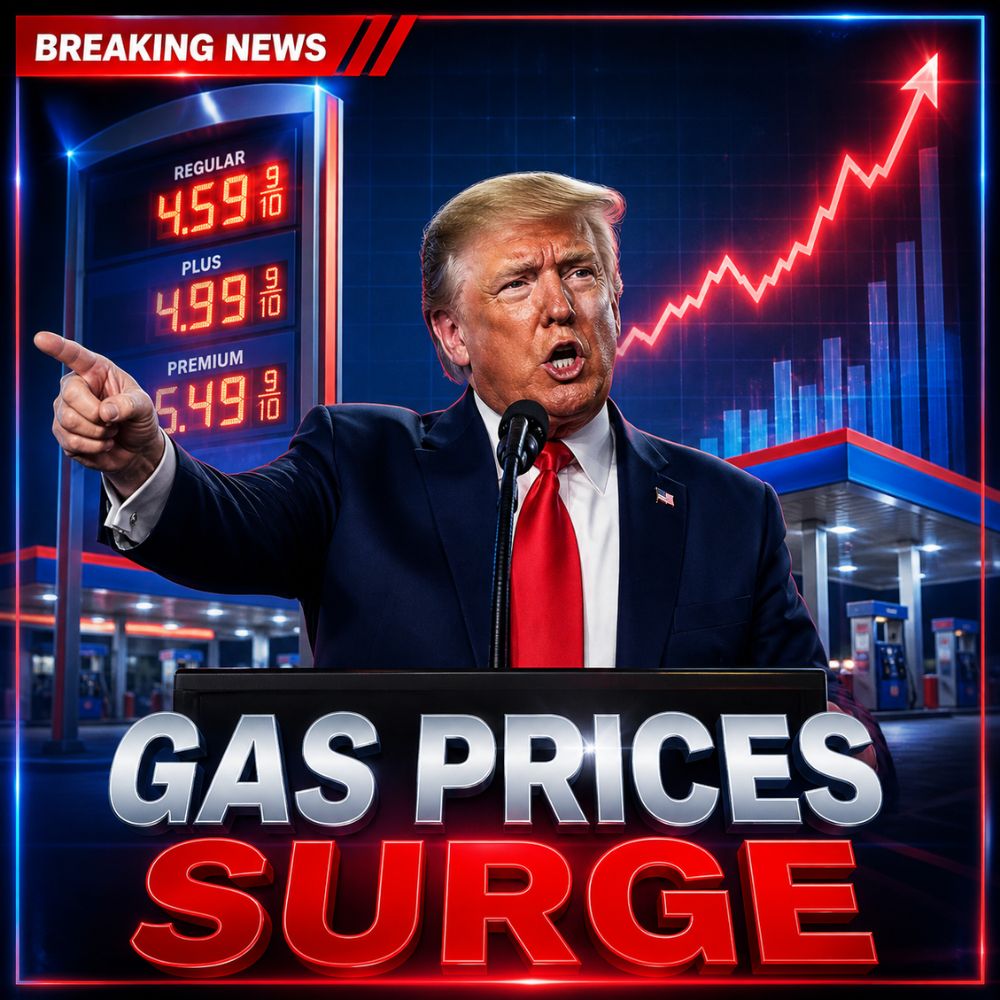
The digital displays at American gas stations are more than just indicators of commerce; in the spring of 2026, they have become the glowing monitors of a political heart rate. As regular unleaded surges past $4.30 a gallon—a staggering $1.32 increase since the onset of the conflict in Iran—the presidency of Donald J. Trump finds itself tethered to a crisis of its own making.
In the high-pressure environment of New York newsrooms and Washington hearing chambers, the narrative of the 2026 midterms is being written in real-time. It is a story of “finding out”—the inevitable economic and geopolitical consequence of a “Participation Trophy Presidency” that prioritized spectacle and sycophancy over strategic depth and global stability.
I. The Economics of Despair: The “Finding Out” Phase
For the better part of a year, the Trump administration attempted to decouple the performance of the stock market from the reality of the American kitchen table. But as CNBC’s Steve Liesman notes, that effort has met with “absolutely no success.”
The economic fallout of the war with Iran is no longer a theoretical projection; it is a lived reality. Nationwide, gas prices are soaring at historic rates, with the Midwest—Indiana, Michigan, Ohio, Wisconsin, and Iowa—climbing faster than any other region. These states, ironically described by the Wall Street Journal as “Trump’s political stronghold,” are now the epicenters of a burgeoning anti-incumbent sentiment.
The Savings Rate Collapse
Perhaps the most alarming economic data point isn’t the price at the pump, but the collapse of the American savings rate. As real incomes (inflation-adjusted) have fallen for two consecutive months, consumer spending has remained deceptively “okay.”
How is this possible? Americans are “papering over” the shock. They are drawing down their savings and leaning on credit cards to maintain their lifestyles, hoping the crisis is temporary. The savings rate has hit its lowest level since 2022, a clear signal that the public is exhausting its financial buffers.
The Federal Reserve, led by Kevin Warsh—a figure criticized for his inability to acknowledge the 2020 election results—finds itself in a straitjacket. Despite the President’s demands for rate cuts to juice the economy before the midterms, the “oil-induced” inflation surge makes such moves impossible. Wall Street now predicts that interest rate cuts may not materialize until July 2027, leaving the administration without its favorite economic lever.
II. The Sitroom Dilemma: Video Game Logic vs. Geopolitics
As the economic pain deepens, the White House is reportedly “squirming.” Axios reporting suggests that the President is being briefed on a series of “quick and easy” ways out of the deadlock. These options, however, sound less like grand strategy and more like the plot of a high-stakes action movie:
A “short and powerful” wave of strikes on Iranian infrastructure.
Taking over parts of the Strait of Hormuz.
A Special Forces operation to “secure” (effectively steal) Iran’s enriched uranium.
The Mirage of the Decisive Strike
Miles Taylor, former DHS Chief of Staff, warns that these options are “extraordinarily dangerous” and rooted in a fundamental misunderstanding of Iranian capabilities. The idea of a Special Forces mission to seize nuclear material is a “video game” fantasy. In reality, such an operation faces a 99-out-of-100 failure rate due to the certainty of booby traps and defensive Iranian firepower.
More importantly, these military “solutions” actually exacerbate the President’s primary political problem: oil. “If his problem is oil,” Liesman notes, “dropping more bombs will not solve it.” The global economy needs Iranian oil supply and an open Strait of Hormuz. Permanent military escalation only ensures that these vital arteries remain blocked, driving prices even higher and solidifying the “economic collapse” the President fears.
III. The Munitions Crisis: America’s Empty Quiver
On Capitol Hill, the true cost of the war is being revealed through the questioning of Secretary of Defense Pete Hegseth. Senator Mark Kelly, a former naval aviator, pressed Hegseth on a startling reality: the U.S. military has depleted a significant portion of its munitions in just the first 60 days of the conflict.
The Untold Story of Attrition
The numbers are revelatory:
Reaper Drones: The U.S. has reportedly lost 24 MQ-9 Reapers—roughly 10% of the entire fleet.
Patriot Interceptors: Regional allies have expended 2,000 interceptors since February. The global production rate is only 600 per year.
Replacement Timeline: Hegseth admitted that replacing these stockpiles will take “years,” not months.
This creates a massive geopolitical vulnerability. Every missile fired at Tehran is a missile that cannot be used to deter Beijing or Moscow. The United States is “all in” on a single theater, stretching its national defense thin and signaling to adversaries like China and Russia that the American “quiver” is increasingly empty.
IV. The Sycophancy Trap: Why Hegseth Remains
One of the most persistent questions in Washington is why Pete Hegseth—described by critics as “more ludicrous in the flesh than an SNL parody”—remains in his post while other “MAGA” stars have been discarded.
The answer lies in the nature of the Trump executive. Unlike former generals like Mattis, Kelly, or Milley, who provided “resistance” based on decades of military experience, Hegseth provides “compliance.”
“He’s still there because he lets Trump be the dictator he’s always wanted to be,” Miles Taylor argues. Hegseth offers praise and flattery instead of strategic warnings. This lack of internal guardrails has turned the world into a “petri dish” for an experiment in unconstrained executive ego. The result is a military buildup in the Middle East the likes of which hasn’t been seen since 2003, conducted without a clear objective or an exit strategy.
V. Burned Alliances and Global Isolation
The unilateral nature of the Iran war has not only depleted bombs but has also “burned” America’s vital alliances. The diplomatic fallout is severe:
Base Restrictions: Countries like Spain have restricted or shut out U.S. access to bases due to opposition to the conflict.
Operational Constraints: Overflight rights and logistical support from European and Gulf allies are being conditioned or withdrawn.
In a globalized world, a “hermit nation” approach to foreign policy is a recipe for disaster. If a second crisis were to erupt—such as a Chinese move on Taiwan—the United States would find itself isolated, without the “closeness to our allies” required to manage a multi-front conflict.
VI. The Public Sour: From 2024 Mandate to 34% Approval
The political price of this “energy crisis by design” is historic. Trump’s approval rating has cratered to 34%, with 64% of Americans disapproving of his performance.
The most stinging data point concerns the very issue that propelled him back to power in 2024: the cost of living. Only 22% of Americans approve of his handling of the economy. For a President who defined his brand on “winning” and economic prowess, an approval rating of 27% on the economy overall is an unprecedented low.
Voters across the country are echoing a common sentiment: they feel “lied to.” The promise of lower gas prices has been replaced by a “double spike” that is forcing families to choose between “driving and eating.”
VII. Conclusion: The “Finding Out” Phase Continues
As the 60th day of the war passes, the Trump administration remains “unraveled.” The President’s obsession with “spectacle” and “participation trophies”—from putting his name on currency to demanding praise for military strikes—has finally collided with the cold, hard reality of global oil markets and geopolitical attrition.
The “finding out” phase is proving to be a painful one for the American public. With a “War Department” led by a secretary who prioritizes culture wars over strategic vision, and a President who views the Situation Room through the lens of a video game, the nation is navigating a period of profound instability.
The glowing gas prices in every town in America are more than just an economic burden; they are a daily reminder of a leadership that sacrificed stability for ego. As the midterms approach, the question for the American voter is no longer whether they “approve” of the President, but whether they can afford to continue his experiment.
The ” Participation Trophy Presidency” is finally facing a scorecard it cannot manipulate—and the numbers are all in red.